All species › Passerines › Cisticolas › Buff-Throated Apalis
Buff-Throated Apalis | Apalis rufogularis
Zwartrugapalis | Apalis Gorjirrufo
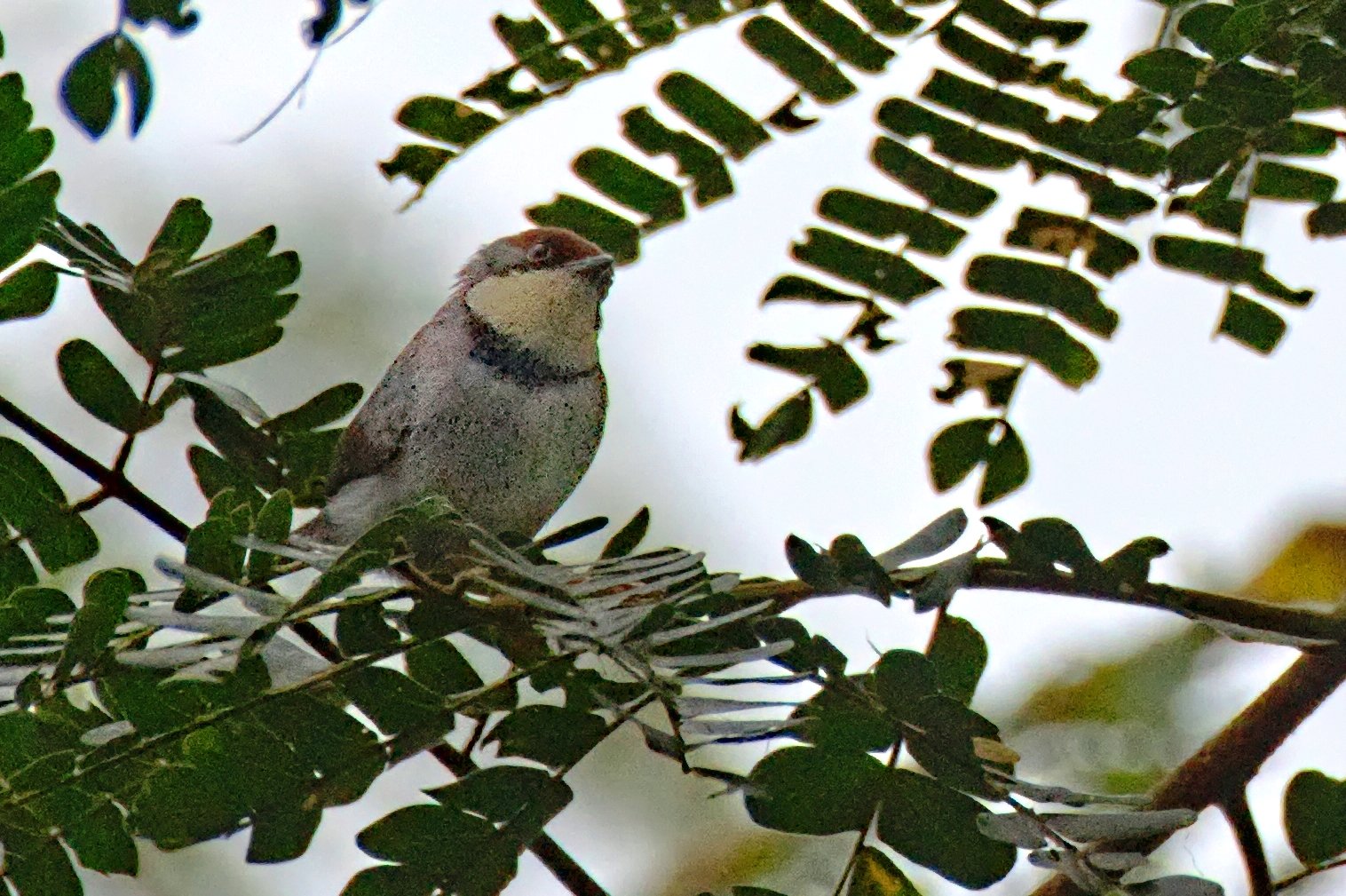
The Buff-Throated Apalis is a dark, contrasting apalis of rainforest and gallery forest: the male is blackish above and white below, the female greyer with a buff throat, which gives the species its English name. Within the region it reaches the southern edge of its range in northern Angola and north-western Zambia.
Voice
A fast, high, sharp series, tsee-tsee-tsee-tsee or pee-pee-pee, often long sustained, answered by the female with a different, softer or rattling phrase. The sound is thinner and higher than that of most other apalises.
Recording: Dries Van de Loock — CC BY-NC-SA 4.0 · converted to mono · xeno-canto
Identification
11–12 cm. Male: crown, cheeks and upperparts dark slate-grey to blackish, the tail black with broad white outer feathers and white tips; underparts white, sometimes with a faint buff wash on the throat. Female: upperparts mid-grey, chin and throat warm buff to pale rufous, the rest of the underparts white. The iris is pale brown to red, the bill black, the legs pink. Juveniles resemble the female, with a greenish wash on the back. It moves quickly through the canopy, often with the tail fanned so that the white in the outer feathers flashes.
Confusion species
Grey Apalis Apalis cinerea of the Angolan highlands is paler grey, has a brownish crown and lives in montane forest, not lowland forest. White-Chinned Prinia Schistolais leucopogon is also dark grey with a white throat, but has a much longer tail without white, grey flanks, and lives in parties low in rank growth. Black-Throated Apalis Apalis jacksoni and Lowland Masked Apalis Apalis binotata have a green back and a black throat. Bleating Camaroptera Camaroptera brachyura is short-tailed with green wings and keeps low. Dark upperparts, white underparts and much white in the tail high in the crowns point to Buff-Throated Apalis; a female with a buff throat confirms it.
Habitat
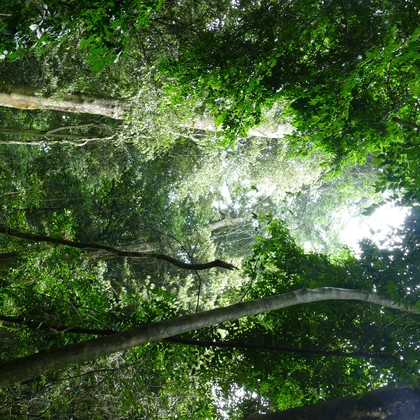
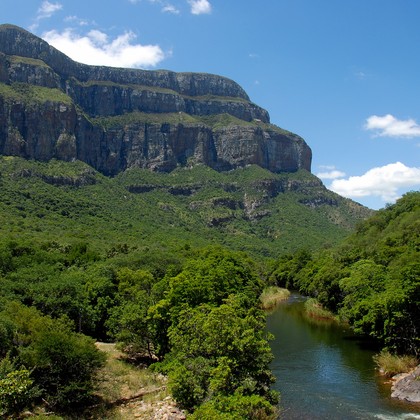
The canopy and edges of moist lowland and mid-altitude rainforest, gallery forest along rivers and tall secondary forest. It forages in pairs, almost always in mixed flocks, high in the trees for insects among leaves and creepers.
Where the bird is most at home, classified by the vegetation units of southern Africa.
Range and movements
Within the region in northern Angola (from Cabinda and Uíge east to the Lunda provinces) and in the moist forests of the western escarpment of Angola, and in extreme north-western Zambia (the gallery forests of Mwinilunga). Beyond the region from Nigeria and Cameroon east through the Congo Basin to Uganda, western Kenya and north-western Tanzania.
- Resident
- dark = core range, pale = thinly spread
How and when to look
Year-round. In Zambia the gallery forests around Mwinilunga, at the Source of the Zambezi and along the Isombu, are the classic site; in Angola the forests of Uíge and Cuanza Norte. Follow the mixed flocks in the canopy and look for a small dark bird with much white in the tail; the high, fast series helps to pick it out among the other species.
Conservation status
Not threatened and common over most of its range. Local within the region, since it is confined to gallery forest and rainforest remnants that are shrinking through logging and fire.
Scientific name
Apalis rufogularis | (Fraser, 1843)
Fraser described the species in 1843 as Drymoica rufogularis; because it was later moved to another genus, the author and year stand in brackets. The genus Apalis was introduced in 1833 by Swainson. Apalis comes from the Greek hapalos, 'delicate, gentle' — for these slender, finely built little warblers. rufogularis is Latin for 'rufous-throated', from rufus, 'rufous', and gula, 'throat' — for the females' chestnut throat. The specimen the first description was based on came from Malabo, Bioko (Equatorial Guinea).