All species › Cranes, rails and allies › Rails and crakes › White-Breasted Waterhen
White-Breasted Waterhen | Amaurornis phoenicurus
Witborstwaterhoen | Gallineta pechiblanca
A striking black-and-white rail from South Asia that hides less than most of its relatives and often walks in the open along ditch banks. In eastern Arabia a scarce but regular visitor, with Oman and the Emirates together now holding many dozens of records.
Voice
Very noisy on the breeding grounds: a long, grunting and croaking series, kroo-kroo-kwak-kwak, that can go on for minutes, often at dusk and at night. Also a repeated, metallic kwak. Usually silent in Arabia.
Recording: Albert Noorlander — CC BY-NC-SA 4.0 · converted to mono · xeno-canto
Identification
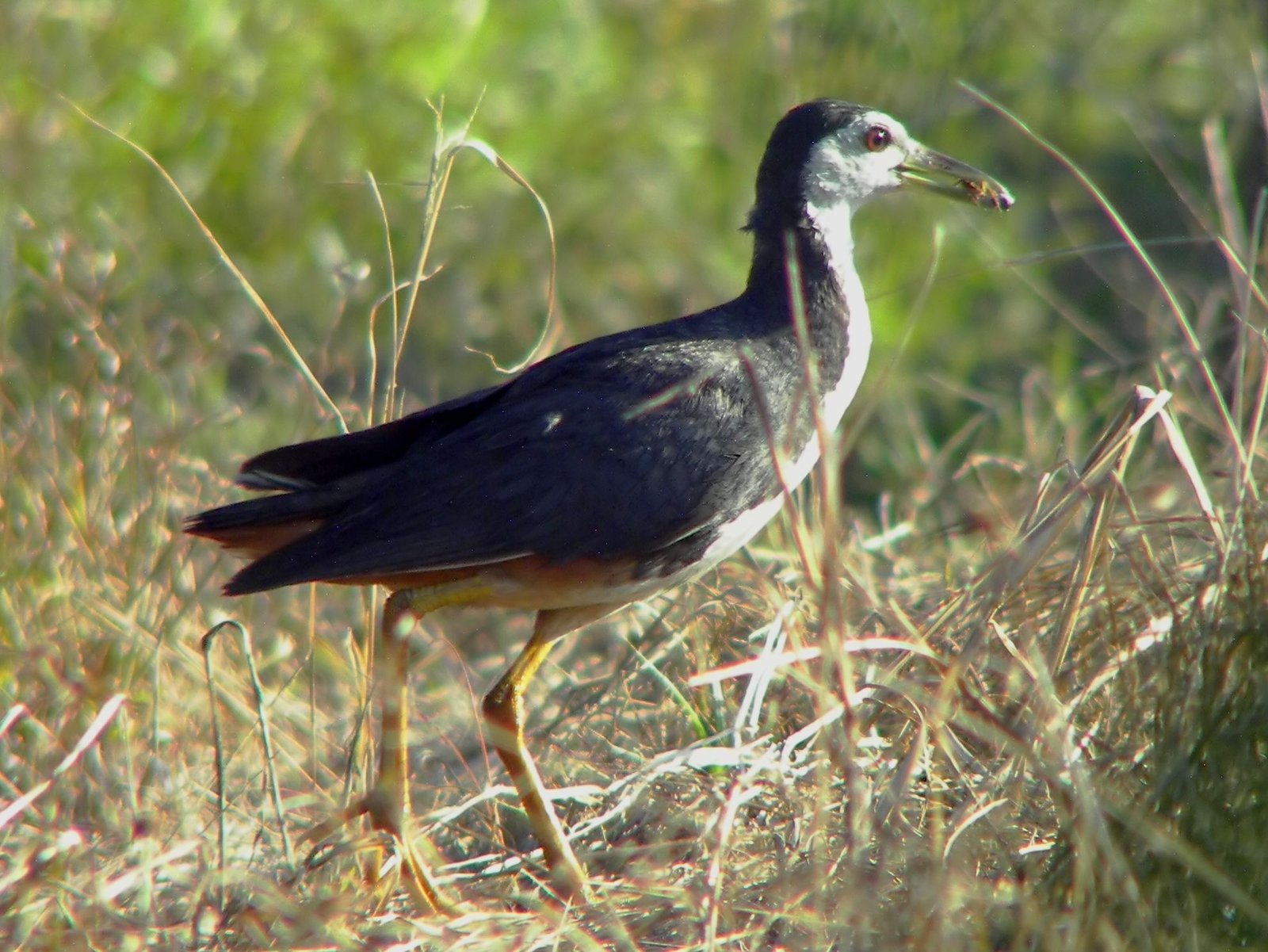
Medium-sized and long-legged, with a fairly long neck and a short, often cocked tail. The upperparts are dark slate-grey with an olive tinge; face, forehead, throat and breast are bright white and sharply set off from the dark upper body. The belly turns rusty towards the rear, and the undertail is deep rufous. The bill is yellow-green with a red base to the upper mandible, the legs are yellow. Young birds are duller, with a greyish face and less white.
Confusion species
With its white face and rufous undertail hardly confusable. Eurasian Moorhen (Gallinula chloropus) is dark below, with a white flank line, white sides to the undertail and a red frontal shield. A young Watercock (Gallicrex cinerea) is larger, warm buff-brown and finely barred all over. A flash of white in the reeds may suggest Squacco Heron (Ardeola ralloides) or Indian Pond Heron (Ardeola grayii), but these have a dagger-shaped bill and white wings.
Habitat
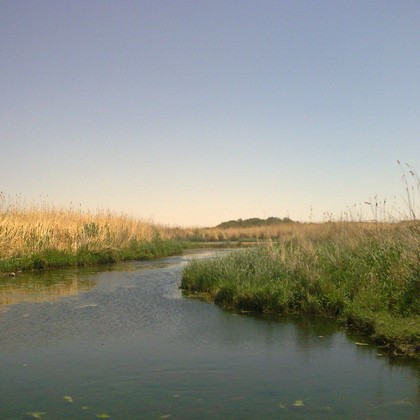
Edges of ponds, ditches and pools with dense growth, reed fringes, small marshes, irrigation channels and flooded fields; also sewage works, parks and gardens with water. Likes to walk along the edge of cover and climbs into bushes.
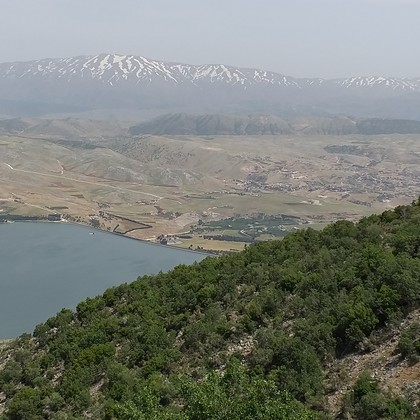
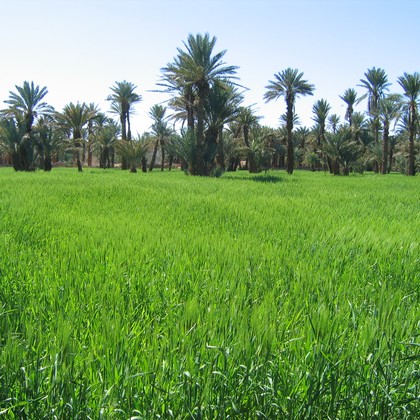
Where the bird is most at home, classified by the habitats of North Africa and the Middle East.
Range and movements
In Oman (more than 50 records by around 2010, more frequent since) a scarce passage migrant and winter visitor, with records along the Batinah coast, inland and in Dhofar; in the United Arab Emirates (more than 25 records by around 2010) similar, including at sewage works and parks. Saudi Arabia: first record in October 2009 near Jubail in the Eastern Province. Qatar and Yemen: a few records. Kuwait: a bird at Jahra in December 2019, the first for the Western Palearctic. Beyond the region resident from Pakistan and India to southern China, Indonesia and the Philippines.
- Winter visitor (c. Oct–Mar)
- dark = core range, pale = thinly spread
How and when to look
In winter, check the edges of reed fringes and open mud at the sewage works and pools of the Batinah coast and the Emirates. The bird comes out in the early morning and late afternoon and then walks across open ground flicking its tail; the white face is visible from afar.
Conservation status
Not globally threatened and common in South Asia, including in man-made wetlands. The increase in records in Arabia coincides with the growth of irrigation and sewage works, which offer the species suitable stopover sites; an established breeding population in the region has not (yet) been proven.
Scientific name
Amaurornis phoenicurus | (Pennant, 1769)
Pennant described the species in 1769 as Gallinula phoenicurus; because it was later moved to another genus, the author and year stand in brackets. The genus Amaurornis was introduced in 1853 by Reichenbach. Amaurornis is Greek, from amauros 'dark, dusky' and ornis 'bird'. phoenicurus is Greek for 'red-tailed', from phoinix 'crimson' and ouros 'tail', for the rufous undertail. The specimen the first description was based on came from Sri Lanka.