All species › Cranes, rails and allies › Rails and crakes › Little Crake
Little Crake | Zapornia parva
Klein waterhoen | Polluela bastarda
A small, slender crake that passes through the whole region in spring and autumn on its way between eastern Europe and Africa. It is the most frequently seen small crake in the region: on passage it turns up at the edge of any pool with a little reed, from the oases of the Sahara to the sewage works of the Gulf states.
Voice
The male sings a series of nasal, yapping notes, kwek kwek kwek, that start slowly, gradually accelerate and drop in pitch to a fast rattling end, like a bouncing ping-pong ball. Heard mainly in spring, also from migrants lingering in marshes in April and May. Otherwise a short, sharp kwek.
Recording: Lars Edenius — CC BY-NC-SA 4.0 · shortened to the first 60 s, mono · xeno-canto
Identification
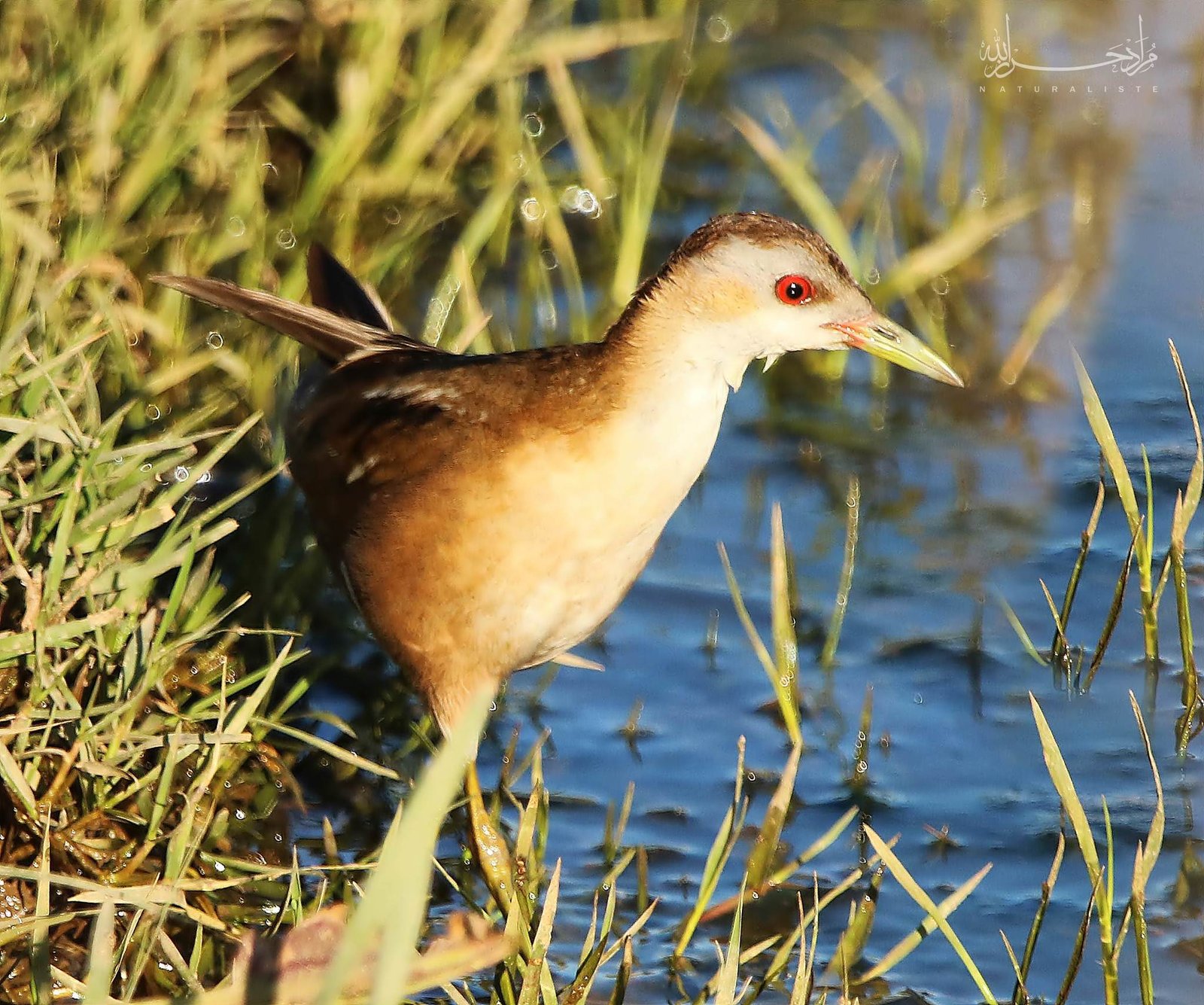
About the size of a starling, with a long tail, long wing tips projecting well beyond the tertials, and long green legs. The male is slate-blue on the face and underparts, with an olive-brown, black-streaked back and faint white barring only on the rear flanks and undertail. The female has buff underparts, a white throat and a pale grey face. Both have a short green bill with a red spot at the base. Young birds are paler, with whitish underparts and fine barring on the flanks. Climbs nimbly in reed stems and walks on floating vegetation.
Confusion species
Baillon's Crake (Zapornia pusilla) is the real pitfall: it is more compact, with shorter wings lacking a long primary projection, flesh-coloured legs, a bill without red, extensive white flecks on the back and broad black-and-white barring far onto the flanks. Spotted Crake (Porzana porzana) is larger and spotted white all over, with a yellow bill and buff undertail. Young birds of the two small crakes are very similar; then check the primary projection and leg colour.
Habitat
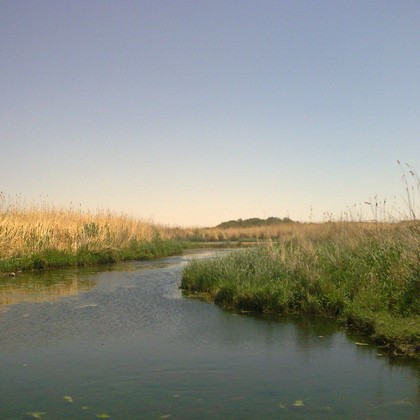
Reed and reedmace fringes with open water between, floating plant mats and the edges of pools, ponds, canals and sewage works. On passage also in small, unexpected patches of marsh in oases, irrigation ditches and at desert reservoirs.
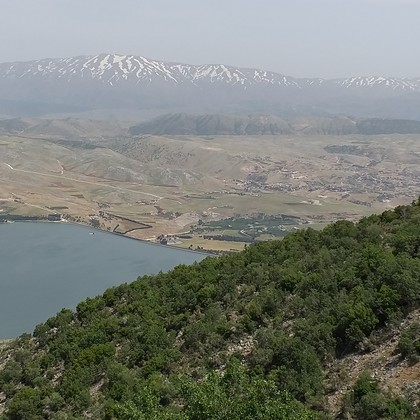
Where the bird is most at home, classified by the habitats of North Africa and the Middle East.
Range and movements
Passage migrant through the whole region. In Morocco, Algeria and Tunisia scarce on spring passage, including at Merja Zerga, Sidi Bou Ghaba and Ichkeul. Egypt: passage migrant along the Nile and the Red Sea and scarce winter visitor in the Nile Delta. In the Levant regular on passage, especially in the Jordan Valley, the Hula area and at Eilat, with a few wintering. In Arabia regular on passage in Kuwait, the Gulf states, Oman and Saudi Arabia, less so in Yemen; in autumn sometimes notably numerous at the sewage works of the Emirates and Oman. Breeding in the region is uncertain and at most sporadic, for example in the marshes of southern Iraq. Breeds from central and eastern Europe to Central Asia; winters in sub-Saharan Africa and to a lesser extent around the Mediterranean and in south-west Asia.
- Winter visitor (c. Oct–Mar)
- Passage (Mar–Apr, Oct–Nov)
- dark = core range, pale = thinly spread
How and when to look
In April migrants are at their most active and least shy: post yourself at dawn by a reed fringe with open mud or floating plants, for example at Hula or Eilat, and wait. In Oman and the Emirates Little Crakes are regularly seen in September and October along the edges of sewage-works lagoons, sometimes several at once.
Conservation status
Not globally threatened, but hard to count and dependent on well-developed reed marshes. In the region it suffers from the drainage of wetlands, although sewage works and fish ponds in the desert provide new stopover sites.
Scientific name
Zapornia parva | (Scopoli, 1769) (GBIF: Porzana parva)
Scopoli described the species in 1769 as Rallus parvus; because it was later moved to another genus, the author and year stand in brackets. The genus Zapornia was introduced in 1816 by Leach. Zapornia is a near-anagram of Porzana, the genus of the French ornithologist Louis-Pierre Vieillot. parva is Latin for 'small', after the modest size of this little crake. The specimen the first description was based on came from Carniola, Slovenia.