All species › Waterfowl › Ducks, geese and swans › Tufted Duck
Tufted Duck | Aythya fuligula
Kuifeend | Porrón moñudo
The black-and-white diving duck with the drooping crest, a fixture in winter on lakes, reservoirs and lagoons from the Maghreb to Iraq. Further south, on the Arabian Peninsula and in Egypt, it becomes scarcer and is often a single bird among other ducks.
Voice
The female gives a harsh, growling kerr-kerr, especially when taking off; in display the male gives a soft, giggling whistle.
Recording: Stanislas Wroza — CC BY-NC-SA 4.0 · converted to mono · xeno-canto
Identification
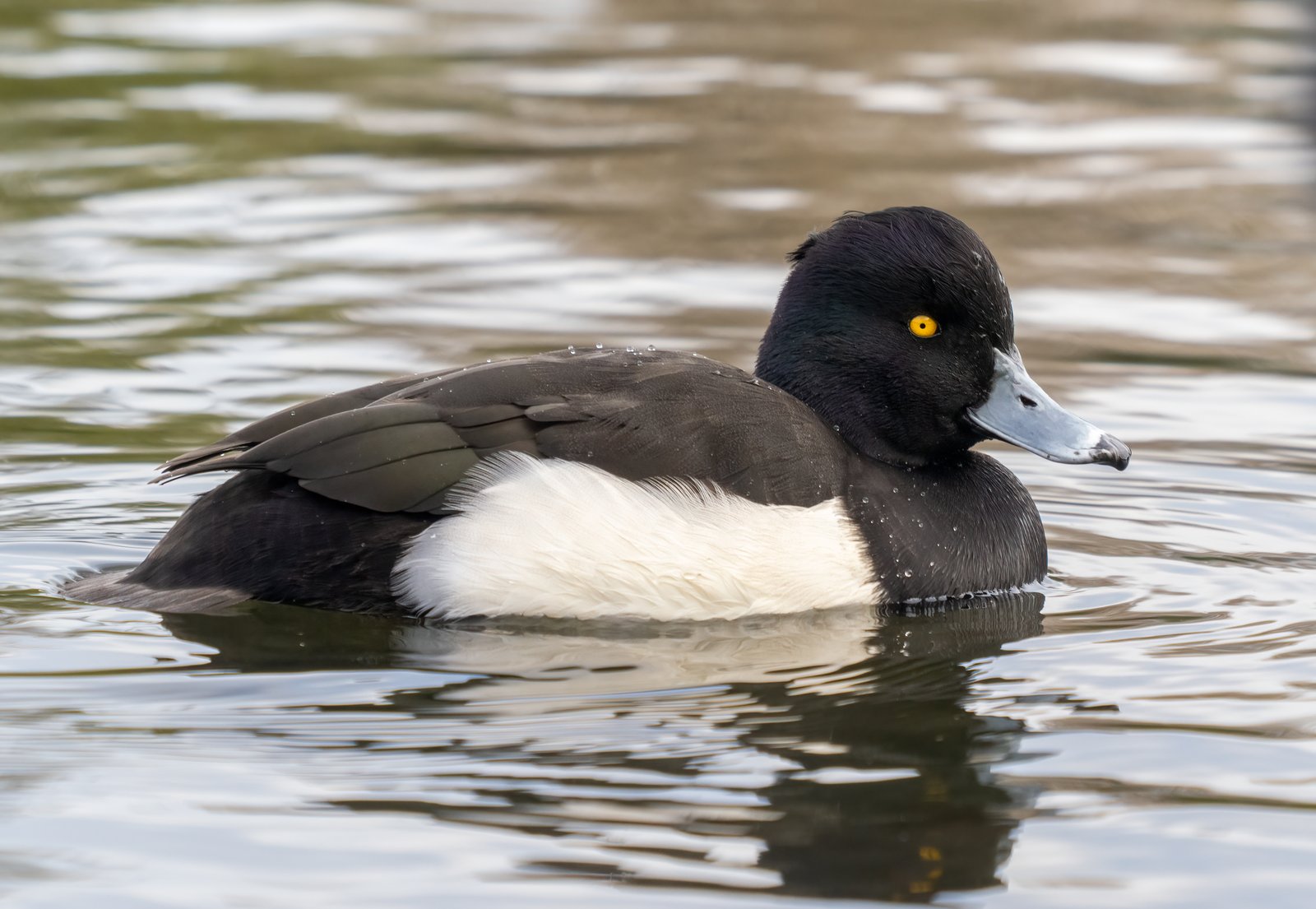
About 43 cm, compact and round-headed. The male is glossy black with bright white flanks, a long drooping crest on the hindcrown, a yellow eye and a blue-grey bill with a broad black tip. The female is dark chocolate brown with paler flanks, a short tuft and a yellow eye; some females show a white patch at the bill base or a white undertail. In flight a broad, bright white wingbar.
Confusion species
The female Greater Scaup (Aythya marila) has a large, sharply defined white blaze around the bill base, a greyer back and no tuft. The female Ferruginous Duck (Aythya nyroca) is warmer reddish brown, with a high crown, white undertail and, in the female, a dark eye. Males of Ring-necked Duck (Aythya collaris) and hybrids with Common Pochard (Aythya ferina) have grey rather than white flanks.
Habitat
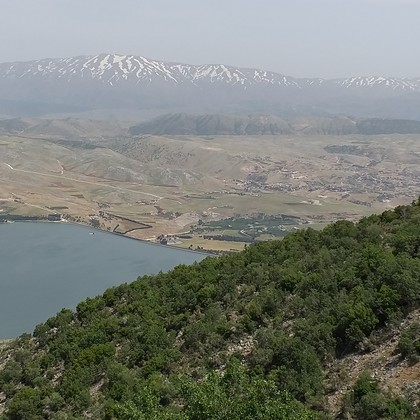
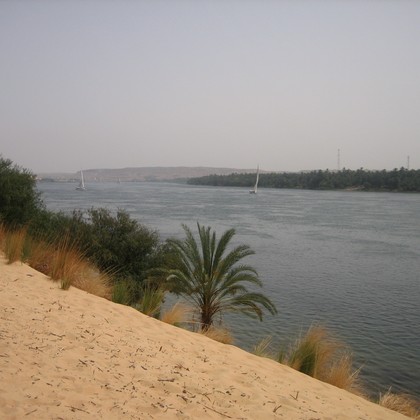
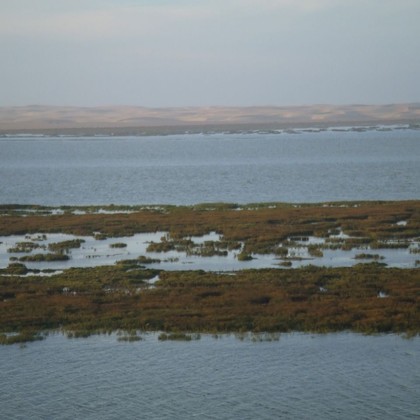
Fresh lakes, reservoirs, rivers, fishponds and sewage pools, also brackish lagoons and sheltered coastal waters. It dives mainly for molluscs, such as zebra mussels and snails, and aquatic insects, and rests by day in flocks on open water.
Where the bird is most at home, classified by the habitats of North Africa and the Middle East.
Range and movements
In winter throughout the Maghreb on lakes, reservoirs and lagoons, from Morocco's Atlantic coast and the Middle Atlas to Ichkeul in Tunisia; scarce in Libya. In Egypt mainly on the Nile Delta lakes. In Israel, Jordan, Lebanon and Syria a common winter visitor; in Iraq numerous in the marshes and on the lakes. In Kuwait, Bahrain, Qatar and the United Arab Emirates a regular winter visitor in small numbers, scarce in Saudi Arabia, Oman and Yemen. Beyond the region it breeds from Iceland and western Europe to Kamchatka and winters south to North Africa, India and Japan.
- Resident
- Summer visitor (c. Apr–Sep)
- Winter visitor (c. Oct–Mar)
- Passage (Mar–Apr, Oct–Nov)
- dark = core range, pale = thinly spread
How and when to look
In winter easiest on large reservoirs and the coastal lagoons of Morocco and Tunisia, and in the Gulf states on sewage pools and water basins. Use a flock of Tufted Ducks to find rarer diving ducks: Ring-necked Duck, Greater Scaup and Lesser Scaup have nearly always been found among Tufted Ducks in the region.
Conservation status
Not threatened. The world population is large; in parts of Europe the species has increased strongly with the spread of the zebra mussel. In the region numbers depend on the state of the wintering lakes, and hunting and disturbance play a role locally.
Scientific name
Aythya fuligula | (Linnaeus, 1758)
Linnaeus described the species in 1758 as Anas fuligula; because it was later moved to another genus, the author and year stand in brackets. The genus Aythya was introduced in 1822 by Boie. Aythya is from Greek aithuia, an unidentified diving seabird mentioned by Aristotle and Hesychius. fuligula combines Latin fuligo 'soot' and gula 'throat'. The specimen the first description was based on came from Sweden.