All species › Waders, gulls and terns › Pratincoles and coursers › Small Pratincole
Small Pratincole | Glareola lactea
Kleine vorkstaartplevier | Canastera chica
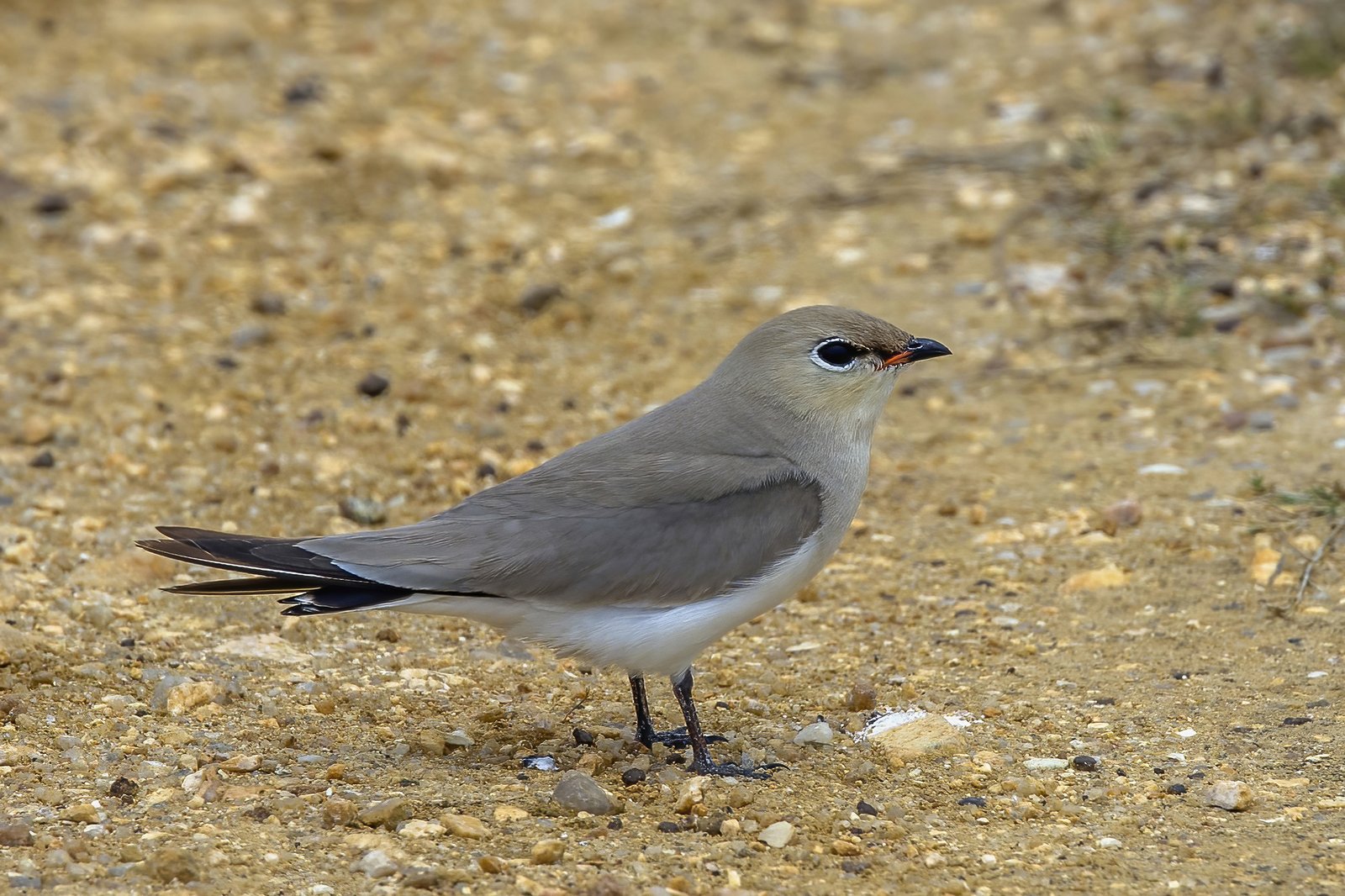
A small, pale grey pratincole of the rivers of South Asia that hunts over water in small groups like a swallow. In the region it is a scarce winter visitor to the coast of Dhofar in southern Oman, and elsewhere a rarity.
Voice
A high, rolling prrip or tirrit, in flocks often a dry chirping; softer and higher than in the larger pratincoles.
Recording: David Darrell-Lambert — CC BY-NC-SA 4.0 · converted to mono · xeno-canto
Identification
Small, barely larger than a Little Ringed Plover, with a short, almost square tail. Upperparts pale sandy grey, throat faintly washed ochre, belly and rump white; a narrow black loral line runs from bill to eye. The bill is black with a small red spot at the base, the legs short and dark. In flight a large white panel on the secondaries stands out, with black primaries, a black trailing edge and black underwing coverts; the white tail has a black terminal band, broadest in the centre.
Confusion species
Collared Pratincole (Glareola pratincola) and Black-winged Pratincole (Glareola nordmanni) are much larger and browner, with an outlined creamy throat and a deeply forked tail, and lack the white secondary panel. In size and hunting behaviour it may recall a White-winged Tern (Chlidonias leucopterus) or Black Tern (Chlidonias niger) in winter plumage, but these have a longer bill, a dark crown patch and a grey tail.
Habitat
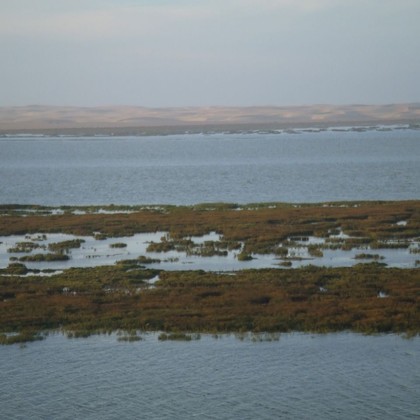
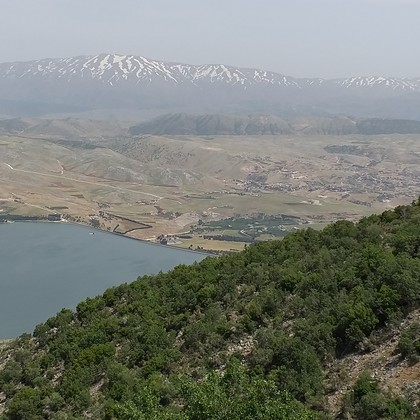
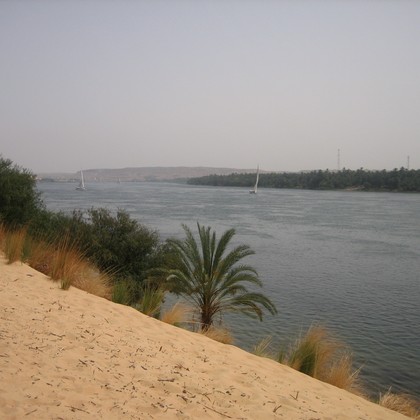
Breeds on sand and shingle banks in large rivers. In winter in the region mainly on the edges of coastal lagoons (khawrs), fresh and brackish pools, sewage works and wet grassland and golf courses; it hunts low over water for flying insects at dusk and rests by day on bare shores.
Where the bird is most at home, classified by the habitats of North Africa and the Middle East.
Range and movements
In the region almost confined to eastern Arabia. In Oman a scarce but almost annual winter visitor to Dhofar, on the khawrs around Salalah (East Khawr, Khawr Sawli, Khawr Taqah and Raysut), in groups of a few to more than ten birds; also reported from Barr al Hikman, Shuwaymiyah and Al Buraimi. In the Emirates a rare winter visitor, with a series of records around Dubai (including one bird that returned each winter from 2001 to 2004) and recently near Al Ain. A vagrant to Qatar (January 2013) and Bahrain. Records fall between October and March. Beyond the region it breeds from eastern Afghanistan and Pakistan through India and Sri Lanka to Myanmar, Thailand and Indochina; most birds move only within that range.
- Winter visitor (c. Oct–Mar)
- dark = core range, pale = thinly spread
How and when to look
The khawrs of Salalah from November to January offer the best chance: scan bare shorelines and sandbars for groups of small, pale birds pressed flat to the ground, and wait for dusk, when they take off to hunt over the water. A flight view with the white secondary panel and black underwing settles it at once.
Conservation status
Not globally threatened and fairly common in its breeding range, although river birds in South Asia suffer from sand mining, dams and disturbance. The rising number of records in Dhofar probably mainly reflects more birdwatchers, but possibly also a small regular wintering group.
Scientific name
Glareola lactea | Temminck, 1820
Temminck described the species in 1820 and placed it straight away in the genus where it still stands. The genus Glareola was introduced in 1760 by Brisson. Glareola is a Latin diminutive of glarea 'gravel', after the bare gravelly ground where pratincoles nest. lactea is Latin for 'milk-white', from lac 'milk'. The specimen the first description was based on came from Bengal, India and Bangladesh.