All species › Waders, gulls and terns › Pratincoles and coursers › Collared Pratincole
Collared Pratincole | Glareola pratincola
Vorkstaartplevier | Canastera común
A wader that hunts like a tern and rests like a plover: on long, pointed wings and with a deeply forked tail it catches insects over saline flats, fields and marshes. In the region it breeds in loose colonies from Morocco to Iraq and passes through the whole region in spring and autumn, on its way to and from the Sahel.
Voice
Noisy: a sharp, rattling, tern-like kik-kik-kirrik and kyerrr, especially over the colony and when flocks disperse at dusk.
Recording: David Darrell-Lambert — CC BY-NC-SA 4.0 · converted to mono · xeno-canto
Identification
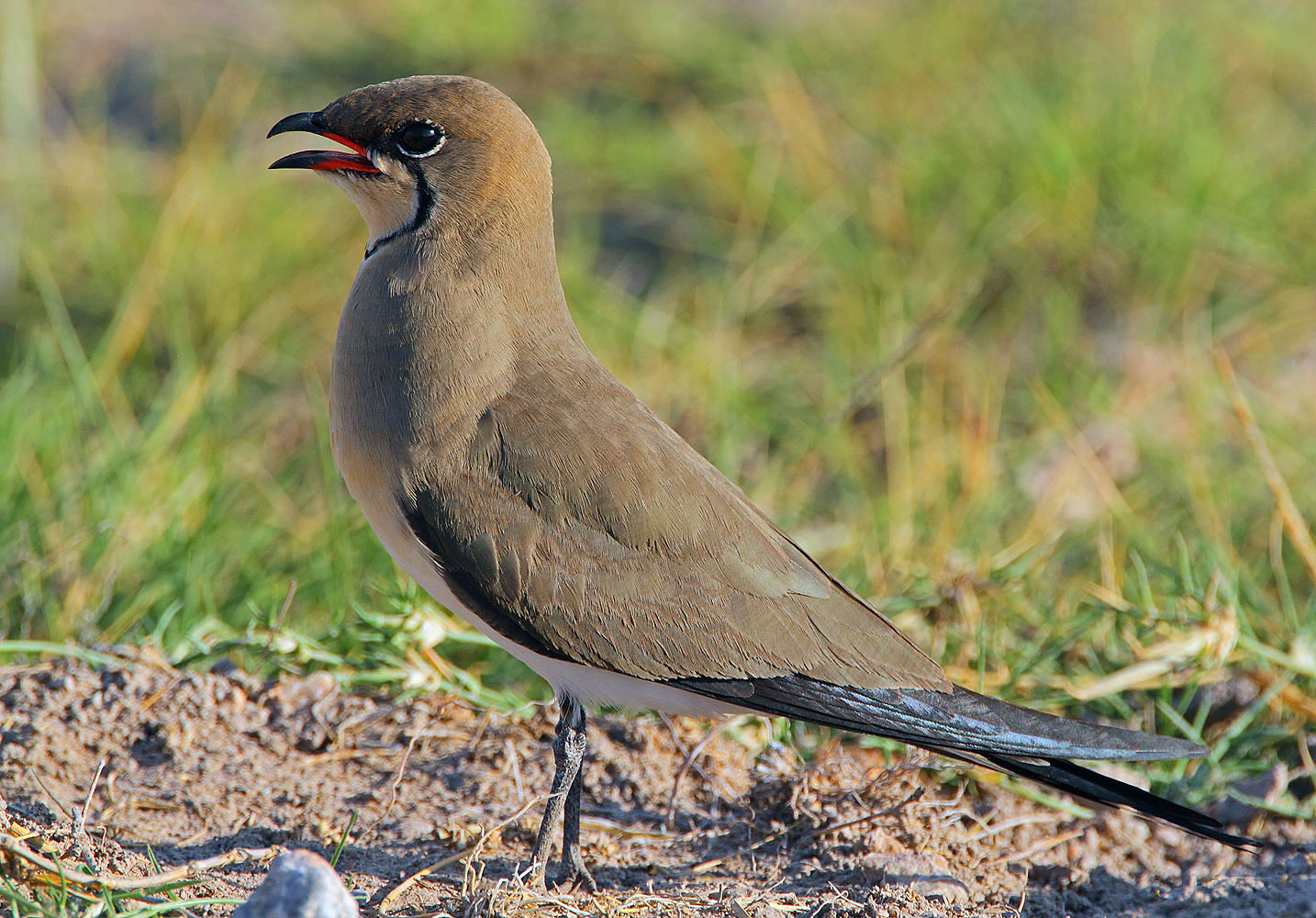
Upperparts uniform olive-brown, breast warm buff-brown, belly white. The throat is creamy yellow and sharply outlined by a thin black band; the short bill is black with a red base, the eye-ring white, the legs short and black. At rest the long tail streamers reach to or beyond the wingtips. In flight the white rump contrasts with the black, deeply forked tail; the underwing is chestnut and a narrow white trailing edge runs along the secondaries. In winter and in juveniles the throat border is faint or spotted.
Confusion species
Black-winged Pratincole (Glareola nordmanni) has a black underwing, no white trailing edge, a darker back and a shorter tail. Oriental Pratincole (Glareola maldivarum), a vagrant in the east, also lacks the white trailing edge and has a shorter tail and a more orange breast. Small Pratincole (Glareola lactea) is much smaller and pale grey, with a white panel on the arm. In flight it may recall a tern such as Whiskered Tern (Chlidonias hybrida), but the brown colour and short bill are distinctive.
Habitat
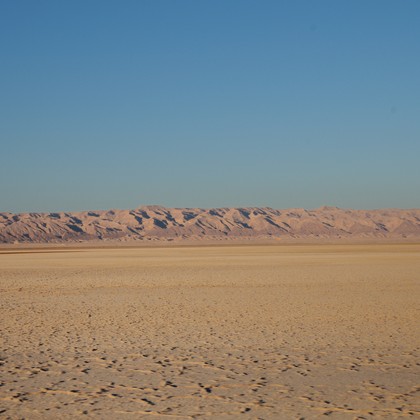
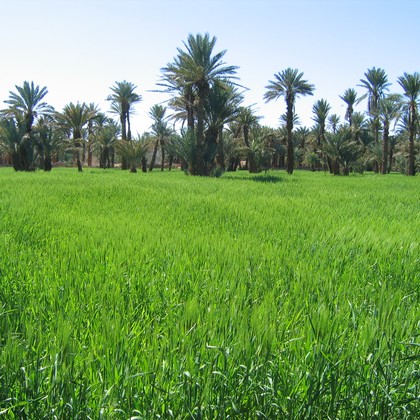
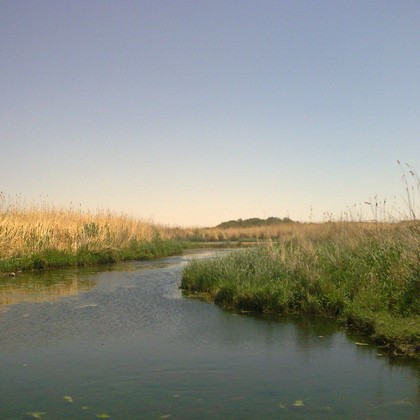
Bare, flat ground near water: drying shores of salt lakes and chotts, sebkha edges, dried-out marshes, fallow and freshly harvested fields, the bunds of rice fields and fishponds. Breeds in loose colonies on bare ground or among low vegetation. Feeds in flight over marshes, grassland and farmland, on passage also over pivot fields and in oases.
Where the bird is most at home, classified by the habitats of North Africa and the Middle East.
Range and movements
In Morocco it breeds mainly in the Atlantic coastal plain (Loukkos, Merja Zerga, Sidi Bou Rhaba) and at the mouth of the Moulouya; in northern Algeria at El Kala and on the chotts of the Hauts Plateaux, in Tunisia around the chotts and lakes of the north and centre, and very locally in Libya. In Egypt it breeds in the Nile Delta (lakes Manzala and Burullus) and along the Nile. In the east it breeds in the Mesopotamian marshes and along the Euphrates and Tigris in Iraq, in Syria (including the Khabur and Euphrates) and scarcely in Israel (Hula and Bet She'an valleys). On passage (March–May, July–October) it appears throughout the region, including Saharan oases and all of Arabia: common in Kuwait and the Emirates, fairly common in western and north-western Saudi Arabia, scarcer in the east; in Kuwait also a scarce summer visitor. Birds from North Africa and the Middle East winter in the Sahel and East Africa; at most a few winter in the region itself. Beyond the region it breeds in southern Europe, Turkey and from Iran to Kazakhstan and Pakistan, and with other subspecies across much of sub-Saharan Africa.
- Resident
- Summer visitor (c. Apr–Sep)
- Winter visitor (c. Oct–Mar)
- Passage (Mar–Apr, Oct–Nov)
- dark = core range, pale = thinly spread
How and when to look
In May and June over Merja Zerga and the Loukkos plain (Morocco) or the chotts of Tunisia, an hour before sunset, when the flocks start hunting. In the Gulf the Sulaibiya pivot fields (Kuwait) and the grasslands and pivot fields of the Emirates are good for flocks of migrants in April and August–September; check them in flight for the white trailing edge and the underwing.
Conservation status
Not globally threatened, but locally declining in the region through drainage of marshes and chotts, conversion of breeding grounds to fields, disturbance and insecticide use. In Israel it has become a scarce breeder; in Iraq it has benefited from the restoration of the Mesopotamian marshes.
Scientific name
Glareola pratincola | (Linnaeus, 1766)
Linnaeus described the species in 1766 as Hirundo Pratincola; because it was later moved to another genus, the author and year stand in brackets. The genus Glareola was introduced in 1760 by Brisson. Glareola is a Latin diminutive of glarea 'gravel', after the bare gravelly ground where pratincoles nest. pratincola means 'meadow-dweller', from Latin pratum 'meadow' and incola 'inhabitant'. The specimen the first description was based on came from Austria.