All species › Passerines › Chats and flycatchers › Semicollared Flycatcher
Semicollared Flycatcher | Ficedula semitorquata
Balkanvliegenvanger | Papamoscas semicollarino
The Semicollared Flycatcher is the most easterly of the black-and-white flycatchers. It breeds from the Balkans to Iran and migrates via the Middle East to East Africa; in the region it is seen mainly in early spring, when males in full breeding plumage pass through the Levant and Arabia.
Voice
Migrants give a short, rasping tsrr or a soft, rising tchip. The song, also heard from migrants in spring, is a short phrase of thin, high, squeezed notes, slower and thinner than that of European Pied Flycatcher.
Recording: Stanislas Wroza — CC BY-NC-SA 4.0 · shortened to the first 60 s, mono · xeno-canto
Identification
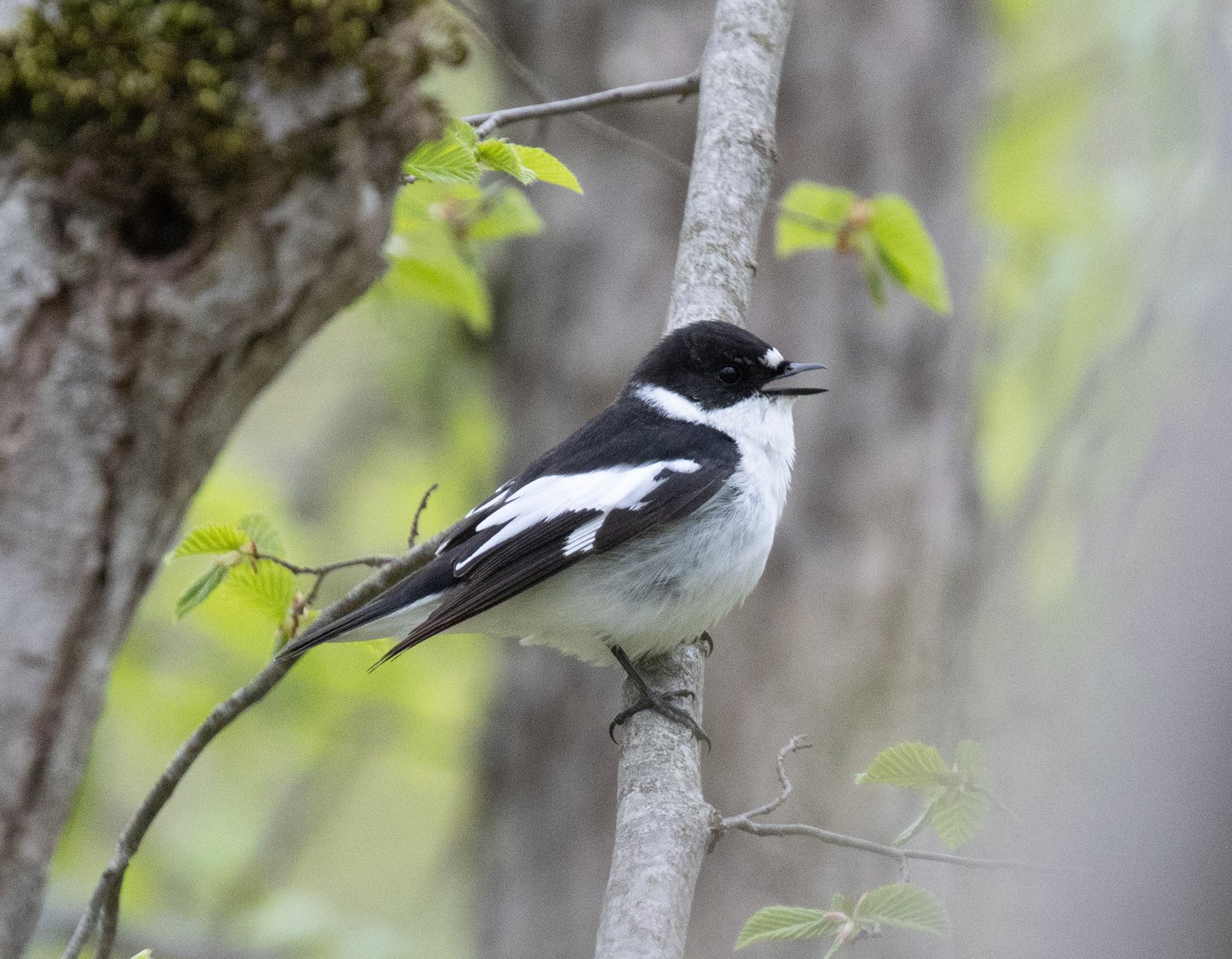
12–13.5 cm. Build and behaviour as European Pied Flycatcher. The spring male is black above and white below; check four features. First the neck: a white half collar running up the side of the neck from the throat and stopping halfway, so the nape stays black. Second the wing: besides the large white patch on the secondaries and primary base, a second, separate white bar across the tips of the median coverts. Third a greyish-white rump, smaller than in Collared Flycatcher. Fourth much white at the base of the outer tail feathers. The female is grey-brown above and off-white below, usually greyer than a female European Pied Flycatcher, also with a narrow second wing bar and a pale primary patch.
Confusion species
Collared Flycatcher (Ficedula albicollis) has a complete white collar encircling the nape, a larger white rump and no or hardly any second wing bar. European Pied Flycatcher (Ficedula hypoleuca) and Atlas Pied Flycatcher (Ficedula speculigera) have no white on the side of the neck and no white median coverts. Moulting males and females of the three species are very close and need good photographs of wing, neck and rump; hybrids with Collared Flycatcher occur.
Habitat
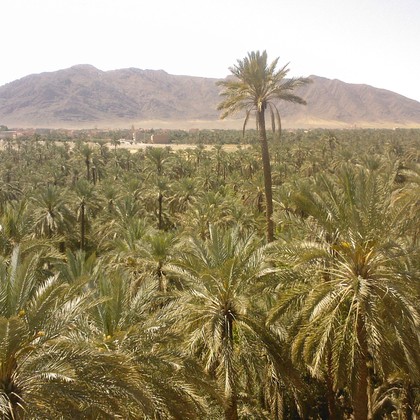
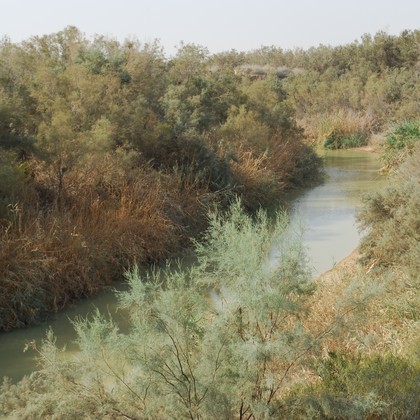
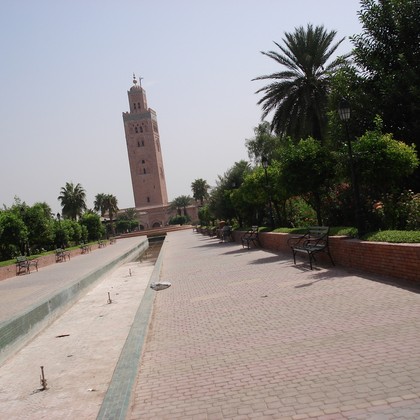
On passage any area with trees or bushes: oases, date-palm gardens, acacia wadis, kibbutz gardens, parks and tamarisk thickets, even small green spots in the middle of the desert. Outside the region it breeds in deciduous oak and hornbeam forest on mountain slopes.
Where the bird is most at home, classified by the habitats of North Africa and the Middle East.
Range and movements
In spring a regular passage migrant in Israel (mainly in the Arava and at Eilat, late March – mid-April), Jordan, Sinai, Lebanon and Syria. Also through Iraq and Kuwait, where it is regular in spring, and through western Saudi Arabia (including Tabuk); in the UAE, Qatar, Bahrain and Oman a scarce spring migrant, mainly in late March and early April. In Egypt scarce, mainly in Sinai and along the Red Sea. Much less often seen in autumn, when birds cross the region in a single flight. Further west, in Libya and the Maghreb, a vagrant. No confirmed breeding record from the region is known. Beyond the region it breeds in the southern Balkans, Turkey, the Caucasus and northern Iran, and winters in East Africa.
- Summer visitor (c. Apr–Sep)
- Passage (Mar–Apr, Oct–Nov)
- dark = core range, pale = thinly spread
How and when to look
In late March and early April search the kibbutz gardens and acacia wadis of the Arava and Eilat, or the parks of Kuwait, for black-and-white flycatchers and view each male from the side: the white half collar and the second wing bar then show well. After a night of southerly winds dozens may be present at once.
Conservation status
Not globally threatened; formerly considered Near Threatened, but the population in Turkey and the Caucasus turned out to be larger than thought. On the breeding grounds it suffers from the felling of old deciduous forest. On migration it depends on oases and green stopover sites in the desert.
Scientific name
Ficedula semitorquata | (Homeyer, 1885)
Homeyer described the species in 1885 as Muscicapa semitorquata; because it was later moved to another genus, the author and year stand in brackets. The genus Ficedula was introduced in 1760 by Brisson. Ficedula is Latin for a small fig-eating bird, from ficus 'fig'; it was believed to turn into the blackcap in winter. semitorquata is Latin for 'half-collared', from semi- 'half' and torquatus 'collared', after the interrupted white collar. The specimen the first description was based on came from the Caucasus.