All species › Tropicbirds › Tropicbirds › Red-Billed Tropicbird
Red-Billed Tropicbird | Phaethon aethereus
Roodsnavelkeerkringvogel | Rabijunco etéreo
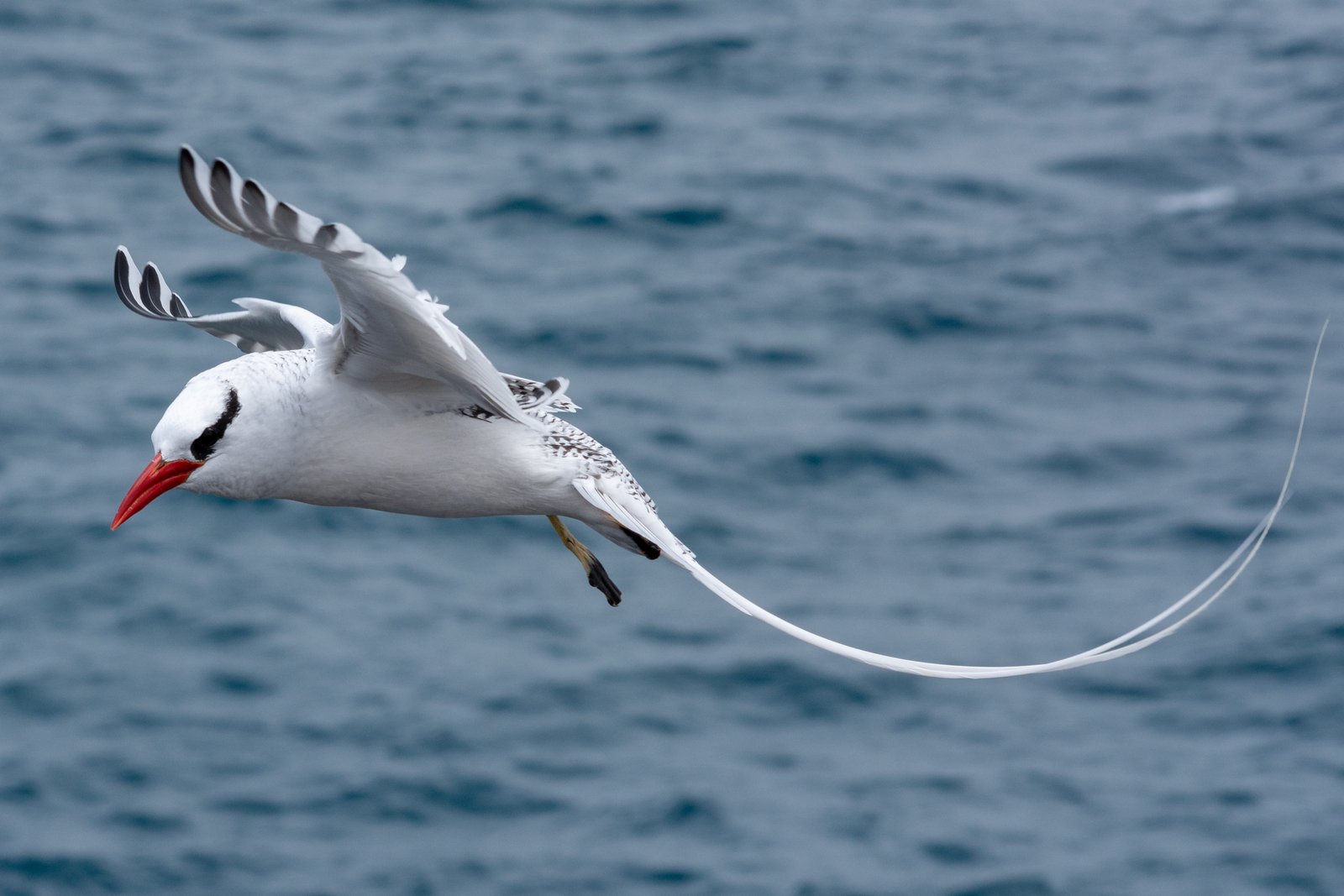
A satin-white seabird with a coral-red bill and two long white tail streamers, which in the region breeds on bare rocky islands from the Red Sea to the Gulf of Oman. The Arabian form indicus is treated by some authors as a separate species; Socotra and the islands off Oman hold internationally important populations.
Voice
Usually silent at sea. At the colony a shrill, rasping scream, kreee-krrr-krrr, running into a fast rattle, often from two or three birds chasing in arcs along the cliffs.
Recording: Jesse Fagan — CC BY-NC-SA 4.0 · converted to mono · xeno-canto
Identification
With streamers 90–105 cm, without about 46–50 cm. White with fine, dense black barring on the mantle, back and upperwing coverts, so the upperparts look greyish at range. A black eye-stripe runs back from the eye. The outer primaries form a black wedge at the wingtip. The bill is bright red, more orange-red in the Arabian form indicus, which is also slightly smaller. Immatures lack streamers, have a yellowish bill with a dark tip and are more coarsely barred. Flies high over the sea with fast, pigeon-like beats and short glides, plunging into the water from a great height.
Confusion species
White-tailed Tropicbird (Phaethon lepturus), a vagrant in the region, is smaller and slimmer, with an unbarred white back, a yellow-orange bill and a broad black diagonal bar across the inner wing. A bird without streamers can recall a large tern at range, such as Greater Crested Tern (Thalasseus bergii), but that has a yellow bill, a crest and a looser, deeper wingbeat. Immature tropicbirds are very similar; check the barring of the back and the head and neck pattern.
Habitat
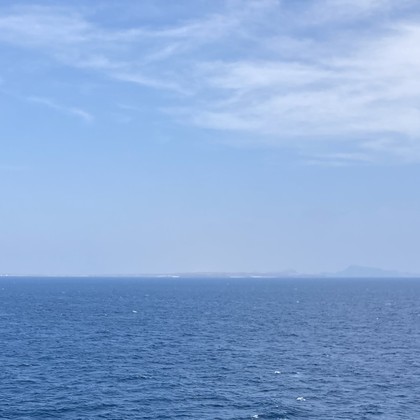
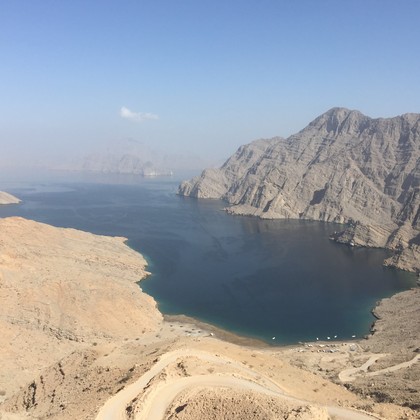
Warm open sea, often far offshore; breeds in crevices and under overhanging rocks on steep coasts and bare islands. Feeds by plunge-diving for flying fish and squid.
Where the bird is most at home, classified by the habitats of North Africa and the Middle East.
Range and movements
Breeds on islands in the southern Egyptian Red Sea, on the Saudi and Yemeni Red Sea islands (including the Farasan Islands), in Yemen along the Gulf of Aden and on the Socotra archipelago, and in Oman on the islands off Muscat (Fahal), the Daymaniyat Islands, the Hallaniyat Islands and in Musandam; in small numbers also on islands off the Emirates. Beyond these at sea in the Gulf of Oman and Arabian Sea; scarce in the Persian Gulf itself, with vagrants to Qatar and Kuwait. A rare summer visitor in the Gulf of Aqaba, mainly in June and July: over twenty records in Israel (Eilat), also at Aqaba in Jordan. In the Atlantic, birds of the Cape Verde form mesonauta wander to waters off Western Sahara and very rarely Morocco. Beyond the region it breeds in the tropical eastern Pacific, the Caribbean, the tropical Atlantic and the north-western Indian Ocean to the Iranian coast.
- Resident
- Summer visitor (c. Apr–Sep)
- Winter visitor (c. Oct–Mar)
- Passage (Mar–Apr, Oct–Nov)
- dark = core range, pale = thinly spread
How and when to look
From Muscat, boats run to Fahal Island and the Daymaniyat Islands, where tropicbirds circle the cliffs year-round. On Socotra they are easily seen from the coast at rocky headlands. At Eilat it pays to scan the gulf from North Beach in June and July.
Conservation status
Not globally threatened, but the population is small and probably declining. In the region threatened by rats and cats on breeding islands, disturbance, oil pollution and bycatch; the colonies on Socotra and off Oman are the most important.
Scientific name
Phaethon aethereus | Linnaeus, 1758
Linnaeus described the species in 1758 and placed it straight away in the genus where it still stands. He introduced the genus Phaethon in that same work. Phaethon goes back to the Greek phaethon 'sun, the shining one'. aethereus is Latin for 'heavenly', from aether 'the high, clear air'. The specimen the first description was based on came from Ascension Island.