All species › Waders, gulls and terns › Gulls and terns › Iceland Gull
Iceland Gull | Larus glaucoides
Kleine burgemeester | Gaviota polar
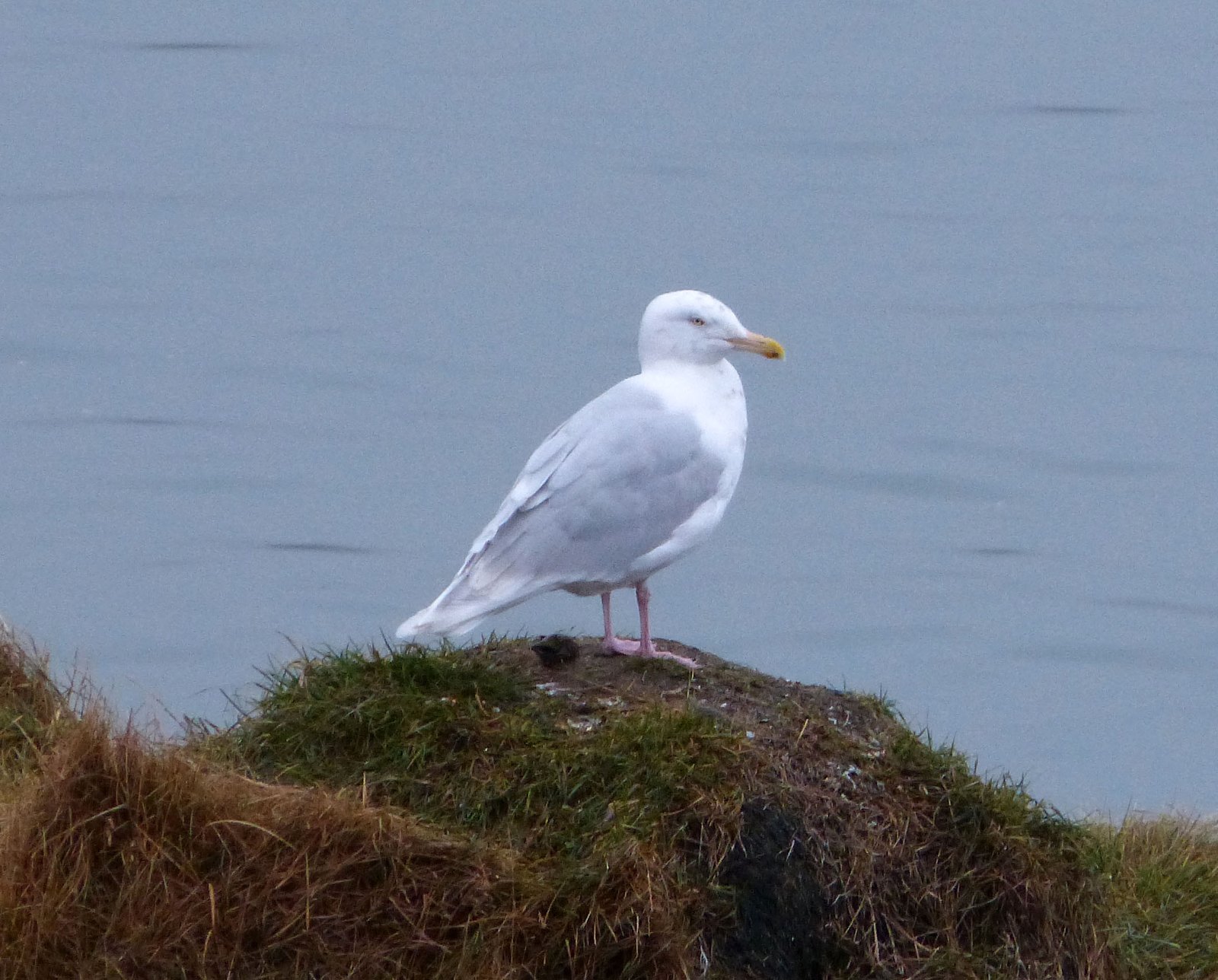
A pale, slim gull of Greenland and north-east Canada, the slender counterpart of Glaucous Gull. In the region it is a very rare vagrant, so far recorded almost only in Morocco, with about fifteen records.
Voice
Higher and thinner than European Herring Gull; vagrants are almost always silent, at most a short kyow when squabbling over food.
Recording: Frank Roos — CC BY-NC-SA 4.0 · converted to mono · xeno-canto
Identification
Adults have a pale grey mantle and white primaries; in the Canadian form kumlieni the outer primaries have grey to grey-brown markings. The bill is fairly short, yellow with a red gonys spot, the eye yellow to dark and the orbital ring purplish red; the legs are pink. In winter the head is heavily brownish streaked. First-years are creamy white to pale buff with fine, mottled markings, white primaries and a mostly dark bill with a paler base. The build is slim: round head, gentle expression and long wingtips projecting well beyond the tail.
Confusion species
Glaucous Gull (Larus hyperboreus) is larger and heavier, with a long, thick bill, a flat head and short primary projection; first-years have a pink bill with a sharply cut-off black tip. Worn or leucistic European Herring Gulls (Larus argentatus) and Yellow-Legged Gulls (Larus michahellis) can also show pale wingtips, but are more heavily built and have dark primary shafts. A bird with grey markings in the wingtip (kumlieni) calls for good photos of the spread wing.
Habitat
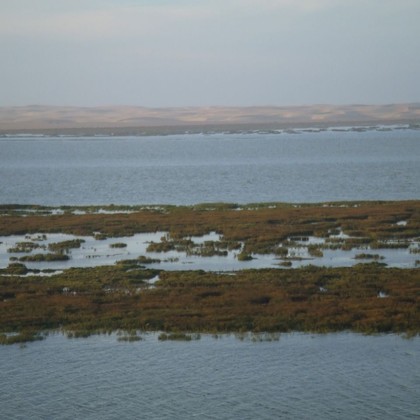
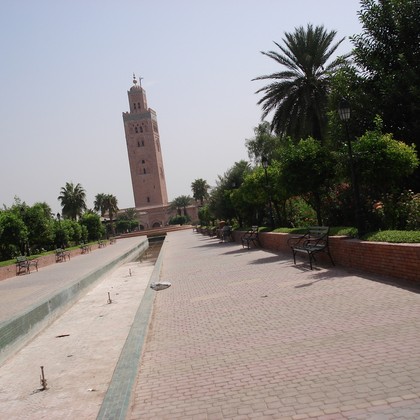
Harbours, estuaries, lagoons and beaches, where it joins flocks of large gulls and looks for fish waste.
Where the bird is most at home, classified by the habitats of North Africa and the Middle East.
Range and movements
In Morocco a very rare vagrant: by 2018 the tally stood at twelve records, among others at Essaouira (2008 and late March–April 2018), in the Souss-Massa, at Khnifiss lagoon and Akhfennir (February 2018) and Tarfaya. Later records came from the Mediterranean coast at Belyounech (2021) and Merja Zerga near Moulay Bousselham (2022); in 2017 one was at Ceuta. There are no certain records from the rest of the region. Beyond it, the nominate form breeds in Greenland and kumlieni in north-east Canada; they winter in the North Atlantic, from Iceland, Norway and the British Isles to north-east North America, sporadically to southern Europe.
How and when to look
Chances are best in January–April in the fishing harbours and lagoons of Morocco's Atlantic coast, often together with other northern vagrant gulls. Look at the structure: a pale gull with a round head and long wingtips, smaller than the surrounding Yellow-Legged Gulls.
Conservation status
Not globally threatened. In the region a very rare vagrant, recorded just over ten times in Morocco since the start of this century, nearly always in winter.
Scientific name
Larus glaucoides | Meyer, 1822
Meyer described the species in 1822 and placed it straight away in the genus where it still stands. The genus Larus was introduced in 1758 by Linnaeus. Larus is Latin, from Ancient Greek laros, and appears to have referred to a gull or another large seabird. glaucoides means 'resembling Larus glaucus', an old name for the glaucous gull; the suffix -oides is Ancient Greek for 'resembling'. The specimen the first description was based on came from Iceland.