All species › Waders, gulls and terns › Plovers and lapwings › Little Ringed Plover
Little Ringed Plover | Thinornis dubius
Kleine plevier | Chorlitejo chico
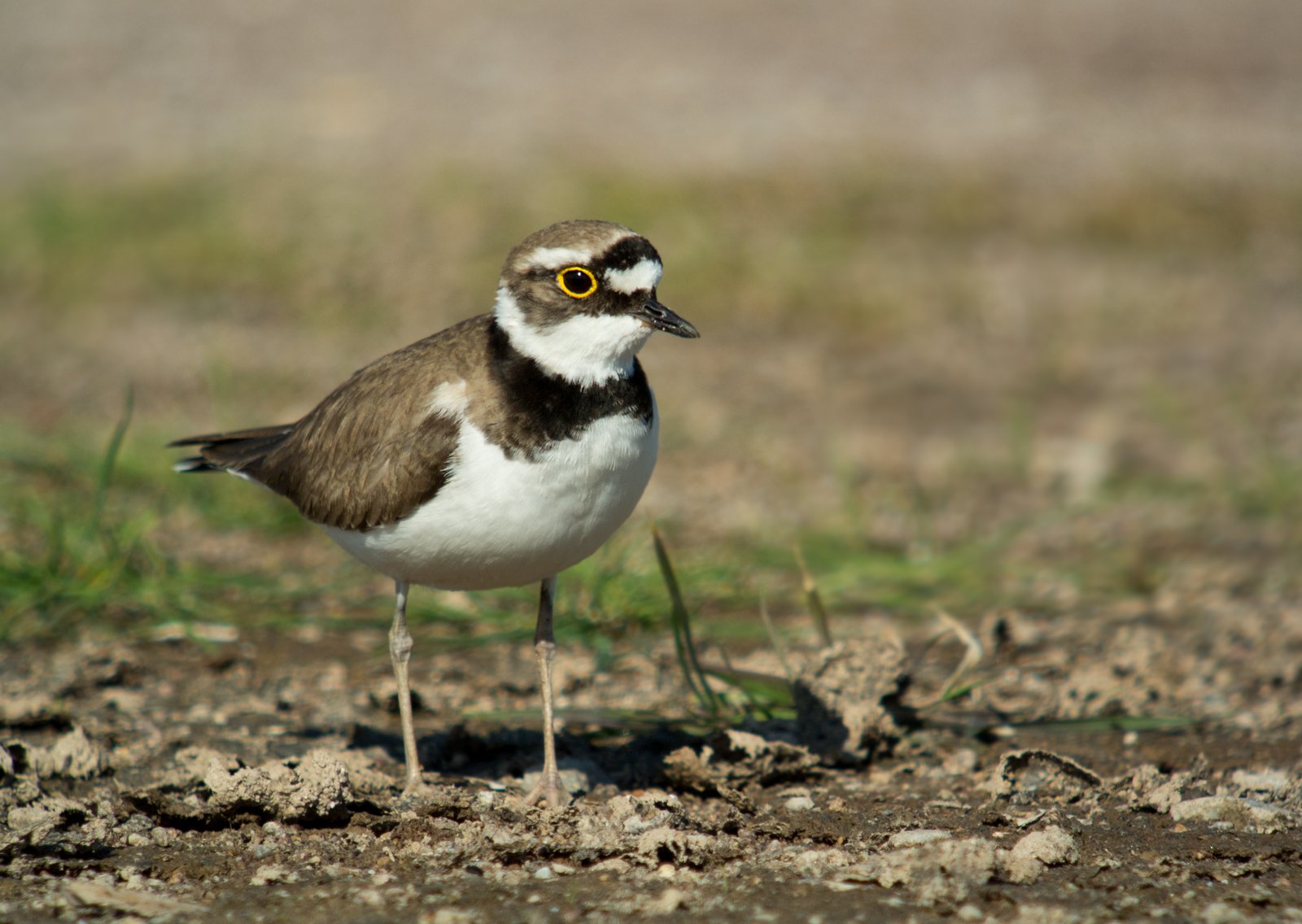
The smallest and slimmest ringed plover of the region, recognised by its bright yellow eye-ring. It breeds on shingle banks, in wadis with water and on bare man-made sites from Morocco to Iraq and locally in Arabia, and migrates in large numbers through the whole region to Africa south of the Sahara.
Voice
A clear, falling pee-oo or chew, often in flight; in display flight a rasping, repeated kree-kree-kree or pree-pree-pree, while the bird flies around with slow wingbeats.
Recording: Beatrix Saadi-Varchmin — CC BY-NC-SA 4.0 · converted to mono · xeno-canto
Identification
Small and slim, with a rather long rear end and a round head. Upperparts sandy brown, underparts white, with a narrow black breast band, a black mask and a black band across the forehead, above a narrow white line separating the brown crown. The bright yellow eye-ring stands out. The thin bill is black, sometimes with a little yellow at the base of the lower mandible; the legs are flesh-coloured to dull yellow. Juveniles are browner, with a broken brown breast band, a faint yellow eye-ring and a buffish face without a white forehead band. In flight: no white wing bar.
Confusion species
Common Ringed Plover (Charadrius hiaticula) is larger and stockier, with an orange bill base, orange legs, a narrow or no eye-ring and a broad white wing bar. Kentish Plover (Anarhynchus alexandrinus) is paler, with black patches only on the breast sides and black legs. Juvenile Little Ringed Plovers resemble juvenile Common Ringed Plovers, but lack the wing bar and pale supercilium and have a narrower head and bill.
Habitat
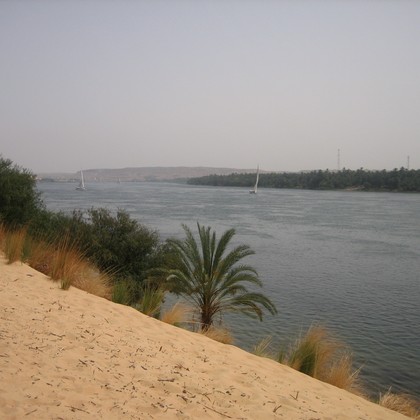
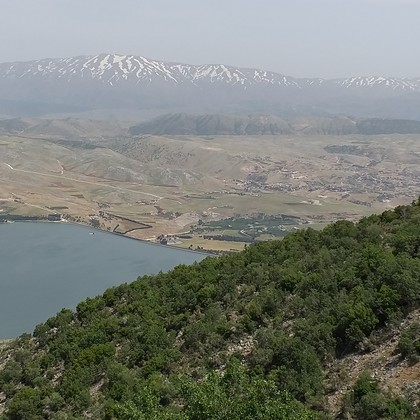
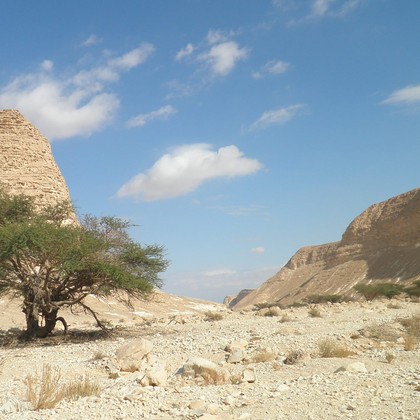
Bare shingle and sandy banks of rivers and wadis with water, reservoirs, gravel and sand pits, fish ponds, sewage ponds, irrigation pools and the edges of salt pans. On passage also at oases and temporary rain pools in the desert. Less on coastal mudflats than other plovers.
Where the bird is most at home, classified by the habitats of North Africa and the Middle East.
Range and movements
Breeds in northern Morocco and the Atlas (rivers, Oued Massa, the Moulouya and reservoirs), northern Algeria, Tunisia, locally in northern Libya and in the Nile Valley and Delta. In the east in Israel, Lebanon, Syria, Jordan and Iraq, and in small numbers in Kuwait, eastern Saudi Arabia (including near Jubail) and the Emirates. On passage throughout the region, also deep in the Sahara and the Arabian interior. In winter in small numbers in the Nile Valley, southern Arabia, Yemen and Oman. Beyond the region it breeds from Europe and north-west Africa to Japan, with separate populations in India and New Guinea; it winters mainly in Africa south of the Sahara and in South and South-East Asia.
- Resident
- Summer visitor (c. Apr–Sep)
- Winter visitor (c. Oct–Mar)
- Passage (Mar–Apr, Oct–Nov)
- dark = core range, pale = thinly spread
How and when to look
In March and April many are found at the fish ponds of the Jordan Valley and Beit She'an Valley and at Eilat; breeding birds can be seen in May–June along Moroccan rivers such as the Oued Massa and the Moulouya. In the breeding season watch for the butterfly-like display flight over shingle banks.
Conservation status
Not globally threatened. It benefits from bare man-made sites such as pits, reservoirs and sewage works, but loses natural shingle banks to river regulation, water abstraction and disturbance.
Scientific name
Thinornis dubius | (Scopoli, 1786)
Scopoli described the species in 1786 as Charadrius dubius; because it was later moved to another genus, the author and year stand in brackets. The genus Thinornis was introduced in 1845 by Gray. Thinornis is Greek, from this, thinos 'beach, sandbank' and ornis 'bird'. dubius is Latin for 'doubtful': it was doubted whether the bird was more than a variety of the common ringed plover. The specimen the first description was based on came from Luzon, Philippines.