All species › Pelicans, herons and ibises › Herons and bitterns › Little Bittern
Little Bittern | Botaurus minutus
Woudaapje | Avetorillo común
The smallest heron of the region, a shy inhabitant of reeds and waterside vegetation that occurs mainly as a summer visitor and passage migrant. It breeds from Morocco to Iraq and along the Nile, and migrates through the entire region in spring and autumn, including deserts and oases.
Voice
In the breeding season the male, often at night, gives a low, short barking wuh, repeated about every two seconds for long periods. When flushed a short, hoarse kerr or kek.
Recording: Julien Bottinelli — CC BY-NC-SA 4.0 · converted to mono · xeno-canto
Identification
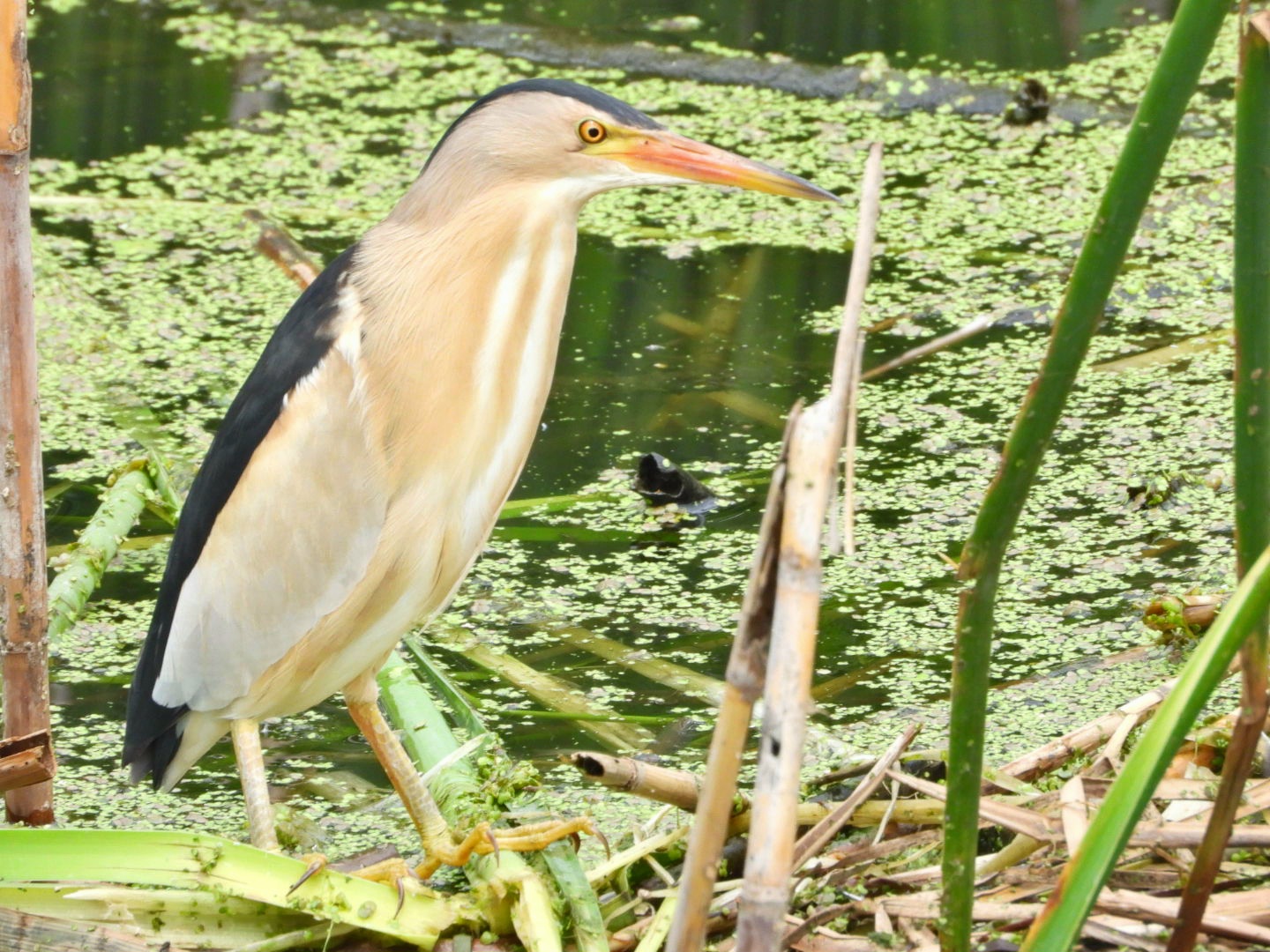
Small and compact, barely larger than a Moorhen. The male has a black crown and back, a large cream to buffy wing patch and pale, finely streaked underparts; in flight the pale wing patch contrasts sharply with the black flight feathers. The female is browner, with a brown-streaked back and a less contrasting wing patch. Juveniles are heavily streaked brown. It clambers nimbly through reeds and, like the Eurasian Bittern, freezes in an upright posture.
Confusion species
Yellow Bittern (Botaurus sinensis) of the Egyptian Red Sea mangroves resembles the female in particular, but the male has a sandy-brown rather than black back, and in flight the black primaries and tail contrast more strongly with the pale coverts. Squacco Heron (Ardeola ralloides) is larger, ochre with white wings. Juvenile Black-crowned Night-Heron (Nycticorax nycticorax) is much larger and grey-brown with white spots. Striated Heron (Butorides striata) is greyer and lacks the pale wing patch.
Habitat
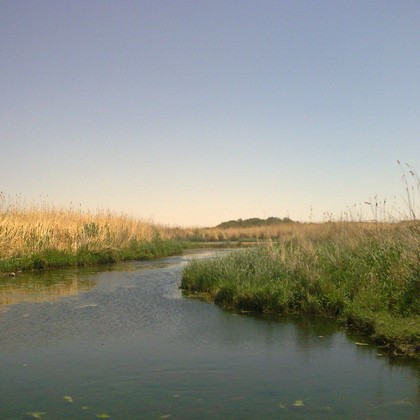
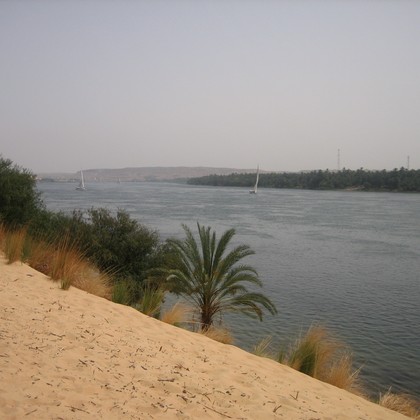
Reedbeds, bulrush and papyrus marshes, overgrown banks of rivers, irrigation canals, fishponds and sewage ponds; in Arabia also mangroves and reeds along wastewater lakes. On passage in oases, gardens and any bush near water, sometimes deep in the desert.
Where the bird is most at home, classified by the habitats of North Africa and the Middle East.
Range and movements
Breeds in northern Morocco and the Atlantic plain, northern Algeria, Tunisia and locally in Libya; in Egypt along the Nile, in the Delta and the Faiyum, where some are present year-round. In the Middle East it breeds in Israel (including the Hula, Beit She'an and the coastal plain), Lebanon, Syria, Jordan and Iraq (mainly the southern marshes), and locally in Saudi Arabia, for example in the mangroves at Thuwal on the Red Sea. In April–May and August–October it migrates on a broad front through the whole region, including across the Sahara and the Arabian Peninsula, with regular records in Kuwait, the Gulf states, Oman and Yemen. Beyond the region it breeds from Europe to western Siberia and India and in sub-Saharan Africa; Palearctic birds winter in tropical Africa.
- Resident
- Summer visitor (c. Apr–Sep)
- Winter visitor (c. Oct–Mar)
- Passage (Mar–Apr, Oct–Nov)
- dark = core range, pale = thinly spread
How and when to look
In May and June, search at dusk along the reed edges of fishponds in Israel or in the Nile Delta for males fluttering low over the reeds from one stand to the next. On passage they turn up unexpectedly in oases and small parks; at Eilat and in the Arava they regularly sit in bushes by pools and ditches in spring.
Conservation status
Not globally threatened, but numbers in Europe fluctuate strongly and have fallen locally through loss of reedbeds and drought in the African winter quarters. In the region it is threatened by drainage and the cutting or burning of reeds; wastewater lakes and fishponds provide new habitat.
Scientific name
Botaurus minutus | (Linnaeus, 1766)
Linnaeus described the species in 1766 as Ardea minuta; because it was later moved to another genus, the author and year stand in brackets. The genus Botaurus was introduced in 1819 by Stephens. Botaurus is Medieval Latin for a bittern; the word combines Latin bos 'ox' with taurus 'bull', after the booming call (compare butire 'to boom'). minutus is Latin for 'small': this is the smallest heron in Europe. The specimen the first description was based on came from Switzerland.