All species › Birds of prey › Hawks, eagles and kites › Imperial Eagle
Imperial Eagle | Aquila heliaca
Keizerarend | Águila imperial oriental
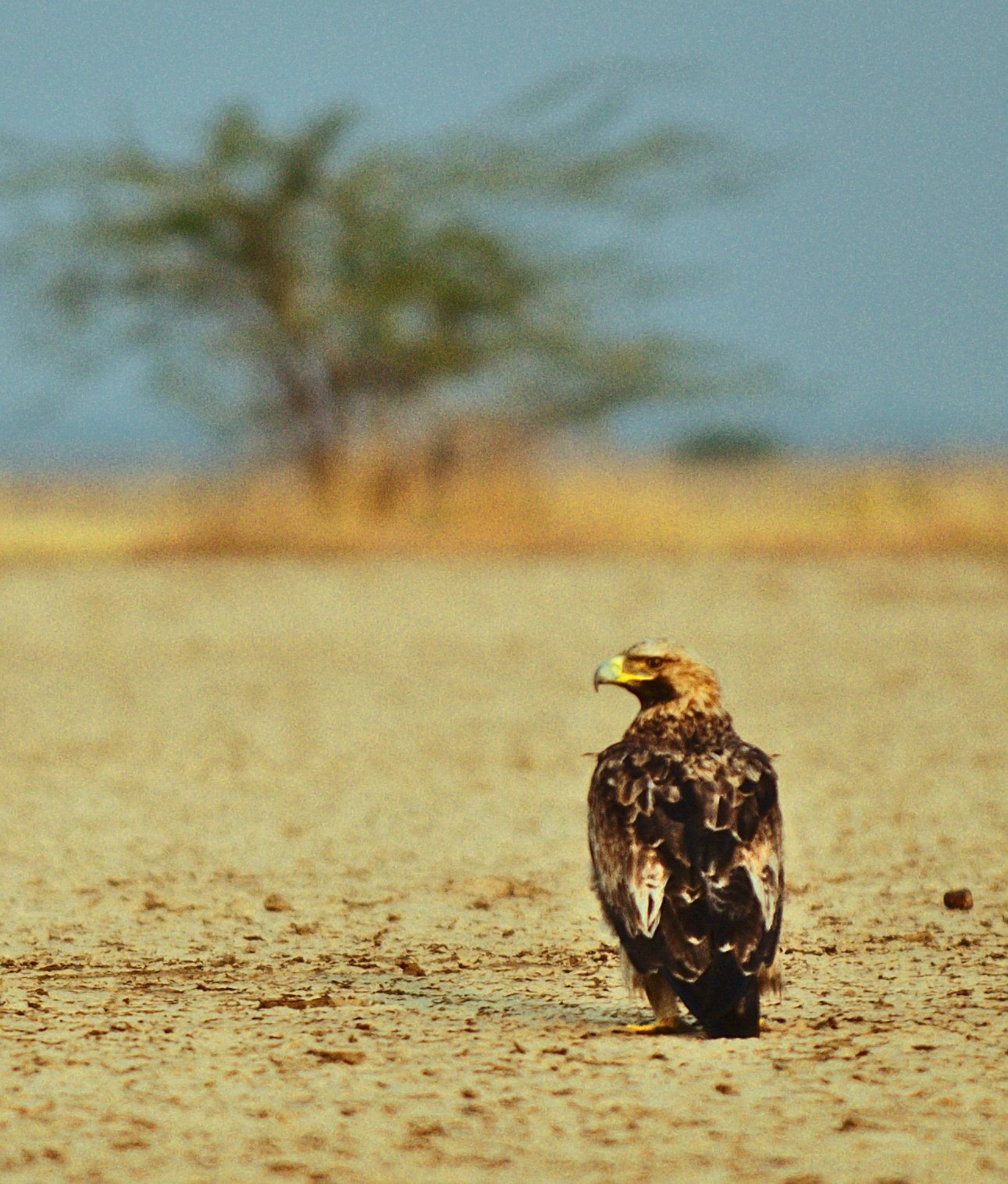
The Imperial Eagle is a large, stately eagle of open steppe and farmland that breeds in south-eastern Europe and Central Asia and winters in the Middle East and Arabia. It likes to sit for hours on a pylon or an isolated tree and in winter is a regular sight at rubbish dumps, camel farms and broad agricultural plains.
Voice
Almost silent in winter. On the breeding grounds a deep, barking owk-owk-owk.
Recording: David Darrell-Lambert — CC BY-NC-SA 4.0 · converted to mono · xeno-canto
Identification
72–83 cm, wingspan 180–215 cm. The adult is blackish-brown with a pale golden-buff crown and nape, two white patches on the scapulars and a pale grey tail base with a broad black terminal band. In flight long, fairly parallel-edged wings held flat or slightly arched, a uniformly dark underwing and a fairly long, square tail; the head projects well. The juvenile is sandy to pale brown with a finely streaked breast and coverts, white tips to the greater coverts forming wingbars, a pale window in the inner primaries and a pale lower back. Adult after four to five years; immatures are blotchy brown and buff.
Confusion species
Adult Spanish Eagle (Aquila adalberti) has a white leading edge to the wing, and the juvenile is unstreaked rufous-sandy. Golden Eagle (Aquila chrysaetos) has a longer tail, an S-curved trailing edge, holds its wings in a V and lacks the white scapular patches. Juvenile Steppe Eagle (Aquila nipalensis) is unstreaked, with a broad white band across the underwing. Tawny Eagle (Aquila rapax) and Greater Spotted Eagle (Clanga clanga) are smaller and lack the streaking of the young Imperial Eagle.
Habitat
In winter open country with scattered trees or pylons: steppe and semi-desert, irrigated farmland and broad valleys, often near rubbish dumps, camel and poultry farms and wetlands with many waterbirds. Hunts ground squirrels, voles, hares, coots and ducks and takes much carrion. Pylons are favourite lookouts, but also a major cause of death.
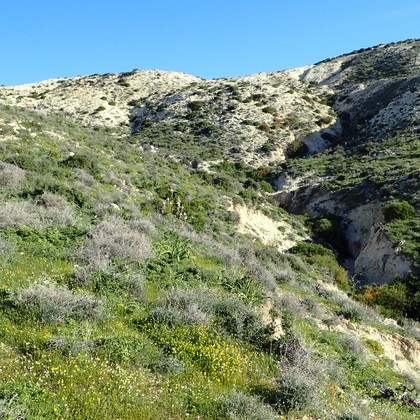
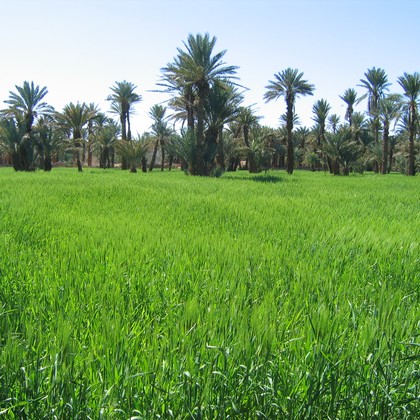
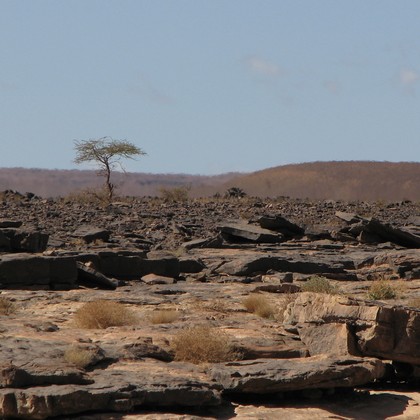
Where the bird is most at home, classified by the habitats of North Africa and the Middle East.
Range and movements
Winters in small numbers but widely in Saudi Arabia (mainly the east and the central interior), Kuwait, Bahrain, Qatar, the UAE and Oman (including the Jiddat al-Harasis and Dhofar), scarcer in Yemen. In Israel a few dozen winter in the northern valleys, the Negev and the Arava; also in Jordan, Syria and Iraq. Passage migrant along the Gulf of Suez and at Eilat, mainly late October – November and March. In Egypt scarce in the Nile Delta and Nile Valley; further west rare in Libya and a vagrant to Tunisia, Algeria and Morocco. Breeds from the Balkans and Turkey through the Caucasus and Kazakhstan to Lake Baikal.
- Resident
- Summer visitor (c. Apr–Sep)
- Winter visitor (c. Oct–Mar)
- Passage (Mar–Apr, Oct–Nov)
- dark = core range, pale = thinly spread
How and when to look
In winter check the rubbish dumps and camel farms of inland Oman and the UAE or the farming valleys of northern Israel, and scan the pylons. A bird with white scapular patches and a two-toned tail is an adult Imperial Eagle; a pale, streaked eagle with wingbars is a juvenile.
Conservation status
Vulnerable. The world population is small and threatened by electrocution on medium-voltage poles, poisoning, shooting and loss of nest trees. In the Arabian wintering areas eagles die every year on unsafe power poles.
Scientific name
Aquila heliaca | de Savigny, 1809
De Savigny described the species in 1809 and placed it straight away in the genus where it still stands. The genus Aquila was introduced in 1760 by Brisson. Aquila is Latin for 'eagle', possibly from aquilus 'dark in colour'. heliaca is Greek for 'of the sun', from hēlios 'sun'. The specimen the first description was based on came from Upper Egypt.