All species › Birds of prey › Hawks, eagles and kites › Gabar Goshawk
Gabar Goshawk | Micronisus gabar
Gabarhavik | Gavilán gabar
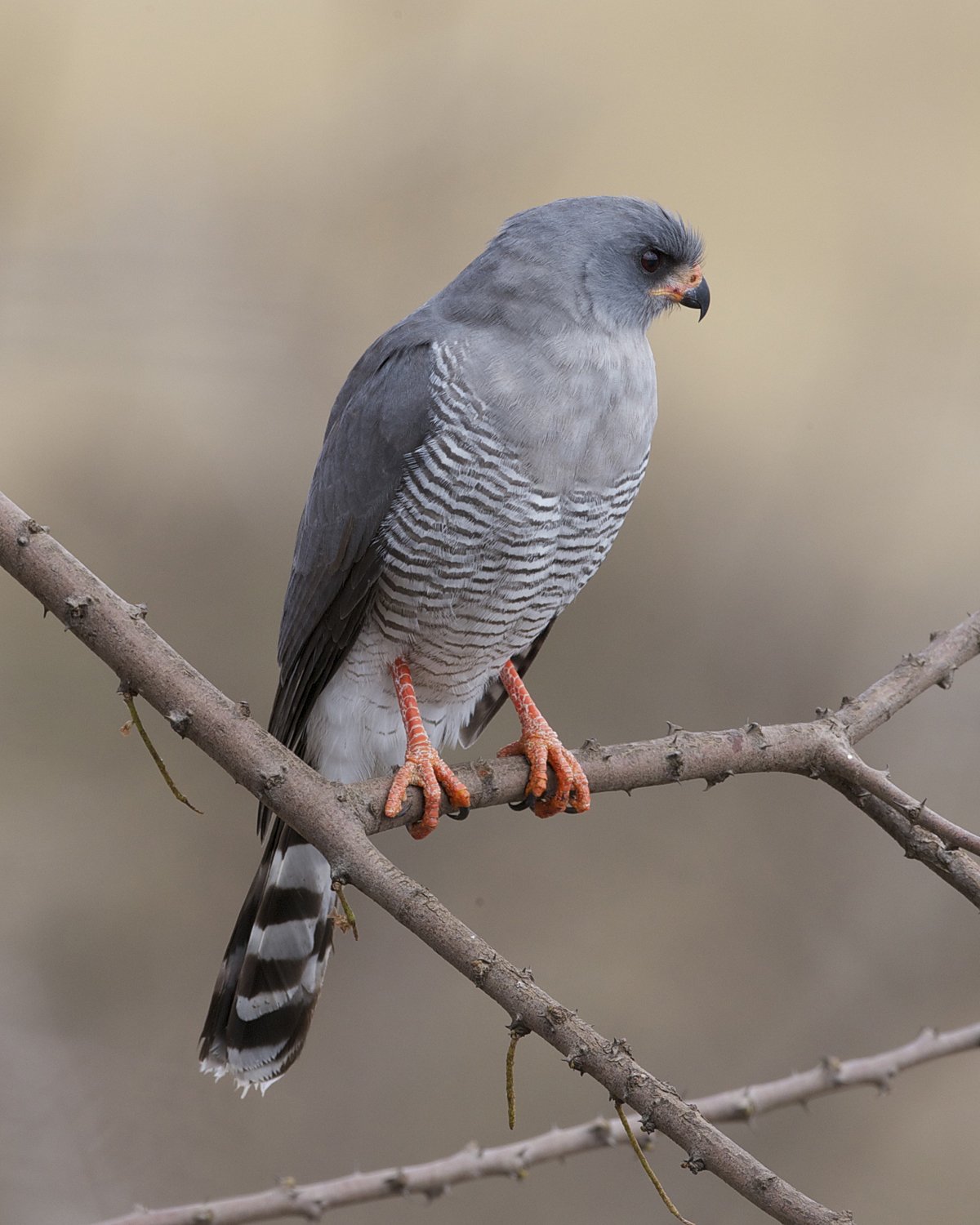
The Gabar Goshawk is a small, grey hawk of African savannas with long red legs and a conspicuous white rump. In the region it occurs only in south-western Arabia, as a scarce and little-noticed resident of acacia woodland and wooded farmland in Yemen and south-western Saudi Arabia.
Voice
A high, fast, rising kee-kee-kee-kee-kee, mainly in the breeding season; also a plaintive peee-u.
Recording: David Darrell-Lambert — CC BY-NC-SA 4.0 · converted to mono · xeno-canto
Identification
28–36 cm, wingspan 55–65 cm. The adult has grey upperparts, head and breast, finely grey-and-white barred belly and a bright white rump that stands out at once in flight. The cere and long legs are orange-red, the eye dark reddish-brown. The tail is grey with three to four broad blackish bars; the wings are short and rounded, with barred flight feathers and a white trailing edge to the arm. There is a black morph, wholly black with barred flight feathers and tail and red legs, but without a white rump. The juvenile is brown with a streaked breast, a rufous-barred belly and also a white rump.
Confusion species
Shikra (Tachyspiza badia) lacks the white rump and has paler, finely rufous-barred underparts and an unbarred central tail feather. Levant Sparrowhawk (Tachyspiza brevipes) is a passage migrant with dark wingtips and also lacks the white rump. Dark Chanting Goshawk (Melierax metabates) is very similar in colour, but much larger, with a finely barred rump and an upright posture.
Habitat
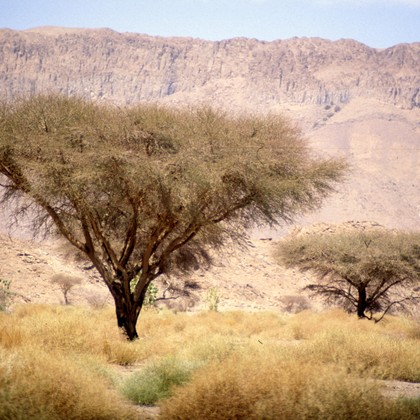
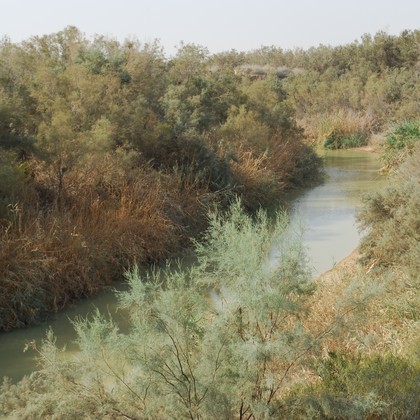
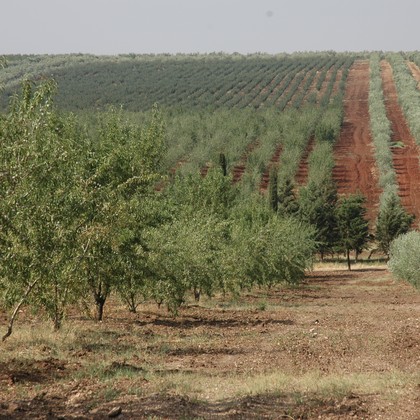
Acacia savanna, thorn scrub and wooded wadis, often near fields and orchards with scattered trees. Hunts from a hidden perch and in fast pursuit for small birds, which it also takes from nests and colonies, and for lizards and insects. The small nest is high in a thorny tree.
Where the bird is most at home, classified by the habitats of North Africa and the Middle East.
Range and movements
In Arabia a scarce resident in western Yemen and south-western Saudi Arabia, mainly in the Tihama and the lower foothills of the Asir mountains, up to the Yemen border; probably under-recorded given the small number of birders in the area. Not established with certainty elsewhere in the region. Beyond it widespread in sub-Saharan Africa, from the Sahel to South Africa.
- Resident
- Summer visitor (c. Apr–Sep)
- Winter visitor (c. Oct–Mar)
- Passage (Mar–Apr, Oct–Nov)
- dark = core range, pale = thinly spread
How and when to look
Search the Tihama of south-western Saudi Arabia along field edges and small irrigated plots with acacias. A small grey hawk that slips away between the trees with a flash of white on the rump is almost certainly a Gabar Goshawk.
Conservation status
Not threatened and widespread in Africa. The small Arabian population is poorly studied and vulnerable to the clearance of acacia woodland and the spread of farming and building in the Tihama.
Scientific name
Micronisus gabar | (Daudin, 1800)
Daudin described the species in 1800 as Falco gabar; because it was later moved to another genus, the author and year stand in brackets. The genus Micronisus was introduced in 1840 by Gray. Micronisus comes from the Greek mikros, 'small', and Nisus, the mythical king turned into a sparrowhawk, whose name came to be used for sparrowhawks. gabar is, according to Jobling, a homophone of the French garde, 'watchman, guard', and barré, 'barred'; the name goes back to Levaillant's 'Gabar' (1798). The specimen the first description was based on came from inner South Africa.