All species › Passerines › Laughingthrushes › Fulvous Babbler
Fulvous Babbler | Argya fulva
Bruingele babbelaar | Turdoide rojizo
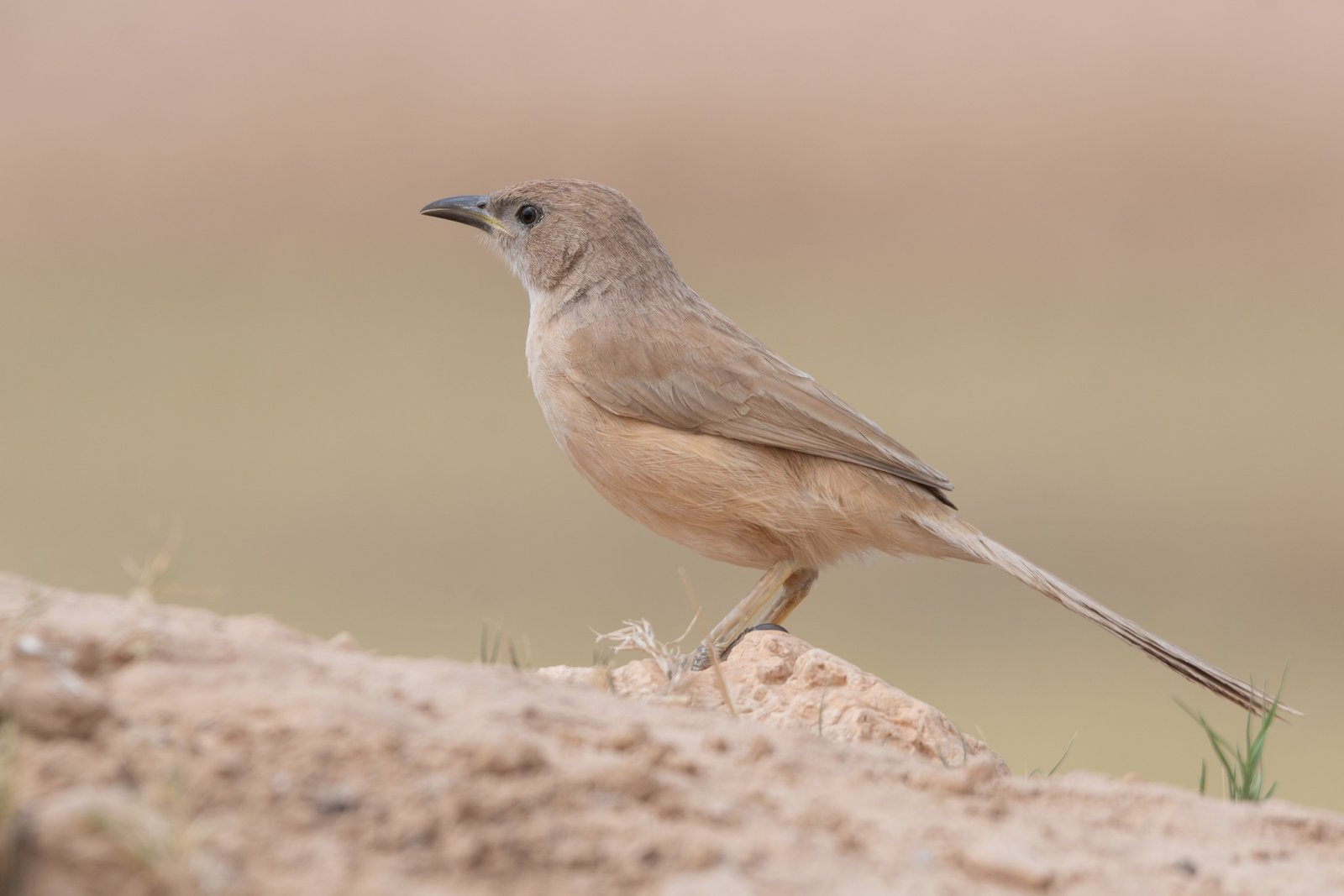
The Fulvous Babbler is the babbler of the northern Sahara edge: from the wadis and tamarisk groves south of the Atlas to the oases of southern Tunisia and Libya. Like its Arabian relative it lives in noisy family groups that dash one after another from bush to bush.
Voice
Groups call almost incessantly: high, rolling whistled trills such as pirrrr-piu-piu, thin pee calls and a rapid chattering chorus; when alarmed a rasping cherr-cherr.
Recording: Stanislas Wroza — CC BY-NC-SA 4.0 · shortened to the first 60 s, mono · xeno-canto
Identification
23–25 cm. Slim and long-tailed, with short rounded wings. Almost unmarked sandy buff: upperparts plain sandy brown, underparts warmer pale ochre-buff, with a contrasting white throat. No streaking or scaling. Bill fairly long, slightly decurved and grey-black (paler in young birds), eye dark, legs pale brown. The forms differ little: maroccana in Morocco and western Algeria is slightly warmer in tone than the nominate in north-eastern Algeria and Tunisia.
Confusion species
Arabian Babbler (Argya squamiceps), found only in eastern Sinai and further east, is larger and greyer, with a scaly crown and a pale iris. Rufous-tailed Scrub-Robin (Cercotrichas galactotes) shares the tamarisk scrub but is smaller and more rufous, with a rufous, black-and-white tipped tail which it fans, and does not live in groups.
Habitat
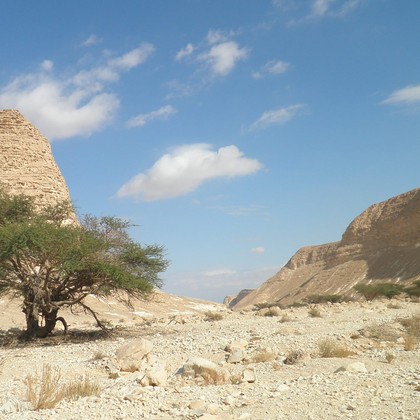
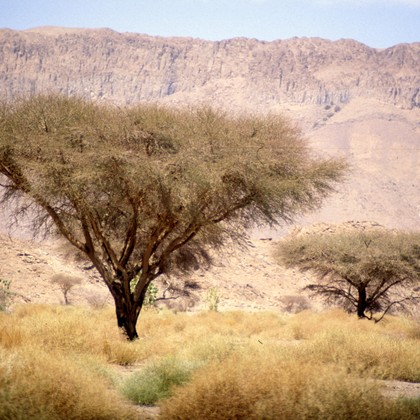
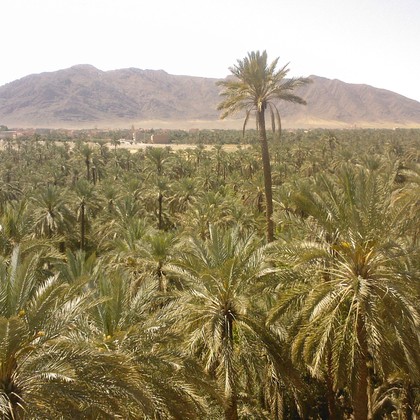
Wadis and dry riverbeds with tamarisk, acacias and Ziziphus, shrubby semi-desert on the edge of the Sahara, the edges of oases and date-palm groves and scrub around dunes. In the northern Maghreb also in steppe with scattered bushes. Forages in groups of five to fifteen on the ground.
Where the bird is most at home, classified by the habitats of North Africa and the Middle East.
Range and movements
In Morocco south and east of the Atlas, from the Souss and Anti-Atlas through the Draa valley, Tafilalt and the east to Figuig, and south into Western Sahara. In Algeria in the northern Sahara and the steppes south of the Saharan Atlas, with isolated populations in the central Sahara. In Tunisia in the south, from the chotts to the oases of the Grand Erg Oriental. In Libya mainly in the north-west (Tripolitania) and the Fezzan. In Egypt only in the extreme south-east, around Gebel Elba. Beyond the region in the Sahel from Mali and Niger to Sudan and northern Eritrea.
- Resident
- Summer visitor (c. Apr–Sep)
- Winter visitor (c. Oct–Mar)
- Passage (Mar–Apr, Oct–Nov)
- dark = core range, pale = thinly spread
How and when to look
In Morocco the tamarisk scrub and palm groves around Merzouga and Erg Chebbi, and the wadis near Tagounite and Zagora in the Draa valley, are regular sites; in Tunisia the oases around Douz and Ksar Ghilane. Listen for the chatter: the groups are easier to hear than to see.
Conservation status
Not globally threatened. Locally common in the region; declines through cutting of tamarisk and acacia for firewood, overgrazing and drought, but the species benefits from irrigation and new planting around oases.
Scientific name
Argya fulva | (Desfontaines, 1789) (GBIF: Turdoides fulva)
Desfontaines described the species in 1789 as Turdus fulvus; because it was later moved to another genus, the author and year stand in brackets. The genus Argya was introduced in 1831 by Lesson. Argya was formed by René Lesson from Latin argutus 'noisy'. fulva is Latin for 'tawny', after the sandy plumage. The specimen the first description was based on came from Gafsa, Tunisia.