All species › Passerines › Laughingthrushes › Iraq Babbler
Iraq Babbler | Argya altirostris
Iraakse babbelaar | Tordalino iraquí
The Iraq Babbler is the babbler of the Mesopotamian marshes: a species almost confined to Iraq that moves in noisy parties through reeds and riverside scrub along the Tigris and Euphrates. In recent decades it has spread up the Euphrates, through Syria into Turkey.
Voice
Groups keep up constant contact with high, thin whistles and rapid, chattering trills, such as pee-pee-pee and a shrill chiririri; when alarmed a rasping cherr.
Recording: Guy Kirwan — CC BY-NC-SA 4.0 · shortened to the first 60 s, mono · xeno-canto
Identification
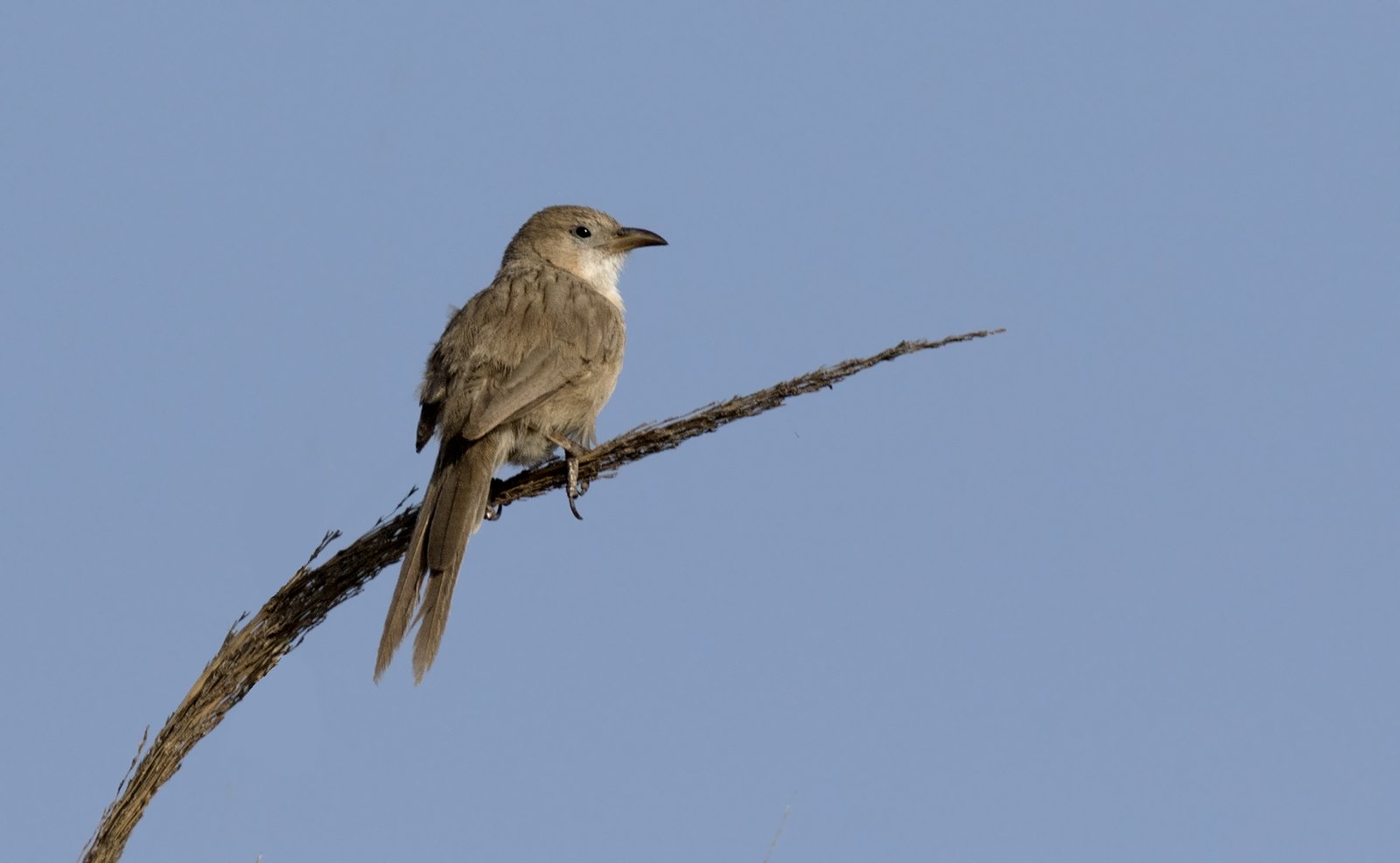
22 cm. A small, slim babbler with short, rounded wings and a long, graduated tail. Upperparts plain buffy brown to greyish brown, the crown at most faintly streaked darker; underparts paler, ochre-brown, with a conspicuous whitish throat. The breast is only weakly streaked. Bill fairly short, blackish and slightly decurved; eye dark; legs dark brown. Sexes alike.
Confusion species
Afghan Babbler (Argya huttoni), found in drier country in southern Iraq, is larger and greyer, with clearly dark-streaked crown, back and breast sides, a pale iris and a heavier bill. Reed warblers such as Basra Reed Warbler (Acrocephalus griseldis) are smaller, with a short, ungraduated tail, and do not live in groups.
Habitat
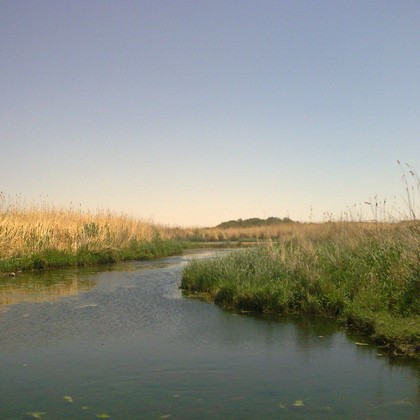
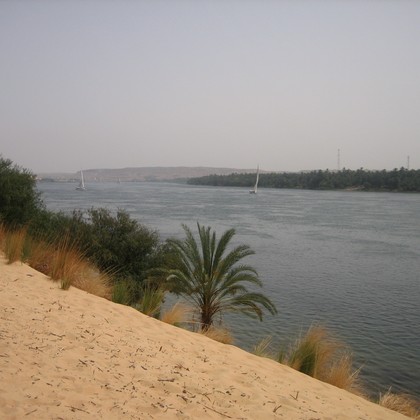
Reedbeds and other marsh reeds, especially along river banks and in the Mesopotamian marshes, and adjacent scrub of tamarisk, willow and poplar, reed fringes along irrigation canals and date-palm groves by water. Forages in parties of ten to twenty low in vegetation and on the ground for insects.
Where the bird is most at home, classified by the habitats of North Africa and the Middle East.
Range and movements
Almost endemic to Mesopotamia. In Iraq in the south and centre: the Hawizeh, Central and Hammar marshes, and along the Tigris and Euphrates north to beyond Baghdad. Along the Euphrates the species has spread north in recent decades through eastern Syria (including around Deir ez-Zor and Raqqa). Beyond the region in south-western Iran (Khuzestan) and since 2006 in south-eastern Turkey, at Birecik on the Euphrates.
- Resident
- Summer visitor (c. Apr–Sep)
- Winter visitor (c. Oct–Mar)
- Passage (Mar–Apr, Oct–Nov)
- dark = core range, pale = thinly spread
How and when to look
Easiest to find in the reed fringes and riverside scrub of the Mesopotamian marshes, for example around Chibayish; the parties give themselves away by their persistent whistling. In Syria search the reedy banks of the Euphrates.
Conservation status
Not globally threatened. The draining of the Mesopotamian marshes in the 1990s removed much habitat, but after re-flooding from 2003 the species is common again in the restored parts. Drought and falling water levels in the Tigris and Euphrates remain a risk; at the same time the range is expanding along the Euphrates.
Scientific name
Argya altirostris | (Hartert, 1909) (GBIF: Turdoides altirostris)
Hartert described the species in 1909 as Crateropus caudatus altirostris; because it was later moved to another genus, the author and year stand in brackets. The genus Argya was introduced in 1831 by Lesson. Argya was formed by René Lesson from Latin argutus 'noisy'. altirostris is Latin for 'high-billed', from altus 'high' and rostrum 'bill'. The specimen the first description was based on came from Al-Faw at the mouth of the Shatt al-Arab, Iraq.