All species › Passerines › Chats and flycatchers › European Pied Flycatcher
European Pied Flycatcher | Ficedula hypoleuca
Bonte vliegenvanger | Papamoscas cerrojillo
The European Pied Flycatcher is one of the commonest passage migrants in the west of the region: in spring and especially in late summer large numbers pass through the Maghreb on their way between Europe and West Africa. In Egypt and the Levant it is still common, in Arabia scarce.
Voice
The call is a short, sharp bit or pik, often combined with a dry tek. The song, also given by migrants in spring, is a rhythmic phrase alternating between two pitches and ending with a rising flourish, zee-too zee-too zee-too see-see.
Recording: Stanislas Wroza — CC BY-NC-SA 4.0 · shortened to the first 60 s, mono · xeno-canto
Identification
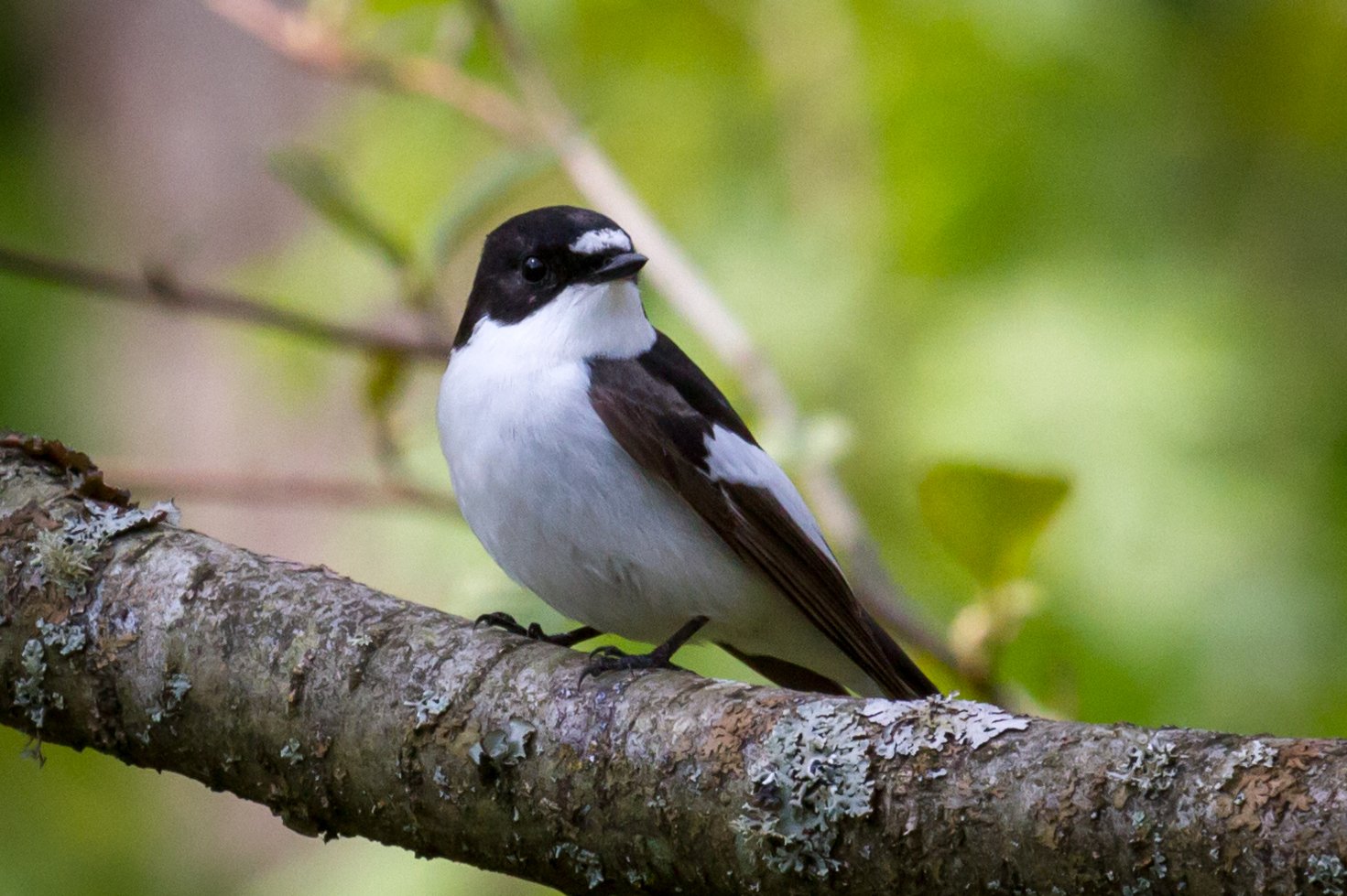
12–13 cm. Small, compact and short-tailed; perches upright on a low branch, sallies for insects and flicks one wing and the tail after landing. The spring male is black to blackish-brown above and white below, with a small, often divided white forehead patch, a white wing patch on the greater coverts and tertials and little or no white at the primary base. The colour of the upperparts varies greatly: many males, especially from northern and eastern Europe, are grey-brown rather than black. Females and autumn birds are grey-brown above and off-white below, with a white wing bar, white tertial fringes and often a small pale spot at the primary base.
Confusion species
Atlas Pied Flycatcher (Ficedula speculigera), breeding in the mountain forests of the Maghreb, has in the male deeper black upperparts, a larger, usually undivided forehead patch and much white at the primary base; females cannot be safely separated in the field. Collared Flycatcher (Ficedula albicollis) has a complete white collar and a white rump, Semicollared Flycatcher (Ficedula semitorquata) a half collar and a second white wing bar. Spotted Flycatcher (Muscicapa striata) is longer, grey-brown and streaked, without white in the wing.
Habitat
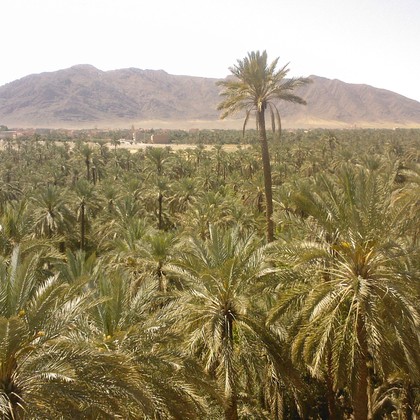
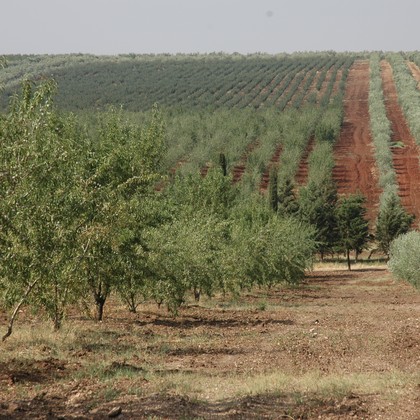
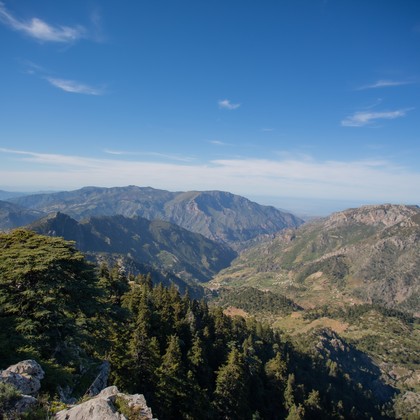
On passage any area with trees or bushes: olive groves, citrus orchards, copses, coastal parks and gardens, riverine woodland, oases and date-palm gardens in the Sahara and small green spots in the desert. In late summer in large numbers in the cork-oak and cedar forests of the Maghreb. Eats mainly flying insects, caterpillars and spiders.
Where the bird is most at home, classified by the habitats of North Africa and the Middle East.
Range and movements
A common passage migrant in Morocco, including Western Sahara, Algeria and Tunisia, both along the coast and in the Atlas and the Saharan oases; in spring mainly mid-April to mid-May, in autumn August to early October. Also common in Libya and Egypt, and in Israel, Jordan, Lebanon and Syria a regular migrant in April – May and September. In Arabia and Iraq scarce to rare, with regular but small numbers in Oman and a few records in Saudi Arabia, the UAE and Kuwait. The odd bird winters in Morocco or Egypt. Beyond the region it breeds from Spain and Britain through central and northern Europe to western Siberia, and winters in West Africa south of the Sahara.
- Resident
- Summer visitor (c. Apr–Sep)
- Winter visitor (c. Oct–Mar)
- Passage (Mar–Apr, Oct–Nov)
- dark = core range, pale = thinly spread
How and when to look
In autumn the olive groves and gardens of Morocco’s Atlantic coast, such as around Agadir and Souss-Massa, or the oases of the Draa and Tafilalt are good places: some copses then hold dozens of European Pied Flycatchers. In spring a morning in an oasis after a night of headwinds pays off.
Conservation status
Not globally threatened, but strongly declined in parts of Europe, partly because climate change has advanced the caterpillar peak on the breeding grounds ahead of the birds’ arrival. On migration it is vulnerable to drought in the Sahel and the Sahara and to the loss of green stopover sites.
Scientific name
Ficedula hypoleuca | (Pallas, 1764)
Pallas described the species in 1764 as Motacilla hypoleuca; because it was later moved to another genus, the author and year stand in brackets. The genus Ficedula was introduced in 1760 by Brisson. Ficedula is Latin for a small fig-eating bird, from ficus 'fig'; it was believed to turn into the blackcap in winter. hypoleuca is Greek, from hupo 'beneath' and leukos 'white': white below. The specimen the first description was based on came from Holland.