All species › Waders, gulls and terns › Sandpipers and snipes › Eurasian Woodcock
Eurasian Woodcock | Scolopax rusticola
Houtsnip | Chocha perdiz
A stocky, shy woodland bird with a long straight bill and a cryptic plumage that makes it almost invisible on the forest floor. In the region it is a winter visitor, mainly to the cork oak and cedar forests of Morocco, Algeria and Tunisia and to the woodlands of the Levant; in Arabia it turns up only rarely.
Voice
Usually silent in winter; when flushed at most a soft, hoarse schaap and the clatter of the wings. The roding call, a low grunting kworr-kworr followed by a high pssip, is rarely heard in the region.
Recording: Aku Kalliomäki — CC BY-NC-SA 4.0 · converted to mono · xeno-canto
Identification
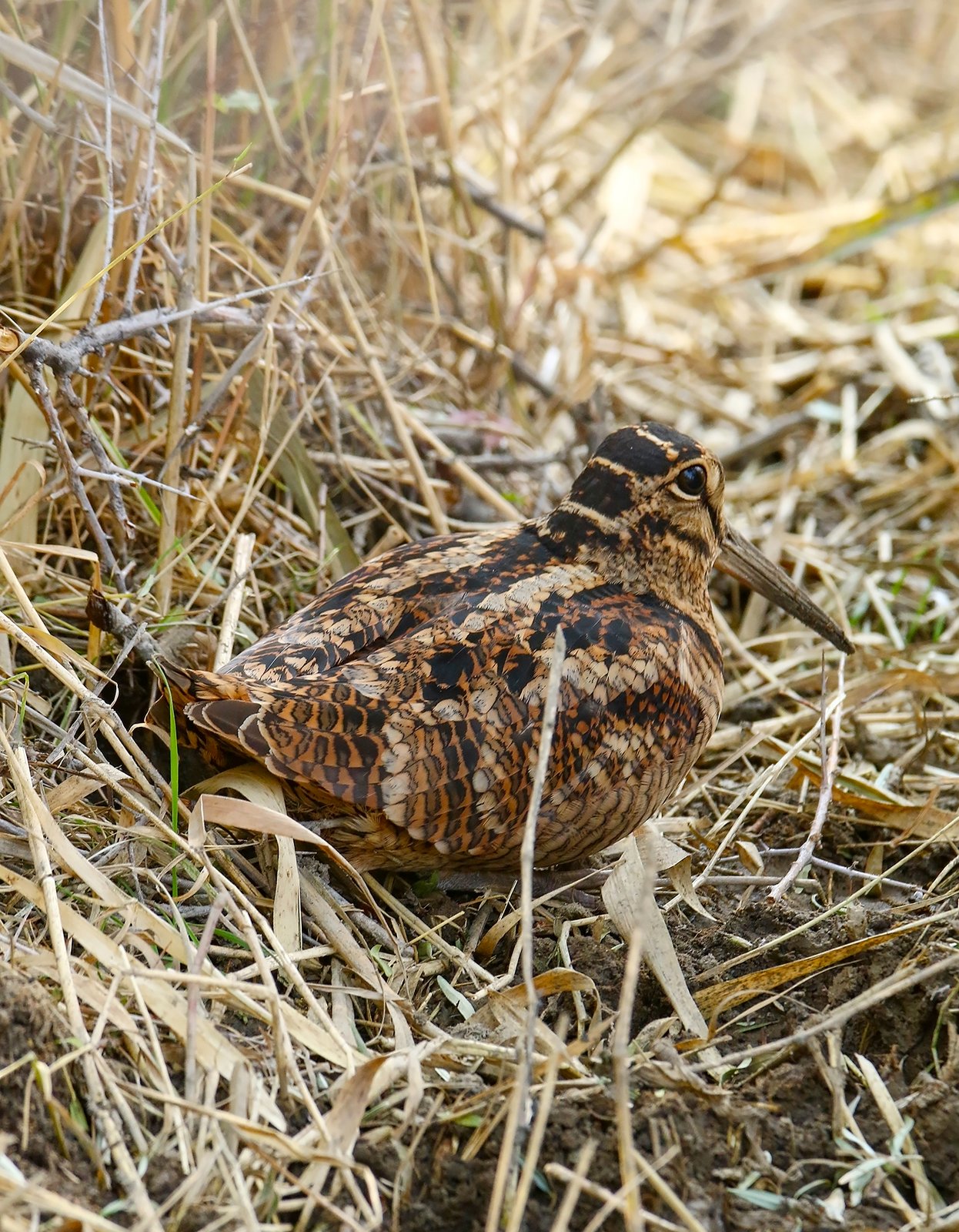
Large and heavy for a snipe, with a round body, short legs and a long, straight bill. The upperparts are a fine pattern of rufous, grey and black like dead leaves; the hindcrown is crossed by transverse black bars, not longitudinal stripes as in the snipes. The underparts are dull buff-brown with fine dark barring. The eye is set high and far back. In flight broad- and round-winged, with an owl-like, slightly wavering flight and the bill angled downwards.
Confusion species
Its size, barred crown and woodland habitat make it hard to confuse. Common Snipe (Gallinago gallinago) and Great Snipe (Gallinago media) are smaller and slimmer, have longitudinal stripes on the head and back and live in open marshes. A flushed woodcock can briefly suggest a pigeon or small owl in woodland, but the long bill gives it away.
Habitat
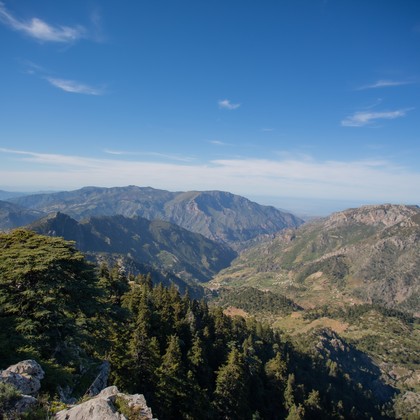
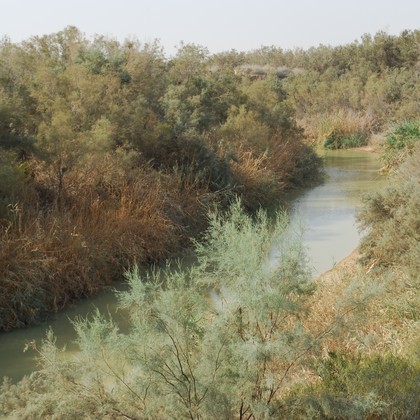
Moist broadleaf and mixed woodland with leaf litter and soft soil: cork oak, holm oak and cedar in the Maghreb, oak and pine woods in the Levant, also riverine woodland, orchards and dense gardens. It rests hidden on the forest floor by day and feeds at dusk in damp meadows and fields, probing for worms. In Arabia migrants appear in plantations, parks and farms.
Where the bird is most at home, classified by the habitats of North Africa and the Middle East.
Range and movements
Winters in northern Morocco (Rif, Mamora, Middle Atlas and the forests around Ifrane), northern Algeria (the Tell Atlas and the coastal forests of the north-east) and north-western Tunisia (Kroumirie and Mogods), in some places in good numbers. Scarce in Libya (Jebel Akhdar in Cyrenaica) and rare in Egypt (Nile Delta, Sinai). In the Levant a fairly scarce winter visitor to Lebanon, Syria and northern Israel (Galilee, Hermon), rare in Jordan, and in northern Iraq (Kurdistan) a winter visitor to the montane forests. On the Arabian Peninsula a rare winter visitor and migrant in small numbers, including Kuwait, Saudi Arabia, Bahrain, the Emirates and Oman. Does not breed in the region; beyond it from the Atlantic islands and western Europe through the taiga to Japan, wintering from western Europe and the Mediterranean to South Asia.
- Resident
- Summer visitor (c. Apr–Sep)
- Winter visitor (c. Oct–Mar)
- Passage (Mar–Apr, Oct–Nov)
- dark = core range, pale = thinly spread
How and when to look
Look for it in winter along forest tracks in the Mamora cork oak forest near Rabat or in the Tunisian Kroumirie around Aïn Draham; often you only see it when it flushes at your feet. At dusk birds can be seen flying out to wet meadows along the forest edge.
Conservation status
Not globally threatened, with a very large population. Wintering birds are hunted in the Maghreb, and logging and drying out of forests degrade the winter habitat; hard winters in Europe push extra birds south.
Scientific name
Scolopax rusticola | Linnaeus, 1758
Linnaeus described the species in 1758 and placed it straight away in the genus where it still stands. He introduced the genus Scolopax in that same work. Scolopax is the Latin word for a snipe or woodcock, taken over by Linnaeus as a genus name. rusticola is the Latin name of a gamebird mentioned by Pliny the Elder and Martial. The specimen the first description was based on came from Sweden.