All species › Waders, gulls and terns › Sandpipers and snipes › Jack Snipe
Jack Snipe | Lymnocryptes minimus
Bokje | Agachadiza chica
The smallest snipe, a shy and rarely well-seen inhabitant of boggy marsh edges. It breeds in the taiga and winters in small numbers throughout the region, from the marshes of Morocco to the reedbeds of Iraq and the sewage ponds of the Gulf states.
Voice
Almost always silent; it usually flushes without a sound, at most with a weak, muffled gatch. The galloping display call is heard only on the breeding grounds.
Recording: Stanislas Wroza — CC BY-NC-SA 4.0 · converted to mono · xeno-canto
Identification
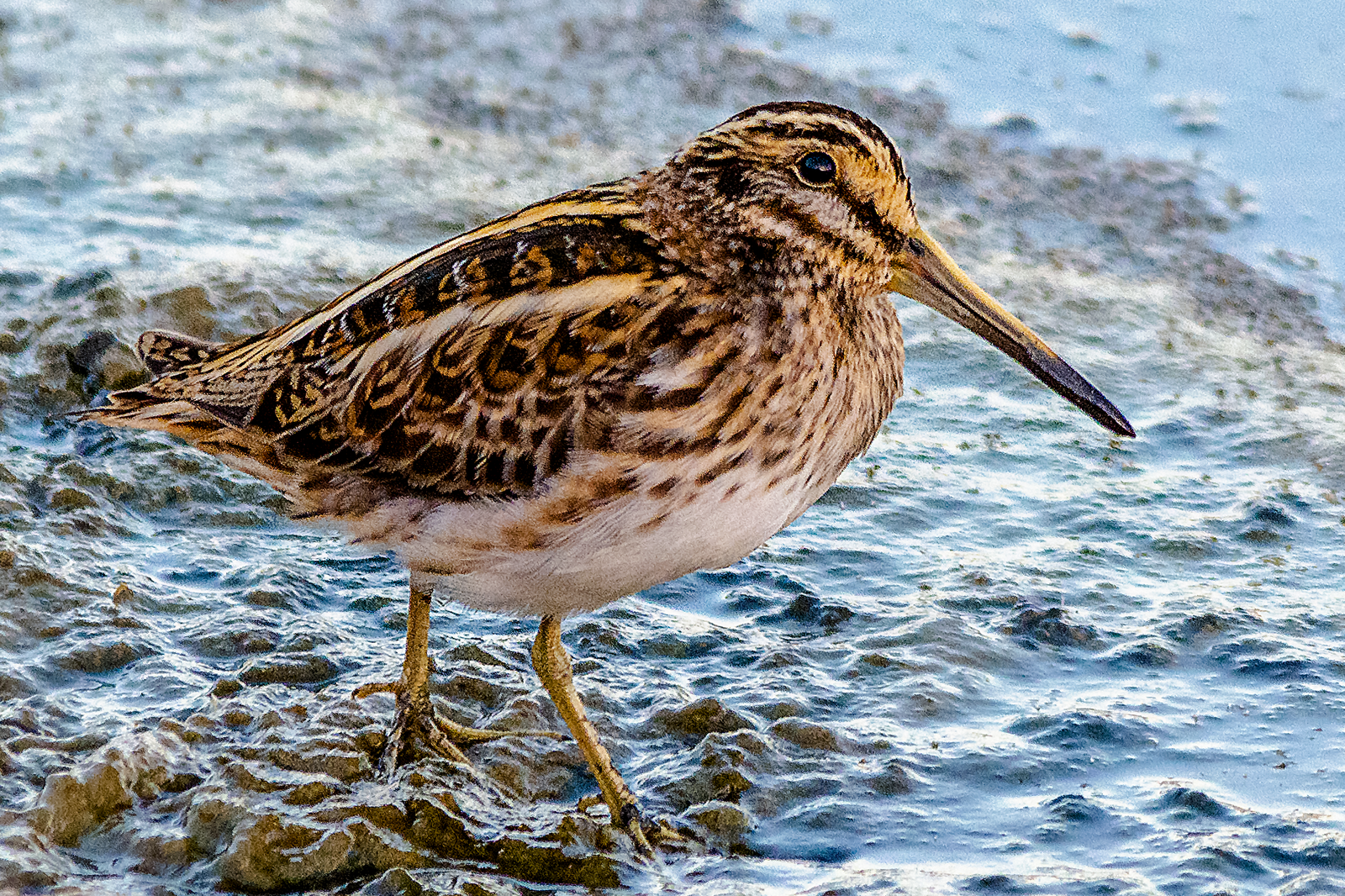
Small and compact, with a relatively short bill, about one and a half times the length of the head. The head lacks a central crown stripe, but has a split pale supercilium and a dark crown; the back is dark with a purple and green gloss and two sharp golden-yellow longitudinal stripes. Breast and flanks streaked, belly white. When feeding the whole body bobs rhythmically up and down. It flushes only when almost trodden on, flying low, straight and without zigzagging, and soon drops back in.
Confusion species
Common Snipe (Gallinago gallinago) is larger, with a much longer bill and a pale central crown stripe; it flushes zigzagging and calling. Pin-tailed Snipe (Gallinago stenura) and Great Snipe (Gallinago media) are also larger, longer-billed and have a crown stripe. The dowitchers of the genus Limnodromus are much larger and feed in open water.
Habitat
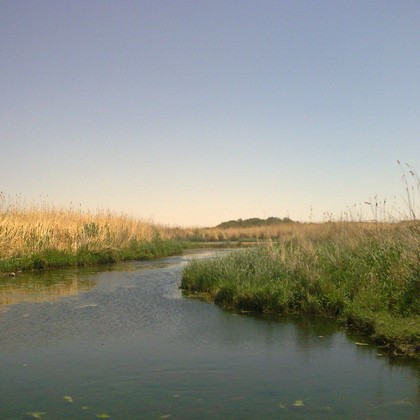
Boggy marsh edges with low vegetation, muddy banks of ditches and ponds, flooded meadows, rice fields and the edges of sewage ponds; also in small patches of marsh in oases. It hides in the vegetation and relies on its camouflage.
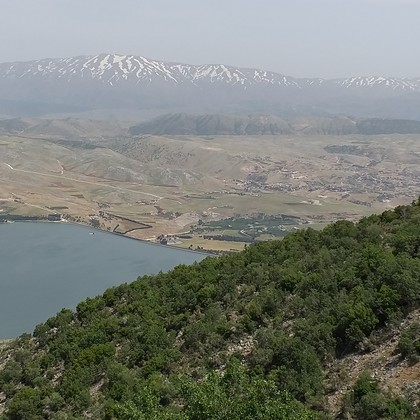
Where the bird is most at home, classified by the habitats of North Africa and the Middle East.
Range and movements
In North Africa a scarce winter visitor to the marshes of Morocco (Merja Zerga, Loukkos, the Gharb), northern Algeria, Tunisia and the Nile Delta, and a migrant at oases deep into the Sahara. In Israel, Lebanon, Syria and Jordan a scarce winter visitor and migrant in marshes and fish ponds (Hula, Azraq). In Iraq probably fairly common in the Mesopotamian marshes. On the Arabian Peninsula a scarce to rare winter visitor and migrant, mainly on irrigated fields and sewage ponds in Kuwait, Bahrain, Qatar, eastern Saudi Arabia, the Emirates and Oman; rare in Yemen. Probably under-recorded everywhere. Beyond the region it breeds in the taiga from Scandinavia to eastern Siberia and winters in western Europe, Africa south of the Sahara and South Asia.
- Winter visitor (c. Oct–Mar)
- Passage (Mar–Apr, Oct–Nov)
- dark = core range, pale = thinly spread
How and when to look
The best chance is to walk slowly along a boggy bank with low vegetation: a Jack Snipe flushes right at your feet and drops back in after a short, straight flight. With a telescope one can sometimes find a feeding bird at the edge of a sewage pond, given away by its bobbing action.
Conservation status
Not globally threatened, although the population is hard to estimate. In the region threatened by the loss of marshes and damp grassland and locally by snipe hunting.
Scientific name
Lymnocryptes minimus | (Brünnich, 1764)
Brünnich described the species in 1764 as Scolopax minima; because it was later moved to another genus, the author and year stand in brackets. The genus Lymnocryptes was introduced in 1826 by Boie. Lymnocryptes is Ancient Greek, from limnē 'marsh' and kruptos 'hidden'. minimus is Latin for 'smallest': it is the smallest of the European snipes. The specimen the first description was based on came from Christiansø, Denmark.