All species › Passerines › Finches › Eurasian Siskin
Eurasian Siskin | Spinus spinus
Sijs | Lúgano
A small, yellow-green finch from the conifer forests of Europe and Asia that wanders south in winter. How many reach the region depends on the seed crop in the north: in some years the Levant and the Maghreb are full of them, in others there are only a few.
Voice
The most frequent call is a clear, plaintive tsee-oo or dluu-ee, often from passing flocks, besides a dry twitter. The song, already heard in winter, is a fast, twittering babble with squeaky and scratchy notes, often ending in a long, wheezy tzeeeh.
Recording: Stanislas Wroza — CC BY-NC-SA 4.0 · converted to mono · xeno-canto
Identification
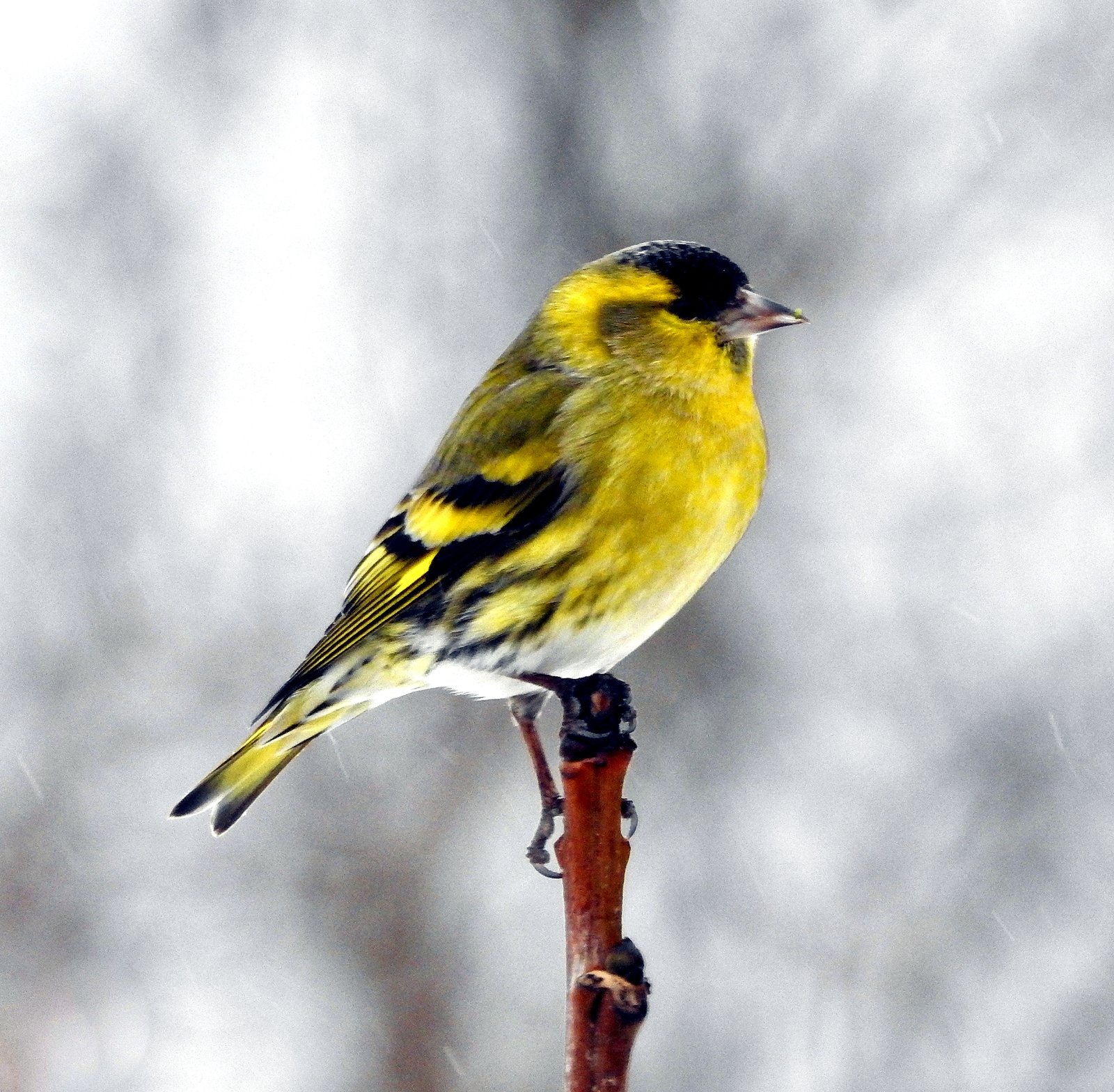
Small and slim, with a sharply pointed bill and a short, forked tail. The male is yellow-green with a black crown and a small black bib, yellow supercilium and breast, a streaked green back, streaked white flanks and a yellow rump. The black wings have two broad yellow bars and the tail has yellow sides. The female lacks the black on the head and is greyer and more heavily streaked, with less yellow. Juveniles are browner and streaked throughout.
Confusion species
European Serin (Serinus serinus) has a short, thick bill, no yellow wing-bars and no yellow in the tail. Syrian Serin (Serinus syriacus) is paler and barely streaked. European Greenfinch (Chloris chloris) is much larger and heavier, with a thick bill and no streaks. A juvenile European Goldfinch (Carduelis carduelis) has a golden wing-bar on a black wing but no green.
Habitat
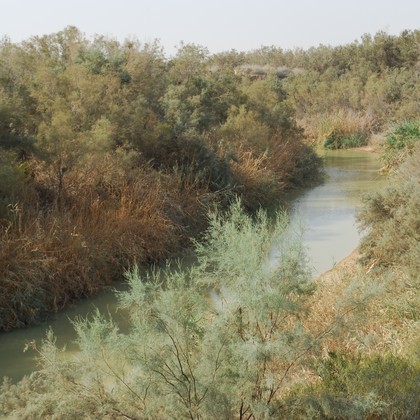
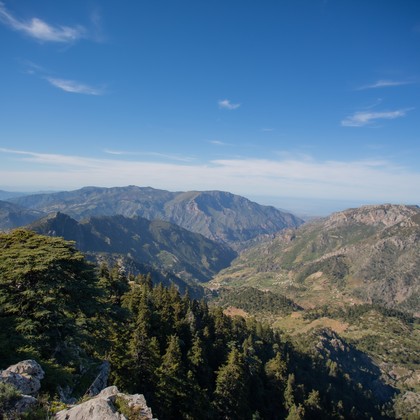
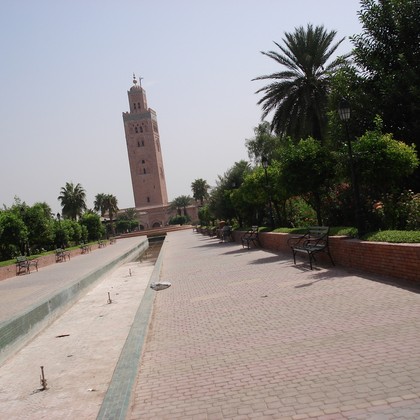
In winter in seed-bearing trees: alders, cypresses, pines, casuarinas and eucalyptus, in parks, gardens, riverine woods and plantations; also on thistles and rough ground. Hangs tit-like from thin twigs and small cones, often in flocks and together with serins and goldfinches.
Where the bird is most at home, classified by the habitats of North Africa and the Middle East.
Range and movements
A winter visitor to northern Morocco, northern Algeria and northern Tunisia, scarce in northern Libya, and in the east to Lebanon, Syria, Israel, Judea and Samaria, Jordan, northern Egypt (the Nile Delta and Sinai) and Iraq. In irruption years it also reaches Kuwait, Qatar, the Emirates, Oman and northern Saudi Arabia, where it is otherwise rare. Breeds in Europe, the Caucasus and northern Asia to Japan, with isolated populations in the mountains of southern Europe.
- Resident
- Summer visitor (c. Apr–Sep)
- Winter visitor (c. Oct–Mar)
- Passage (Mar–Apr, Oct–Nov)
- dark = core range, pale = thinly spread
How and when to look
In an irruption winter, check the alders and cypresses in parks and along streams in northern Israel or the Moroccan Rif; listen for the plaintive tsee-oo above the trees. Check the flocks for European Serin and Syrian Serin.
Conservation status
Not globally threatened and numerous in its breeding range. In the region a winter visitor in varying numbers; the siskin too is trapped as a cage bird in the region.
Scientific name
Spinus spinus | (Linnaeus, 1758)
Linnaeus described the species in 1758 as Fringilla Spinus; because it was later moved to another genus, the author and year stand in brackets. The genus Spinus was introduced in 1816 by Koch. Spinus goes back to Ancient Greek spinos, a name for a small bird that can no longer be identified with certainty. The specific name repeats the genus name. The specimen the first description was based on came from Sweden.