All species › Cranes, rails and allies › Rails and crakes › Corn Crake
Corn Crake | Crex crex
Kwartelkoning | Guion de codornices
A secretive rail of dry grasslands that visits the region only on passage, between Europe and Central Asia and its winter quarters in eastern and south-eastern Africa. Almost the entire world population passes through the east of the region, via the Nile, Sinai, the Levant and Arabia; in autumn many end up in the quail nets along the Egyptian coast.
Voice
The well-known song is a dry, rasping krek-krek, krek-krek, like running a comb across a matchbox, mainly at night. In the region it is rarely heard, as migrants are silent; in spring an odd bird may call for a few nights in a field or alfalfa crop.
Recording: Marketa Rusarova — CC BY-NC-SA 4.0 · shortened to the first 60 s, mono · xeno-canto
Identification
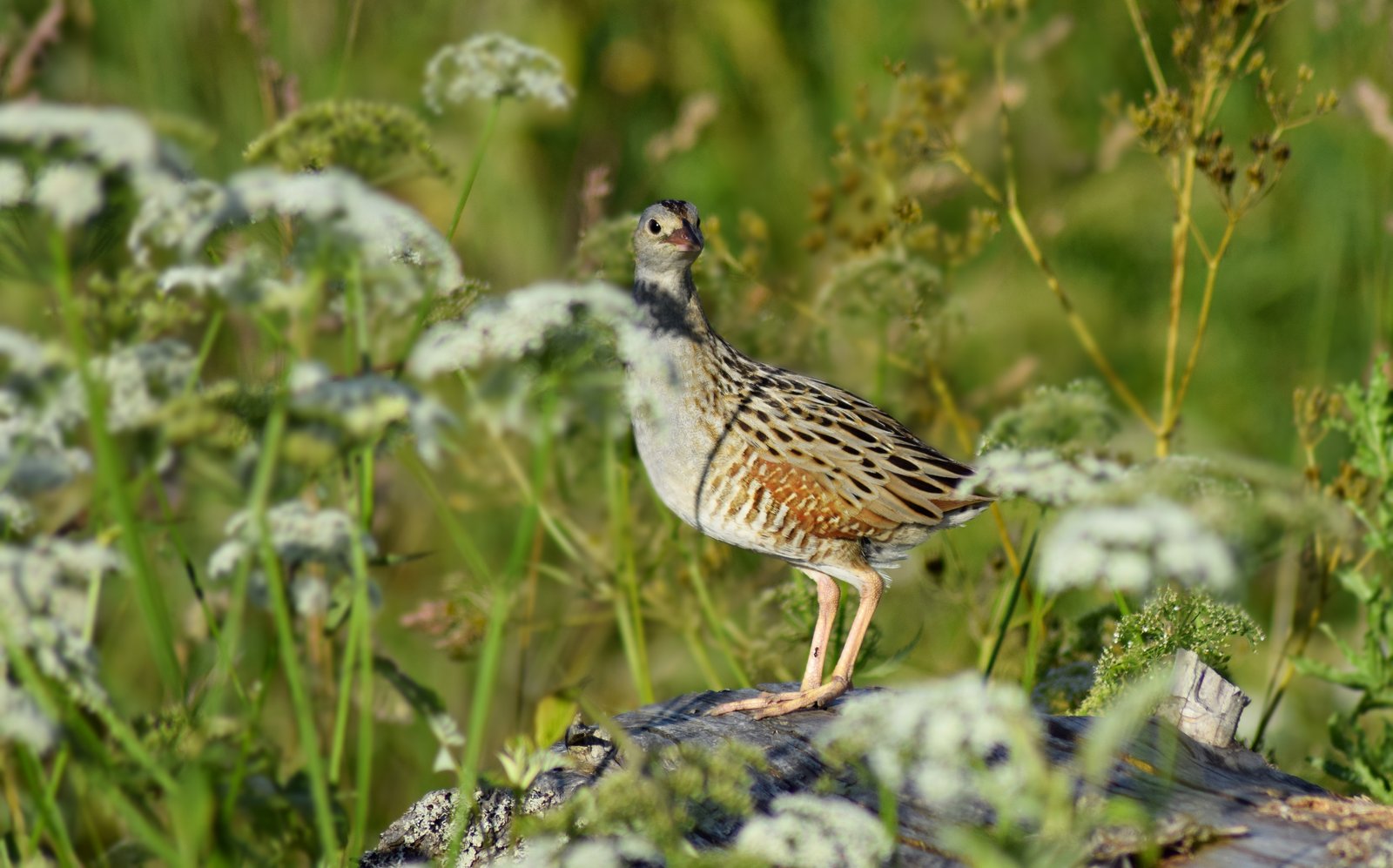
Slender, with a short, thick pinkish-brown bill. Upperparts yellowish-brown with dark feather centres, looking scaly; face and breast blue-grey in the male (largely obscured in autumn), paler buff in females and juveniles; flanks barred rufous. In flight the striking rufous wings and dangling legs; flight is weak and short, but on migration it covers great distances.
Confusion species
In flight it resembles Common Quail (Coturnix coturnix), which is smaller, with faster wingbeats and without rufous wings and dangling legs. Spotted Crake (Porzana porzana) has white spots and a yellow bill and lives in wet marshes. African Crake (Crecopsis egregia), an extremely rare vagrant, is smaller and darker, with black-and-white barred flanks and no rufous in the wing.
Habitat
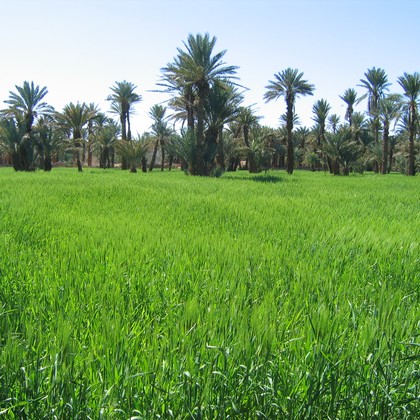
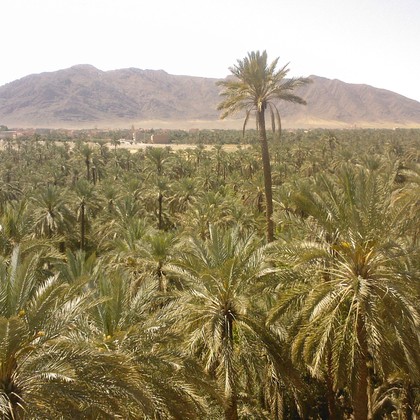
On passage in fields, alfalfa and clover crops, hayfields, rank vegetation along canals, oases and small patches of grass in the desert, also in gardens and on golf courses. Rests hidden in tall vegetation by day and migrates at night.
Where the bird is most at home, classified by the habitats of North Africa and the Middle East.
Range and movements
Passage migrant mainly through the east of the region. Egypt: common along the Mediterranean coast and the Nile, in autumn into northern Sinai; also in the oases of the Western Desert. Regular in Israel, Jordan, Lebanon, Syria and Iraq, and scarce but annual in Saudi Arabia, Kuwait, the Gulf states, the United Arab Emirates, Oman and Yemen. A scarce passage migrant in Libya, Tunisia, Algeria and Morocco. Breeds from Europe and northern Turkey to central Siberia and winters in Africa, mainly from Tanzania to South Africa.
- Summer visitor (c. Apr–Sep)
- Passage (Mar–Apr, Oct–Nov)
- dark = core range, pale = thinly spread
How and when to look
Chances are best in September and October in the fields and alfalfa of northern Sinai, the Nile Delta and the Arava, and in irrigated fields in Arabia. Walk slowly through alfalfa or hay; a Corn Crake flushes late and drops back in after a short flight, the rufous wings being the best feature.
Conservation status
After a steep decline in the twentieth century caused by mechanised mowing in Europe, the species is now again listed as not threatened, thanks to large populations in Russia and Central Asia. In the region many migrants are caught in autumn together with quails in nets along the Egyptian and Libyan coast.
Scientific name
Crex crex | (Linnaeus, 1758)
Linnaeus described the species in 1758 as Rallus Crex; because it was later moved to another genus, the author and year stand in brackets. The genus Crex was introduced in 1803 by Bechstein. Crex comes from Ancient Greek krex and is onomatopoeic, after the grating, repeated call. The specific name repeats the genus name. The specimen the first description was based on came from Sweden.