All species › Waterfowl › Ducks, geese and swans › Common Scoter
Common Scoter | Melanitta nigra
Zwarte zee-eend | Negrón común
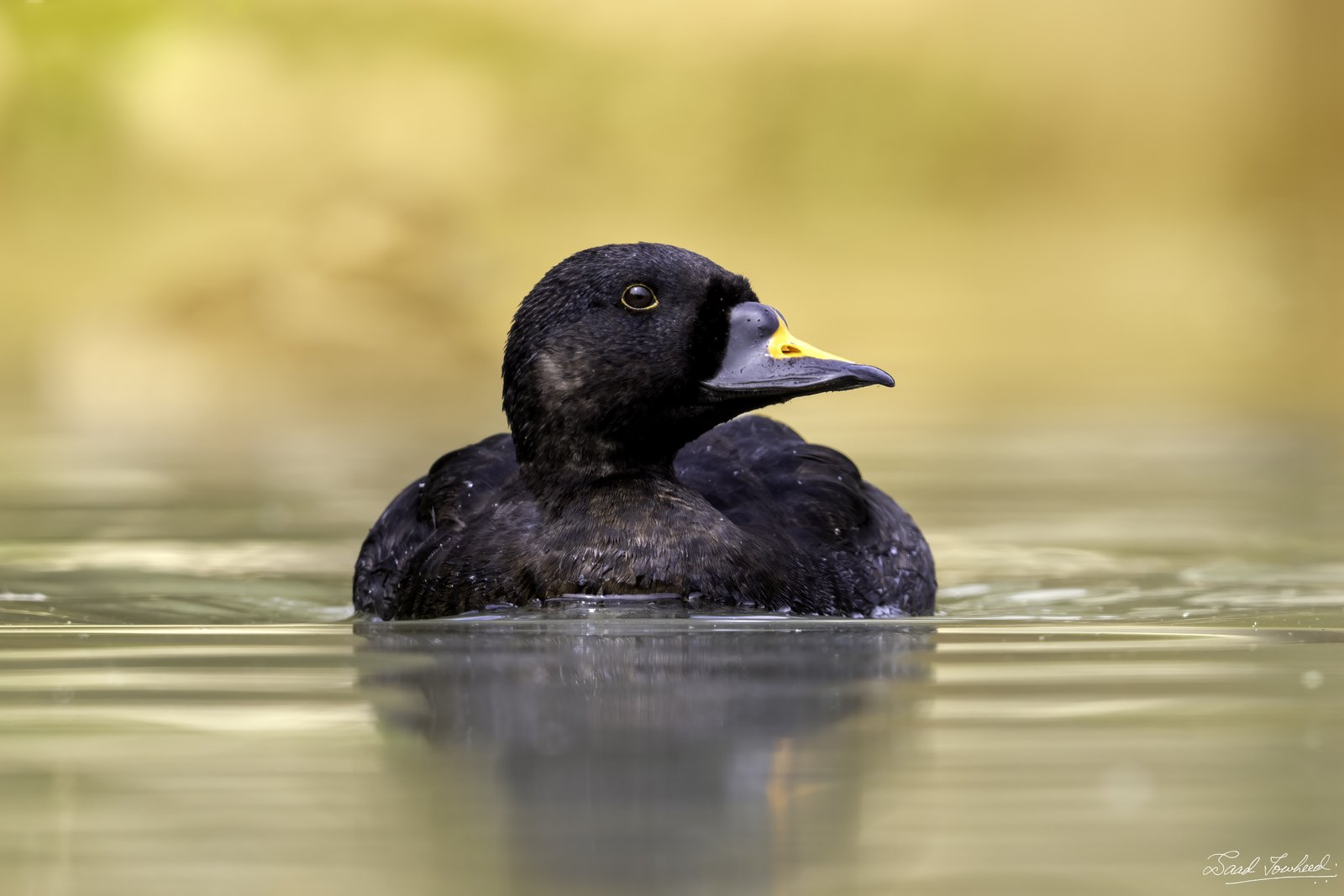
The Common Scoter is a dark, stocky sea duck that spends the winter in flocks at sea, just beyond the surf. Within the region it is virtually confined to the Atlantic coast of Morocco and Western Sahara, the southernmost part of its wintering range along Africa.
Voice
In display the male gives a soft, whistling, plaintive pyoo or tyoo, also at night on migration; the female a rasping krrr. Usually silent in the region.
Recording: Michael John O Mahony — CC BY-NC-SA 4.0 · converted to mono · xeno-canto
Identification
About 49 cm, a stocky duck with a pointed tail that is often cocked on the water. The male is wholly glossy black, with a black knob at the base of the bill and a yellow patch on top of the bill; this is the only colour on the bird. The female is dark brown with a dark cap and pale grey-brown cheeks and foreneck, and a dark bill. In flight dark, with slightly paler primaries from below and no white in the wing.
Confusion species
The Velvet Scoter (Melanitta fusca) is an extreme rarity in the region; it is larger, with white secondaries that show in flight and often on the water, and the female has two pale patches on the head instead of a pale cheek. A female Long-tailed Duck (Clangula hyemalis) is smaller, with a white belly and a white head with dark patches. At great distance lines of scoters over the sea can recall Great Cormorants (Phalacrocorax carbo), but those are larger and fly with the neck outstretched.
Habitat
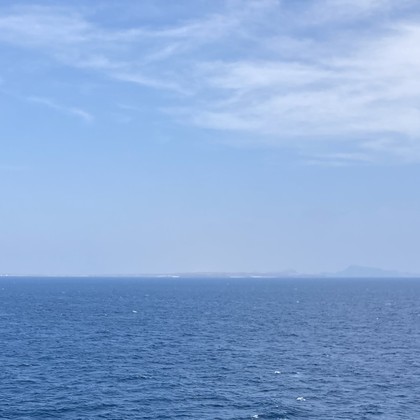
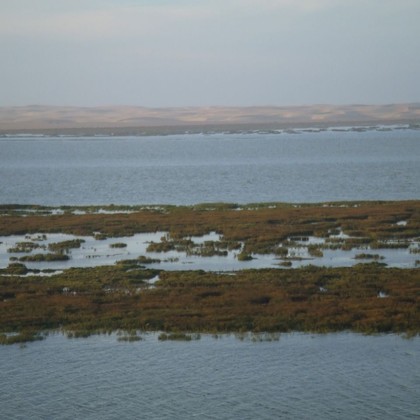
Winters at sea over shallow sandy bottoms, usually within a few kilometres of the coast, diving for molluscs, especially small mussels and surf clams. Also in large bays and in lagoons with an open connection to the sea.
Where the bird is most at home, classified by the habitats of North Africa and the Middle East.
Range and movements
A winter visitor and passage migrant along the whole Atlantic coast of Morocco, from Tangier to Western Sahara, most numerous in the bays and off the lagoons of the northern and central coast. Scarce along the Mediterranean coasts of Morocco, Algeria and Tunisia; a rare vagrant in Libya, Egypt, Israel and the Middle East. Beyond the region it breeds on the tundra and in the taiga from Iceland and Scotland to Siberia, wintering along the Atlantic coast from Norway to Mauritania.
- Resident
- Winter visitor (c. Oct–Mar)
- Passage (Mar–Apr, Oct–Nov)
- dark = core range, pale = thinly spread
How and when to look
From a high point on the coast, in calm weather and with the light behind you, look for dark flocks out at sea. Lines of migrants along the coast in October–November and March–April can also be followed well with a telescope, especially from headlands.
Conservation status
Not threatened, but strongly declined in parts of its range. Sensitive to oil pollution, bycatch in gill nets, disturbance by shipping and the building of offshore wind farms, and to the loss of shellfish beds through fishing.
Scientific name
Melanitta nigra | (Linnaeus, 1758)
Linnaeus described the species in 1758 as Anas nigra; because it was later moved to another genus, the author and year stand in brackets. The genus Melanitta was introduced in 1822 by Boie. Melanitta is Greek, from melas 'black' and netta 'duck'. nigra is Latin for 'black', after the wholly black plumage of the male. The specimen the first description was based on came from Lapland.