All species › Passerines › Bush warblers › Cetti's Warbler
Cetti's Warbler | Cettia cetti
Cetti's zanger | Ruiseñor bastardo
Cetti's Warbler is a dark, skulking warbler of reed edges and scrub by water, best known for its explosive song. In the region it is a resident of the Maghreb, the Levant and the rivers and marshes of Iraq, and a scarce winter visitor further south.
Voice
The song is an explosion out of nowhere: a loud chuip! followed by a fast, loud rattle, chuip — chuwee-chuwee-chuwee-chi-chi, over in under two seconds, often from a new spot each time. Sings all year, also at night. The call is a hard, dry chik or plit, often in series when disturbed.
Recording: João Ferreira Tomás — CC BY-NC-SA 4.0 · shortened to the first 60 s, mono · xeno-canto
Identification
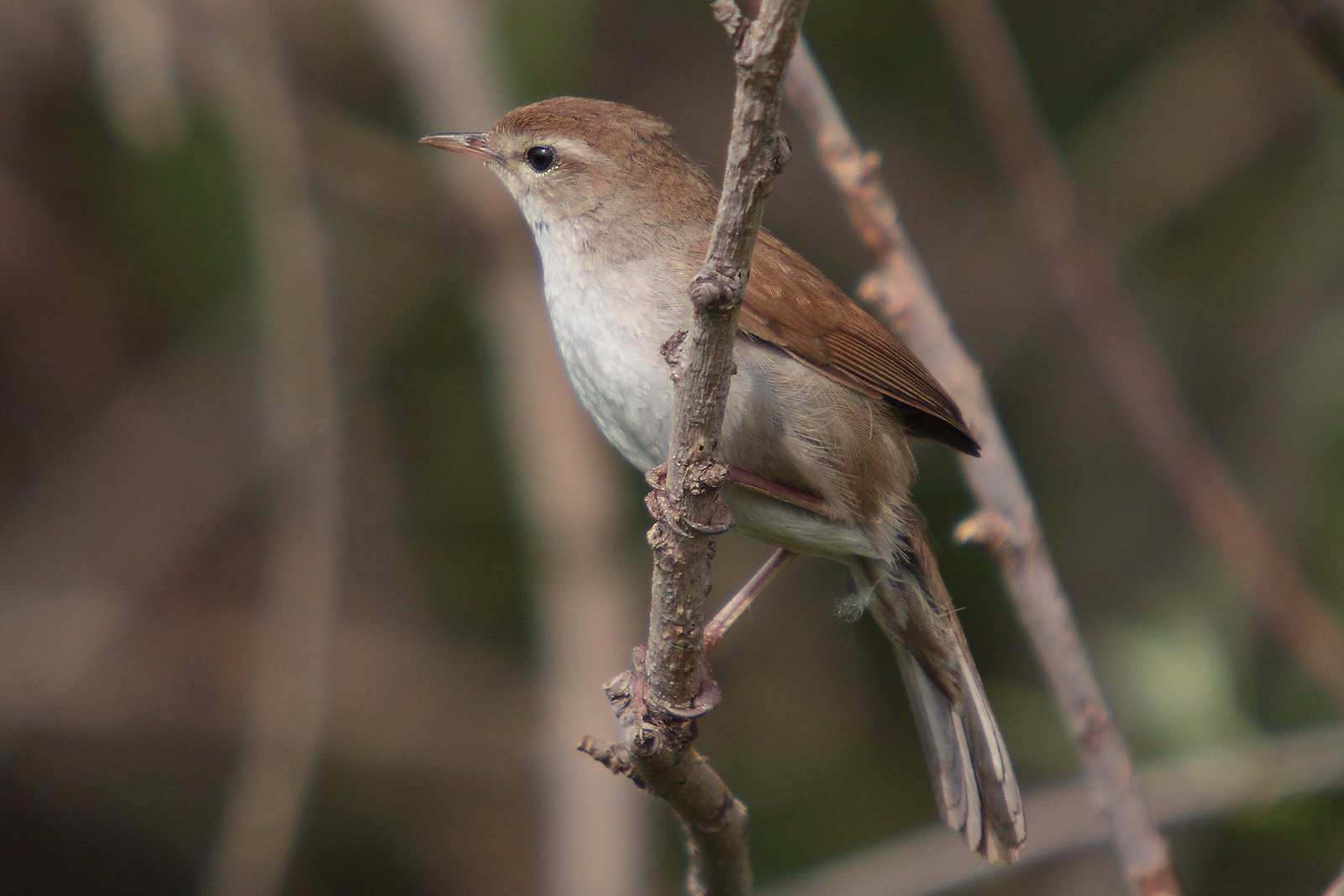
13–14 cm. Stocky, with a short, rounded wing and a broad, rounded tail that is often cocked or fanned. Upperparts warm chestnut-brown without streaks, underparts greyish white with dusky to brownish flanks, a narrow grey supercilium over a dark eye. The undertail coverts are dark with pale tips, giving a scaly effect. Birds become paler and greyer to the east: the forms of Iraq and further east (orientalis, albiventris) are greyer-brown above and whiter below. Males are clearly larger than females.
Confusion species
Common Nightingale (Luscinia megarhynchos) is larger, with a rufous tail and a large dark eye in a pale eye-ring. Eurasian Reed Warbler (Acrocephalus scirpaceus) is slimmer, with a flatter head, a longer bill, a longer, more pointed wing and a narrow tail, and paler underparts without grey. Savi's Warbler (Locustella luscinioides) has a graduated tail and long undertail coverts and sings a buzzing reeling song.
Habitat
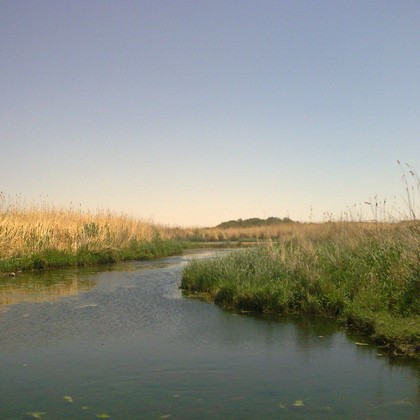
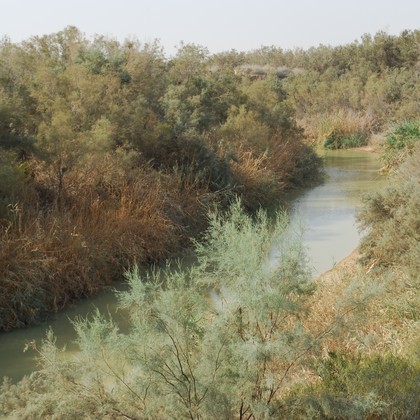
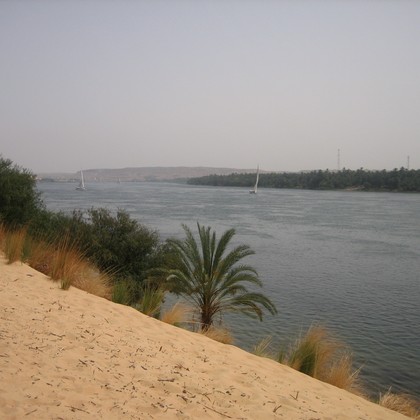
Dense scrub of bramble, tamarisk, willow and oleander along rivers, streams, canals and marshes, rank vegetation at the edge of reedbeds and damp thickets in oases and along irrigation channels. In Iraq also in the reed marshes of Mesopotamia. In winter also in bushes at sewage works and ponds in the desert.
Where the bird is most at home, classified by the habitats of North Africa and the Middle East.
Range and movements
Resident in northern Morocco, Algeria and Tunisia and locally in northern Libya; in Israel, Samaria and Judea, Lebanon, Syria and Jordan (Jordan Valley, Azraq) and along the Euphrates and Tigris and in the marshes of Iraq. In Egypt a scarce winter visitor to the Nile Delta and Sinai; in Kuwait a scarce passage migrant and winter visitor at Jahra; in northern and eastern Saudi Arabia and the Gulf states a rare winter visitor. Beyond the region in southern and western Europe, Turkey, the Caucasus, Iran and Central Asia to Afghanistan and Pakistan.
- Resident
- Summer visitor (c. Apr–Sep)
- Winter visitor (c. Oct–Mar)
- Passage (Mar–Apr, Oct–Nov)
- dark = core range, pale = thinly spread
How and when to look
Along the Jordan, at the fishponds of the Hula Valley and Beit She'an or by the oueds of northern Morocco: stop at dense scrub by the water and wait for the explosive song; with some patience the bird darts across the path or shows itself at the edge of a bush.
Conservation status
Not globally threatened. Locally common in the region, though riparian vegetation is lost to drainage, canalisation and agriculture; unlike in Europe, hard winters are not a problem here. The restoration of the Iraqi marshes since 2003 has helped the species there.
Scientific name
Cettia cetti | (Temminck, 1820)
Temminck described the species in 1820 as Sylvia cetti; because it was later moved to another genus, the author and year stand in brackets. The genus Cettia was introduced in 1834 by Bonaparte. Cettia honours the eighteenth-century Italian zoologist Francesco Cetti, after whom the bird itself is also named. cetti honours the same Francesco Cetti as the genus name. The specimen the first description was based on came from Sardinia.