All species › Waders, gulls and terns › Gulls and terns › Caspian Gull
Caspian Gull | Larus cachinnans
Pontische meeuw | Gaviota del Caspio
A large, elongated gull with a small head on a long neck, breeding on the steppes and lakes around the Black and Caspian Seas. In the region it is a numerous winter visitor to the eastern half: along the Levant coast, in the Nile Delta, in Iraq and above all on the Persian Gulf, where it is one of the commonest large gulls.
Voice
A hoarse, nasal and somewhat braying laugh, lower and heavier than European Herring Gull; during the long call the wings are often raised high, a posture that is striking in this species.
Recording: Pauline Guinet — CC BY-NC-SA 4.0 · converted to mono · xeno-canto
Identification
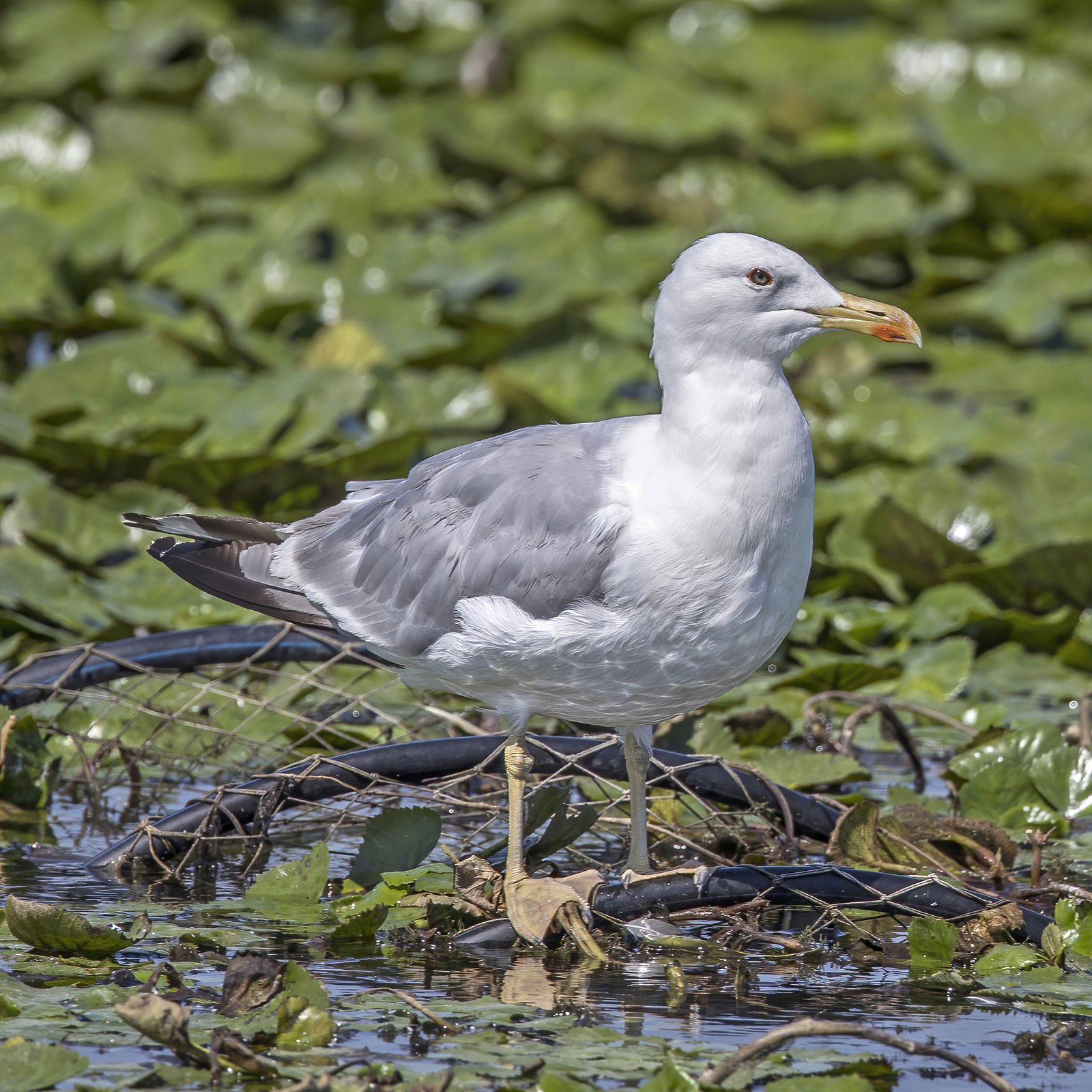
Large and slim, with a pear-shaped body, long legs and long wings projecting well beyond the tail. The head is small with a sloping forehead and a small, often dark eye; the bill is long and parallel-sided without a strong gonys angle, with a small red spot and often a dark mark. The mantle is mid-grey, slightly darker than European Herring Gull and paler than Yellow-legged Gull; the legs are dull pink to pale yellow. The wingtip shows much white: a large white mirror on p10, often a white tip, and long grey tongues on the inner webs of the outer primaries. Even in winter the head is white or only finely streaked on the hindneck. First-years look pale: white head and underparts, plain grey scapulars with a dark shaft streak, dark tertials with a narrow pale edge, a white underwing and a narrow, sharp tail band.
Confusion species
Yellow-legged Gull (Larus michahellis) is bulkier and more angular, with a heavier bill with a clear gonys angle, bright yellow legs, a darker mantle and less white in the wingtip. Armenian Gull (Larus armenicus) is smaller and more compact, with a short, blunt bill with a black band, a darker mantle and a dark wingtip with little white. Lesser Black-backed Gull (Larus fuscus), in the east mainly the forms heuglini and barabensis, has yellow legs and a darker mantle. European Herring Gull (Larus argentatus) is paler and more streaked on the head in winter, with pink legs and a shorter bill.
Habitat
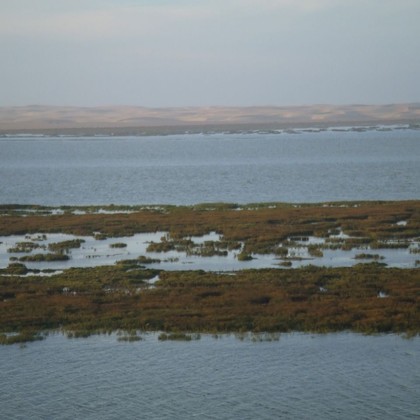
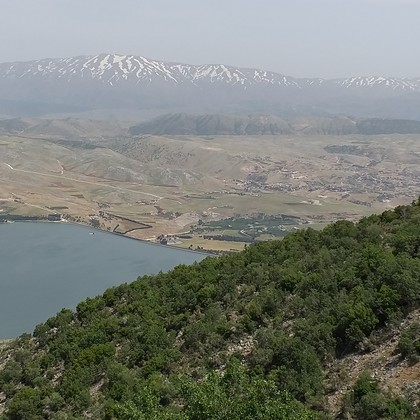
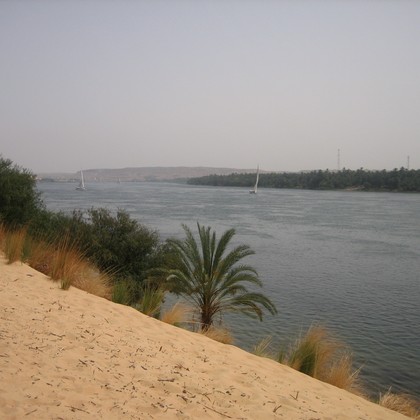
Coasts, estuaries, lagoons, harbours, fish farms, reservoirs, rivers and rubbish tips, also far inland along the Euphrates, the Tigris and the Nile. Breeds outside the region on islands in steppe lakes and in river deltas.
Where the bird is most at home, classified by the habitats of North Africa and the Middle East.
Range and movements
In winter widespread in the east of the region: numerous in Israel (coast, fishponds, Hula Valley and Eilat), Lebanon and Syria, in Egypt in the Nile Delta, along the Suez Canal and on the northern Red Sea, in Jordan at Aqaba, in Iraq along the rivers and marshes, and above all along the Persian Gulf from Kuwait through eastern Saudi Arabia, Bahrain and Qatar to the Emirates and Oman, where thousands winter. In smaller numbers on the Arabian Red Sea coast south to Yemen. West of Egypt rare: odd birds in Libya and Tunisia, and at most a vagrant in Algeria and Morocco. Beyond the region it breeds from Ukraine and the Black Sea through the Caspian to Kazakhstan, and is spreading to Poland and Germany; it also winters around the Black Sea, in central Europe and in south-west Asia.
- Resident
- Summer visitor (c. Apr–Sep)
- Winter visitor (c. Oct–Mar)
- Passage (Mar–Apr, Oct–Nov)
- dark = core range, pale = thinly spread
How and when to look
A winter visit to the rubbish tips and farms around Kuwait, Bahrain or Abu Dhabi often produces hundreds of Caspian Gulls alongside Steppe and Heuglin's Lesser Black-Backed Gulls: ideal for comparing the species side by side. In Israel, the northern coast at Ma'agan Michael with its fishponds is a classic site.
Conservation status
Not globally threatened; the population has increased in recent decades and spread westwards. In the region it benefits from rubbish tips and fish farms; no particular threats are known.
Scientific name
Larus cachinnans | Pallas, 1811
Pallas described the species in 1811 and placed it straight away in the genus where it still stands. The genus Larus was introduced in 1758 by Linnaeus. Larus is Latin, from Ancient Greek laros, and appears to have referred to a gull or another large seabird. cachinnans is Latin for 'laughing', from cachinnare 'to laugh out loud', after the call. The specimen the first description was based on came from the Caspian Sea.