All species › Waders, gulls and terns › Gulls and terns › Brown Noddy
Brown Noddy | Anous stolidus
Noddy | Tiñosa común
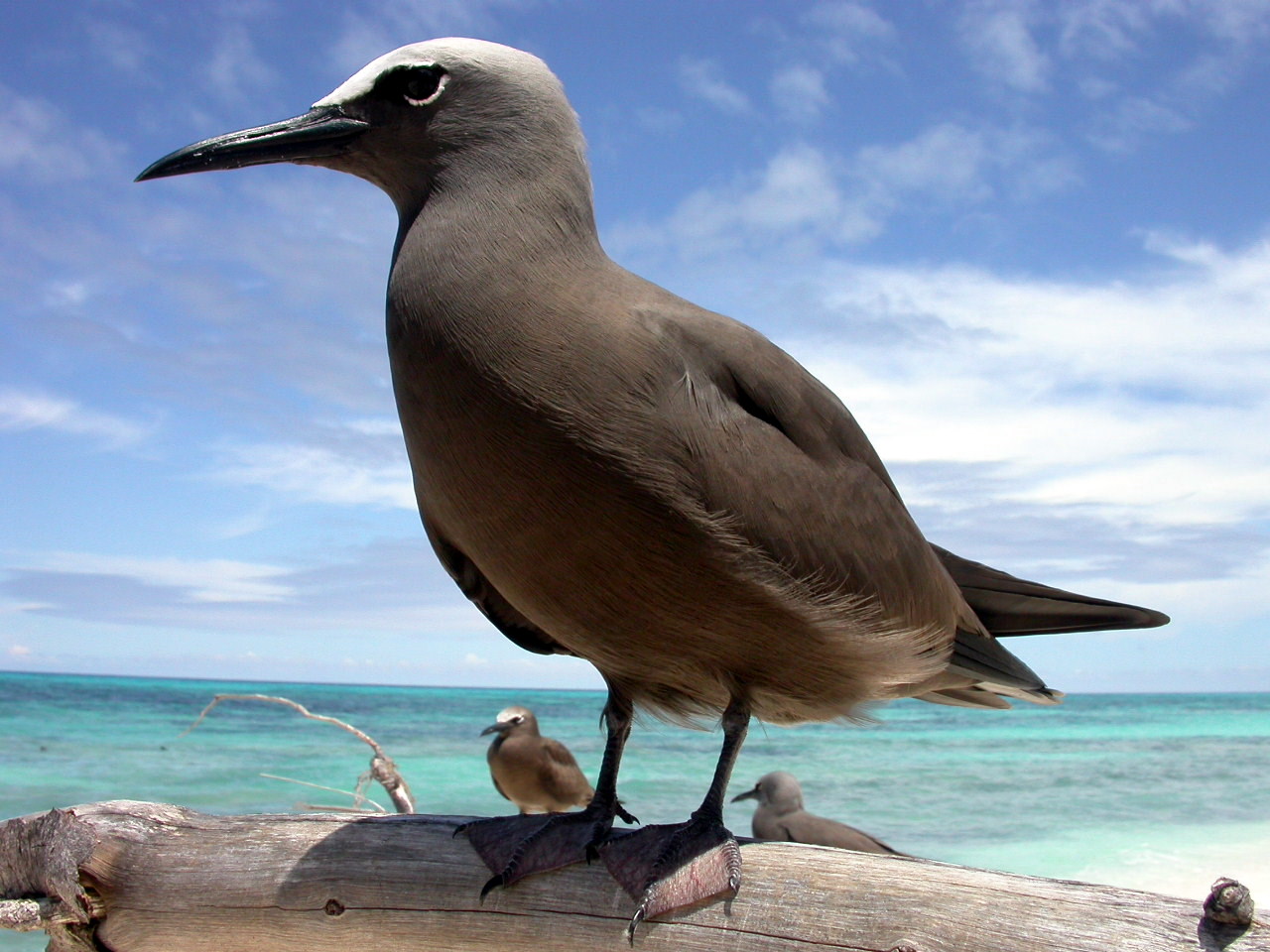
A dark brown tropical tern with a whitish cap that spends almost its whole life at sea. In the region it breeds on coral islets in the southern Red Sea and the Gulf of Aden; further north and in the Arabian Sea and Gulf of Oman it is a scarce visitor.
Voice
At the colony a low, grating karrk or kwok and a rolling purr; usually silent at sea.
Recording: Alexander Schlatmann — CC BY-NC-SA 4.0 · converted to mono · xeno-canto
Identification
Entirely chocolate-brown, with a greyish-white cap that fades to grey on the nape and is sharply demarcated from the black lores; a narrow white crescent below and above the eye. Bill black, fairly stout and slightly decurved; legs blackish-brown. The tail is long and wedge-shaped with a small central notch, often fanned in flight. Juveniles have a browner, less defined cap and pale fringes on the upperparts. Flies low over the sea with easy beats alternating with glides.
Confusion species
Lesser Noddy (Anous tenuirostris) is smaller and slimmer, with a thinner, longer bill, a paler grey cap that blends gradually into the nape and less contrast between cap and forehead; Brown Noddy shows a paler brown bar on the upperwing coverts, Lesser Noddy hardly any. Juvenile Sooty Terns (Onychoprion fuscatus) are also dark brown but have a white belly and undertail coverts and a forked tail. Sooty Gull (Ichthyaetus hemprichii) is much larger with a heavy, two-toned bill.
Habitat
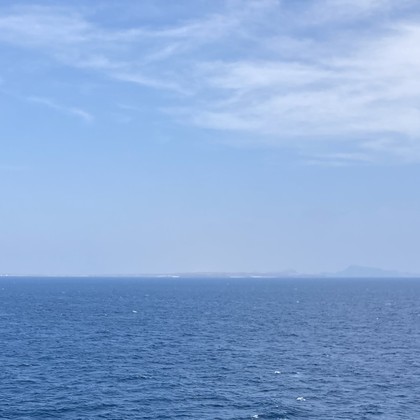
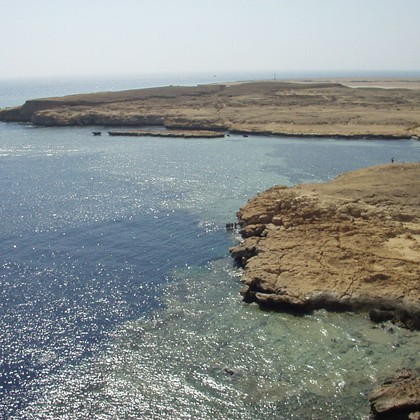
Warm open sea over coral reefs and shoals of small fish. Breeds on bare or vegetated coral islets and rocky islands, nesting on the ground, on rock ledges or low in bushes. Rests on buoys, wrecks, posts and driftwood; far offshore only where food is plentiful.
Where the bird is most at home, classified by the habitats of North Africa and the Middle East.

Range and movements
Breeds in summer on islands in the southern Red Sea, on the Saudi and Yemeni side (including the Farasan archipelago and off the Tihama coast), and in the Gulf of Aden. Scarce in the northern Red Sea and along the Egyptian coast, mainly in late summer. In the Arabian Sea a scarce visitor along the coast of Oman and around Socotra; rare in the Gulf of Oman, with records off the UAE east coast at Dibba. Vagrant to Israel (Eilat) and the Persian Gulf. Beyond the region it breeds on tropical islands in all oceans, in the Indian Ocean from the Seychelles to Western Australia.
- Summer visitor (c. Apr–Sep)
- Winter visitor (c. Oct–Mar)
- Passage (Mar–Apr, Oct–Nov)
- dark = core range, pale = thinly spread
How and when to look
Boat trips from Jizan to the Farasan Islands give the best chance of breeding birds in summer. In the UAE they sometimes perch on the cages of the fish farms off Ras Dibba, together with Lesser Noddies, mainly from July to October.
Conservation status
Not globally threatened and common. In the Red Sea the colonies are vulnerable to disturbance by visitors and fishermen, egg collecting, introduced rats and coastal development; fortunately many breeding islands lie in protected areas such as the Farasan Islands.
Scientific name
Anous stolidus | (Linnaeus, 1758)
Linnaeus described the species in 1758 as Sterna stolida; because it was later moved to another genus, the author and year stand in brackets. The genus Anous was introduced in 1826 by Stephens. Anous is Greek for 'stupid, silly' — for the tameness with which noddies allowed sailors to approach and catch them. stolidus is Latin for 'stupid, dull' — for the birds' tameness, which made them easy to catch at sea. The specimen the first description was based on came from West Indies.