All species › Passerines › Reed warblers › Booted Warbler
Booted Warbler | Iduna caligata
Kleine spotvogel | Zarcero escita
The Booted Warbler is the smallest of the pale Iduna warblers, a compact, sandy-brown bird of the steppes of Russia and Central Asia that winters in India. Its migration route lies largely north and east of the region, so here it is only a rare passage migrant, mainly in eastern Arabia. Every record requires careful separation from Sykes's Warbler.
Voice
Migrants are usually silent but do call: a dry, hard chek or tek, often in short series, not separable from Sykes's Warbler. The song, on the breeding grounds, is a fast, high, dry chatter with short repeated motifs, much faster and sharper than that of Sykes's Warbler.
Recording: Lars Edenius — CC BY-NC-SA 4.0 · converted to mono · xeno-canto
Identification
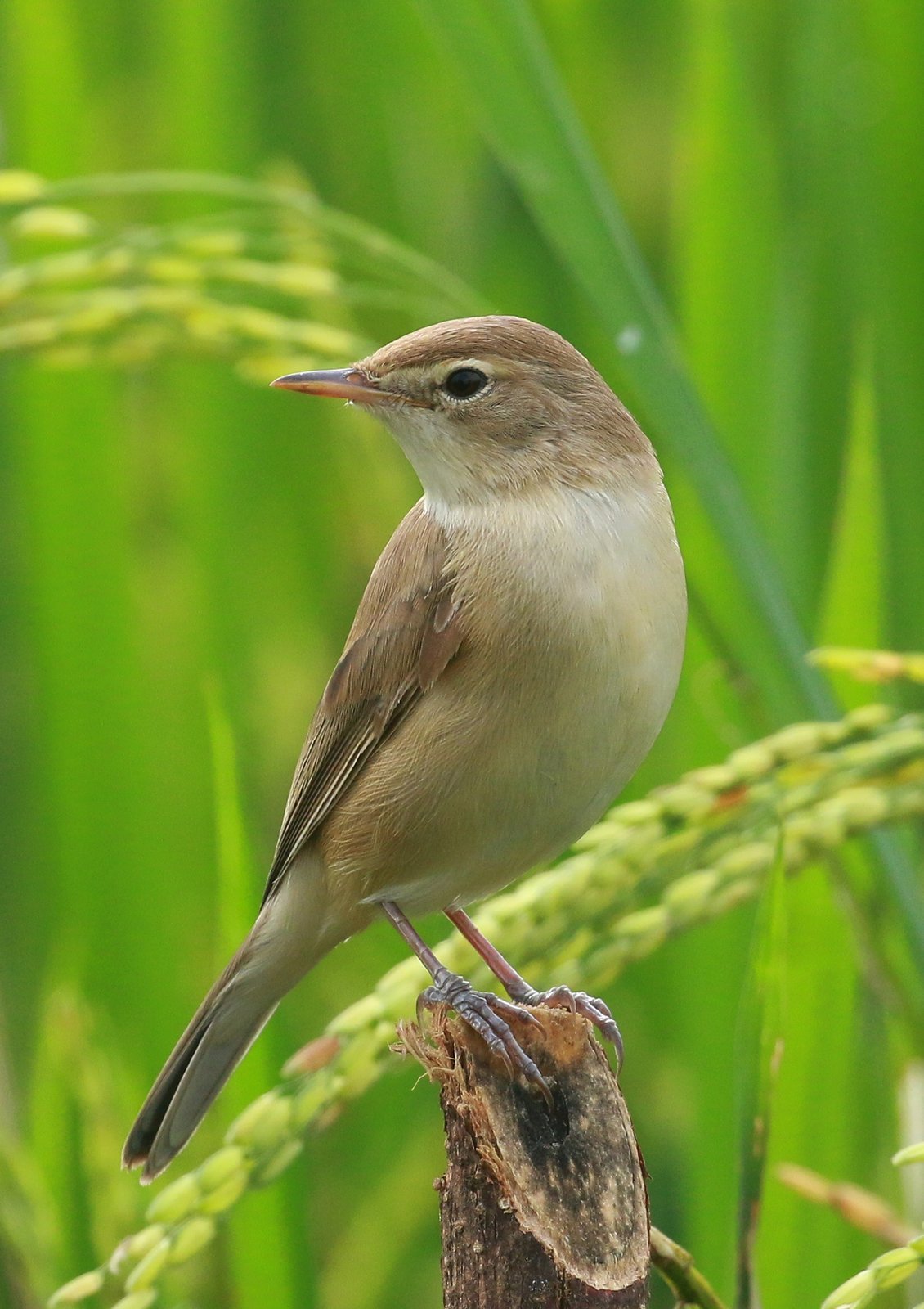
11.5–12.5 cm. Small, round and short-tailed, more like a Lesser Whitethroat than a reed warbler in shape. Upperparts grey-brown, in fresh autumn plumage with a warm sandy-brown wash; underparts white with buff flanks. The head holds the key: a white supercilium reaching clearly behind the eye, bordered above by a faint dark lateral crown-stripe. The bill is short and fine, and the orange lower mandible has a dark tip. No pale wing panel; primary projection about half to two-thirds of the tertials. The short, square tail has a white outer web to the outermost feather. Legs grey-brown to flesh. Sexes alike.
Confusion species
Sykes's Warbler (Iduna rama), far commoner in the region, is larger and longer, cooler sandy grey, with a longer bill without a dark tip, a plainer face without a dark lateral crown-stripe, a shorter primary projection and a longer tail that it constantly pumps downwards. Eastern Olivaceous Warbler (Iduna pallida) is clearly larger and longer-billed and also dips its tail. Lesser Whitethroat (Curruca curruca) has a dark mask and grey head; Common Chiffchaff (Phylloscopus collybita) has a fine, pointed bill and moves much more lightly.
Habitat
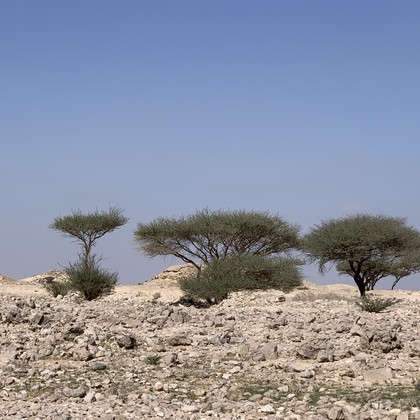
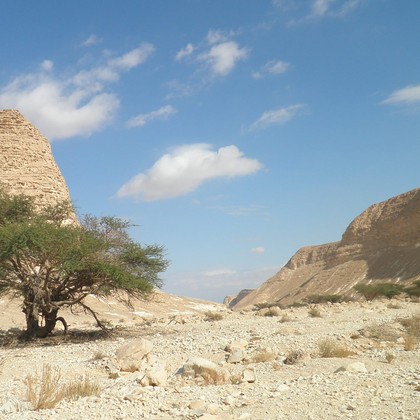
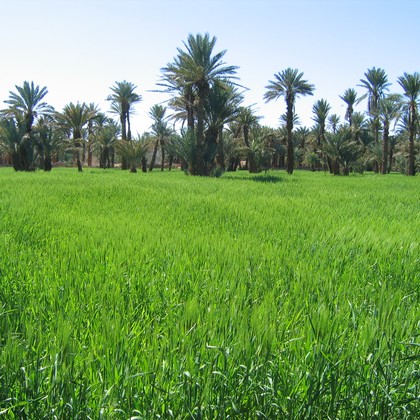
On migration in low bushes and rank vegetation: acacia and Prosopis scrub, tamarisk in wadis, the edges of fields and irrigated farmland, parks and gardens in the desert. Forages low and actively in the foliage.
Where the bird is most at home, classified by the habitats of North Africa and the Middle East.
Range and movements
Rare passage migrant, mainly in autumn (mid-August – October) and less in spring (April – May), almost only in eastern Arabia: a few records a year in the Emirates and Oman, and rare in Qatar, Bahrain and eastern Saudi Arabia. In Kuwait it is an extremely rare vagrant with four records between 2006 and 2013, all in the Sabah Al-Ahmad reserve. Israel, Jordan, Iraq and Egypt have at most a handful of records, North Africa none confirmed. Beyond the region the species breeds from Belarus, central Russia and Kazakhstan to western Mongolia and the upper Yenisei, and winters in the Indian subcontinent.
- Passage (Mar–Apr, Oct–Nov)
- dark = core range, pale = thinly spread
How and when to look
A small, round pale warbler with a clear supercilium and a dark-tipped bill in a garden or scrub in the Emirates or Oman in September is worth chasing; photograph the bill, face and wing and report the bird to the national rarities committee.
Conservation status
Not globally threatened; widespread on its breeding grounds and spreading west in European Russia. In the region a rare visitor without threats of its own. Many older Arabian records of ‘Booted Warblers’ date from when Sykes's Warbler was still treated as a subspecies and probably refer to that species.
Scientific name
Iduna caligata | (Lichtenstein, 1823)
Lichtenstein described the species in 1823 as Sylvia caligata; because it was later moved to another genus, the author and year stand in brackets. The genus Iduna was introduced in 1840 by Keyserling & Blasius. Iduna is usually linked to Iðunn, the Norse goddess who guarded the apples of eternal youth; the authors of the name gave no explanation, and other derivations have been proposed as well. caligata is Latin for 'booted', from caliga 'boot'. The specimen the first description was based on came from the Ilek River near Orenburg.