All species › Pelicans, herons and ibises › Herons and bitterns › Black-Crowned Night-Heron
Black-Crowned Night-Heron | Nycticorax nycticorax
Kwak | Martinete común
A stocky heron of the twilight, black, grey and white with red eyes, that roosts hidden in trees by day. It breeds patchily from Morocco to Iraq and migrates in numbers through the Sahara, the Nile Valley and the Levant.
Voice
A hoarse, short kwak or kwok, especially in flight at nightfall; croaking and barking sounds at the colony.
Recording: Timeo CONSTANT — CC BY-NC-SA 4.0 · converted to mono · xeno-canto
Identification
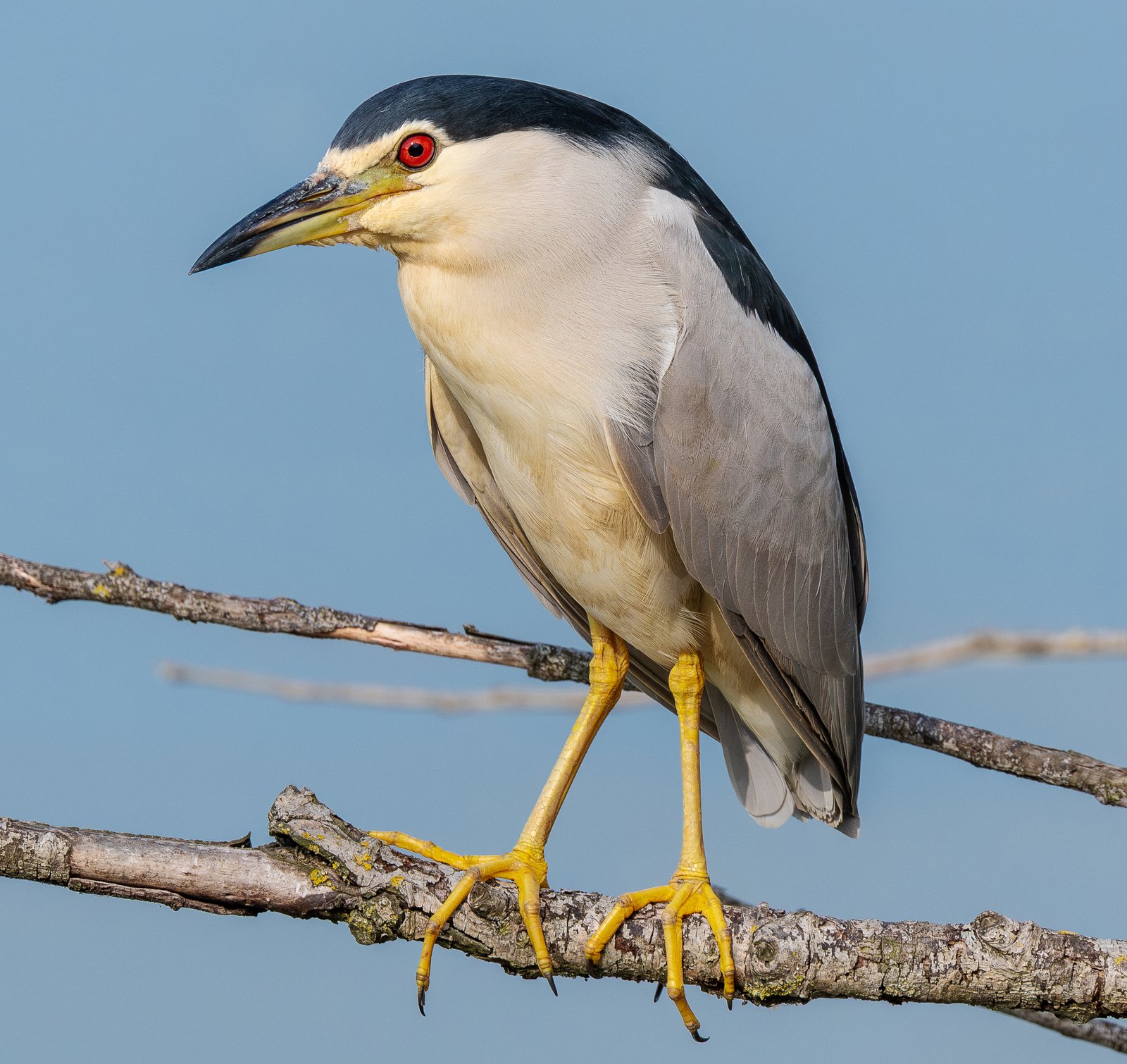
Stocky, with a short neck and fairly short legs. Adults have a black crown and back, grey wings and tail, and white underparts and forehead; in the breeding season two or three long white nape plumes. Bill thick and black, eyes large and ruby red, legs yellow (pink during courtship). Juveniles are grey-brown with white drop-shaped spots on the upperparts and streaked underparts, the eye orange. Second-year birds are intermediate with a plain brownish back. In flight it shows broad, rounded wings and feet barely projecting beyond the tail.
Confusion species
Juveniles resemble Eurasian Bittern (Botaurus stellaris), but that species is larger and warmer golden brown, without white spots and with a black crown and moustache. Juvenile Striated Heron (Butorides striata) is smaller and slimmer, with a longer, thinner bill and no large white spots. The adult is unmistakable.
Habitat
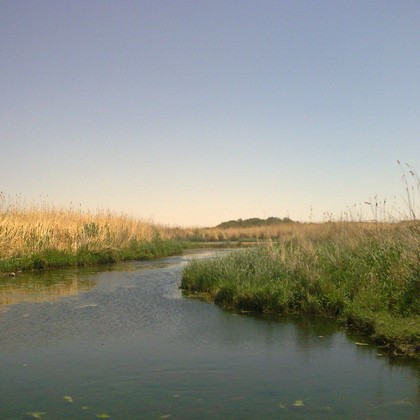
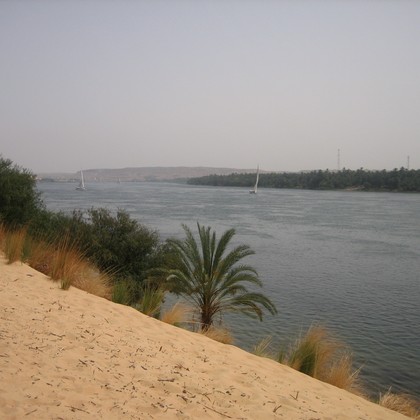
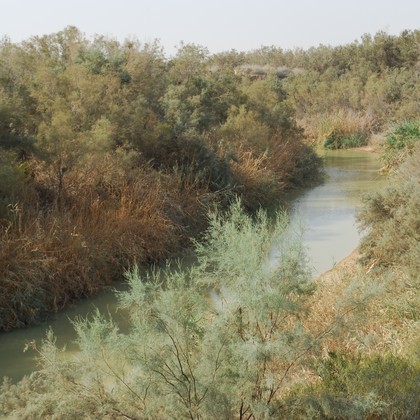
Marshes, riverbanks with trees or bushes, fishponds, oases and irrigated land. It roosts by day in dense trees, tamarisks or reeds and feeds at dusk and at night. Breeds in colonies, often together with other herons.
Where the bird is most at home, classified by the habitats of North Africa and the Middle East.
Range and movements
Breeds in Morocco, northern Algeria, Tunisia and locally in Libya; in Egypt present year-round along the Nile, in the Delta and the Faiyum. In the east it breeds in Israel (mainly the Hula and Beit She'an valleys and the coastal plain), Lebanon, Syria, Jordan and Iraq. In April–May and August–October it migrates on a broad front through the Sahara and the Levant, and also through Arabia to the Gulf states, Oman and Yemen, where small numbers winter. Beyond the region it breeds in Europe, Asia, Africa and the Americas; Palearctic breeders winter mainly in the Sahel and West Africa.
- Resident
- Summer visitor (c. Apr–Sep)
- Winter visitor (c. Oct–Mar)
- Passage (Mar–Apr, Oct–Nov)
- dark = core range, pale = thinly spread
How and when to look
At sunset night-herons fly out from their day roosts over the fishponds of the Hula Valley and along the Nile in Cairo and Luxor. On passage they rest by day in tamarisks or palms in oases and kibbutzim; in spring, search the Arava and around Eilat for small groups in dense trees.
Conservation status
Not globally threatened. Locally declining in Europe and North Africa through loss of wetlands and disturbance of colonies; shooting at fish farms and drought in the Sahel, where it winters, also play a part.
Scientific name
Nycticorax nycticorax | (Linnaeus, 1758)
Linnaeus described the species in 1758 as Ardea Nycticorax; because it was later moved to another genus, the author and year stand in brackets. The genus Nycticorax was introduced in 1817 by Forster. Nycticorax is Greek, from nux, genitive nuktos, 'night' and korax 'raven': night raven. In Aristotle and Hesychius it is a bird of ill omen, perhaps an owl; Conrad Gessner used the word for this heron in 1555. The specific epithet repeats the genus name. The specimen the first description was based on came from southern Europe.