All species › Woodpeckers and allies › Woodpeckers › Arabian Woodpecker
Arabian Woodpecker | Dendrocoptes dorae
Arabische specht | Pico árabe
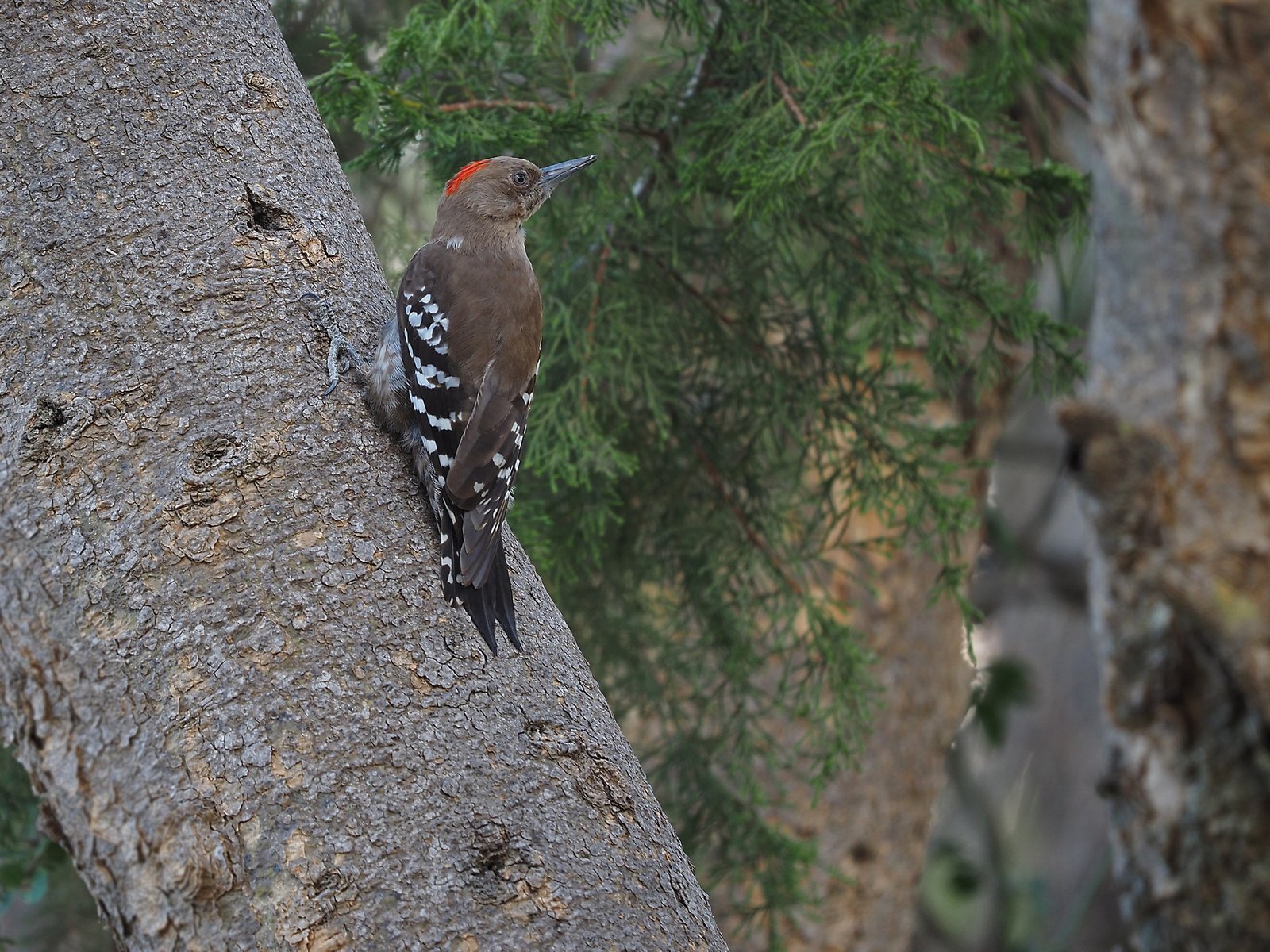
The only true woodpecker of the Arabian Peninsula, endemic to the mountains and wadis of south-west Saudi Arabia and Yemen. It is a small, unobtrusive, olive-brown woodpecker that lives scattered and at low density in acacia woodland, juniper forest and old orchards, and is more often heard tapping than seen.
Voice
A high, rapid, rather whinnying kee-kee-kee-kee or rattling kek-kek-kek, and a single sharp pik. Drums briefly and softly. Often first noticed by its tapping on wood.
Recording: Zsombor Károlyi — CC BY-NC-SA 4.0 · converted to mono · xeno-canto
Identification
A small woodpecker with a fairly short, straight bill. Head and upperparts plain olive-brown to greyish brown, wings and tail darker with narrow white bars and spots. Underparts plain pale grey-brown to buff, sometimes faintly streaked, with a pinkish-red to orange-red patch in the centre of the belly. The face is somewhat paler, with a faint dark eye-stripe and moustache. The male has a small red patch on the nape, the female none. Juveniles are duller, with little or no red on the belly.
Confusion species
Within its range confusion is hardly possible: it is the only breeding woodpecker in Arabia. Eurasian Wryneck (Jynx torquilla), which occurs there in winter, is grey with a brown back band, finely barred underparts and a long tail, and does not climb trunks. Visitors from the Levant will know the pied woodpeckers, which are black and white with red undertail coverts.
Habitat
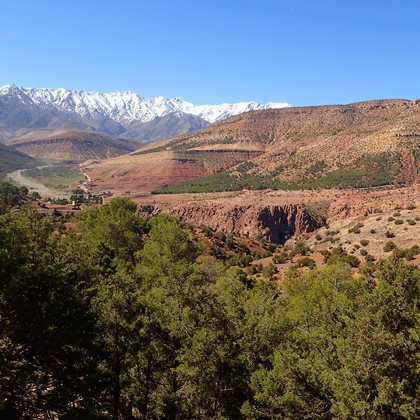
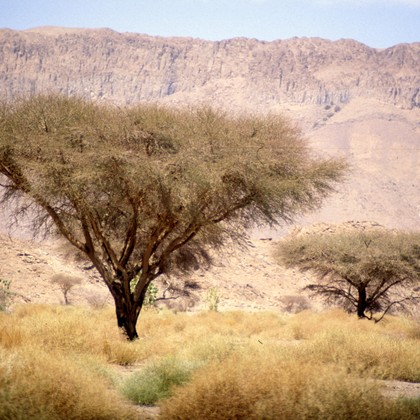
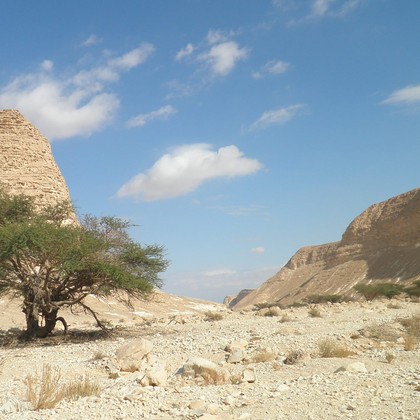
Fragmented woodland of many kinds: acacia woodland on slopes and in wadis, juniper, olive and dragon-tree woodland in the highlands, old orchards and shade coffee at mid-altitudes, and lower down fig, date-palm and screw-pine groves along streams. From near sea level to about 3,000 m; breeds mainly in the highlands between about 1,400 and 2,400 m, in a self-excavated hole in a large tree.
Where the bird is most at home, classified by the habitats of North Africa and the Middle East.
Range and movements
Endemic to south-west Arabia. In Saudi Arabia along the western highlands and the Red Sea foothills, from the Yemen border through Asir and the Hijaz north to about 26°N, with well-known sites around Abha, Al Baha and Taif. In Yemen widespread through the western highlands and the mountains above the Tihama, from the Saudi border south to the hills above Taizz and the hinterland of Aden. Absent from Oman and Socotra. It does not occur outside the region.
- Resident
- Summer visitor (c. Apr–Sep)
- Winter visitor (c. Oct–Mar)
- Passage (Mar–Apr, Oct–Nov)
- dark = core range, pale = thinly spread
How and when to look
In Saudi Arabia the juniper forests and old orchards around Abha (including Al Soudah and Tanomah) and the acacia woodland in the wadis south of Taif are the best sites. It is never numerous: walk slowly through old woodland, listen for soft tapping and the high rattle, and check trunks and thick branches in the canopy.
Conservation status
Near Threatened. The population is estimated at fewer than 10,000 mature birds and is probably declining. Woodland in the Arabian highlands is being fragmented by cutting and lopping for charcoal, firewood and fodder, by overgrazing and by building and road construction; drought-related dieback of juniper woodland also plays a part.
Scientific name
Dendrocoptes dorae | (Bates & Kinnear, 1935)
Bates & Kinnear described the species in 1935 as Desertipicus dorae; because it was later moved to another genus, the author and year stand in brackets. The genus Dendrocoptes was introduced in 1863 by Cabanis & Heine. Dendrocoptes is Greek, from dendron 'tree' and koptō 'to strike'. dorae honours Dora Philby, wife of the British Arabian explorer Harry St John Philby. The specimen the first description was based on came from Ukadh, on the Taif–Mecca road, Saudi Arabia.