All species › Passerines › New World sparrows › Yellow-eyed Junco
Position in the tree Birds Aves › Birds with a flexible palate Neognathae › All other modern birds Neoaves › Landbirds Telluraves › Falcons, parrots and passerines Australaves › Falcons and passerines Eufalconimorphae › Parrots and passerines Psittacopasserae
Yellow-eyed Junco | Junco phaeonotus
Geeloogjunco | Junco ojo de lumbre
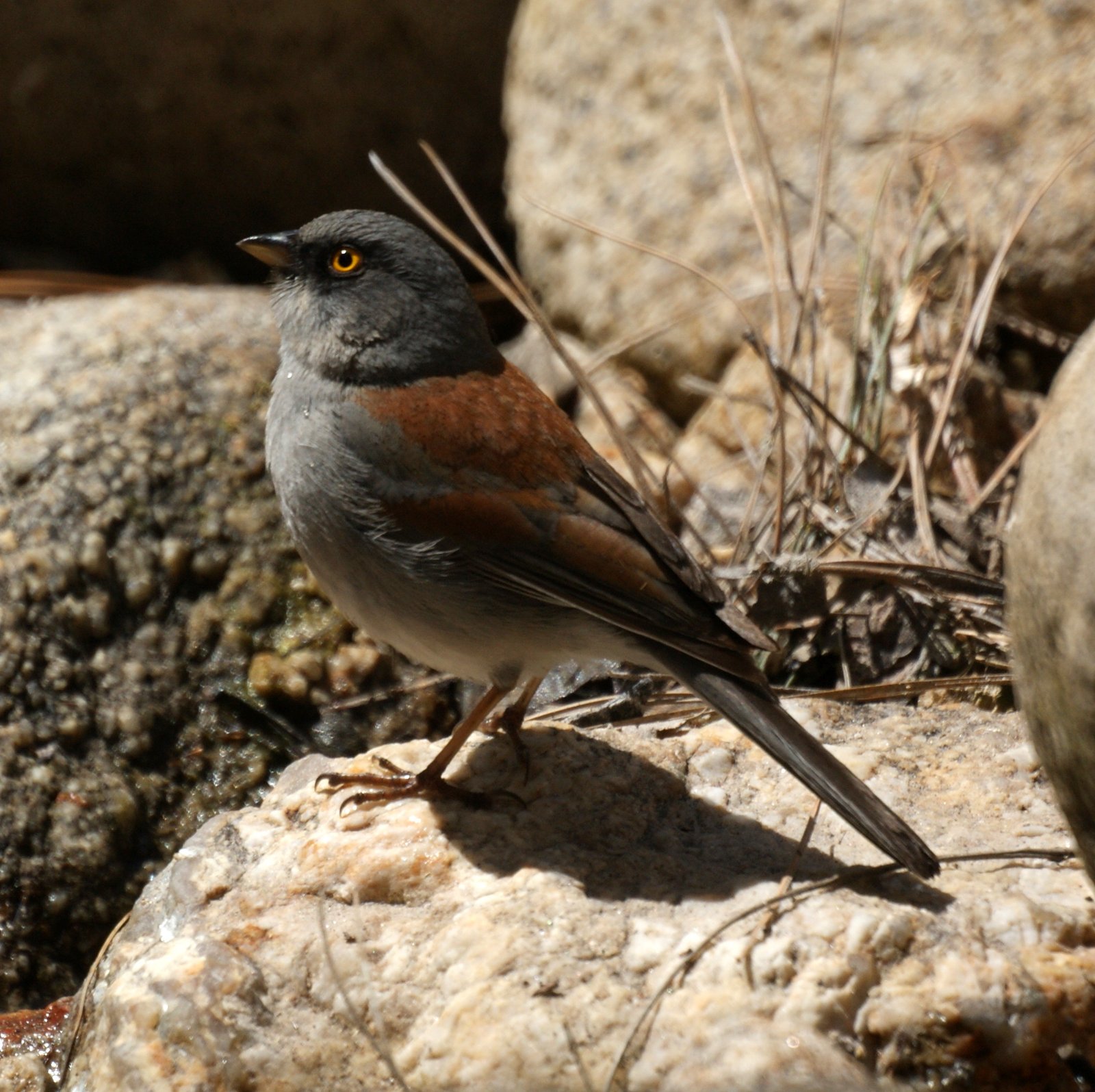
The Yellow-eyed Junco is a junco of mountain forest with bright yellow eyes, a rufous back and a two-toned bill. It shuffles rather than hops and is often fairly tame in pine forest. In the guide area it lives in the mountains from northern Mexico to Guatemala.
Voice
The song is more varied than that of Dark-eyed Junco: a series of clear, alternating notes and trills, often in three parts. Call a high, thin tseet and a dry tik.
Recording: Scott Crabtree — CC BY-NC-SA 4.0 · converted to mono · xeno-canto
Identification
15–16 cm. Iris yellow to orange-yellow, with dark lores that make the eye stand out even more. Head and breast grey, back rufous, greater coverts and tertials edged rufous, belly whitish. Upper mandible dark, lower mandible yellow to flesh-coloured. Outer tail feathers white. Young birds are brown and streaked, with a darker eye. Birds from the south of the range differ somewhat in tone.
Confusion species
Dark-eyed Junco Junco hyemalis, in winter in northern Mexico, has dark eyes and an all-pink bill; the Grey-headed group of that species also has a rufous back, but no rufous wing pattern. Baird's Junco Junco bairdi of Baja California Sur is smaller and has warmer buff-brown flanks. In Costa Rica and Panama it is replaced by Volcano Junco Junco vulcani.
Habitat
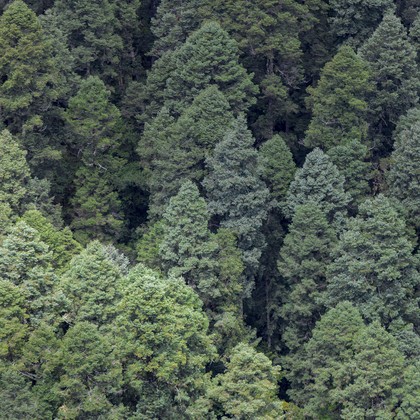
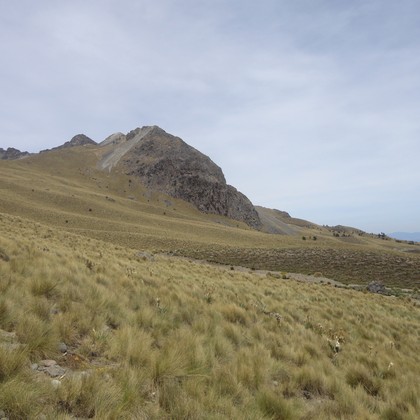
Open pine, pine-oak and fir forest in the mountains, mostly above 1800 m, also forest edges and grassy clearings; locally lower in winter. It forages on the ground for seeds and insects.
Where the bird is most at home, classified by the vegetation units of Mexico and Central America.


Range and movements
From south-eastern Arizona and south-western New Mexico through the Sierra Madre Occidental and the Sierra Madre Oriental, the volcanic mountains of central Mexico and Oaxaca to the highlands of Chiapas and Guatemala. Outside the guide area only in the south-western United States.
- Resident
- dark = core range, pale = thinly spread
How and when to look
Common in the pine forests around Mexico City, for example in Desierto de los Leones and on the slopes of Iztaccíhuatl, and in the Chiapas highlands around San Cristóbal de las Casas; often in clearings and along trails.
Conservation status
Not threatened (LC). Common in the mountain forests of Mexico; locally declining through logging and forest fires.
Scientific name
Junco phaeonotus | Wagler, 1831
Wagler described the species in 1831 and placed it straight away in the genus where it still stands. He introduced the genus Junco in that same work. Junco comes from Latin iuncus meaning 'rush'. phaeonotus is Greek, from phaios 'dusky' and nōtos 'back', after the rufous-brown back. The specimen the first description was based on came from Mexico (not specified further).