All species › Passerines › Cotingas › Yellow-billed Cotinga
Position in the tree Birds Aves › Birds with a flexible palate Neognathae › All other modern birds Neoaves › Landbirds Telluraves › Falcons, parrots and passerines Australaves › Falcons and passerines Eufalconimorphae › Parrots and passerines Psittacopasserae
Yellow-billed Cotinga | Carpodectes antoniae
Geelsnavelcotinga | Cotinga piquiamarillo
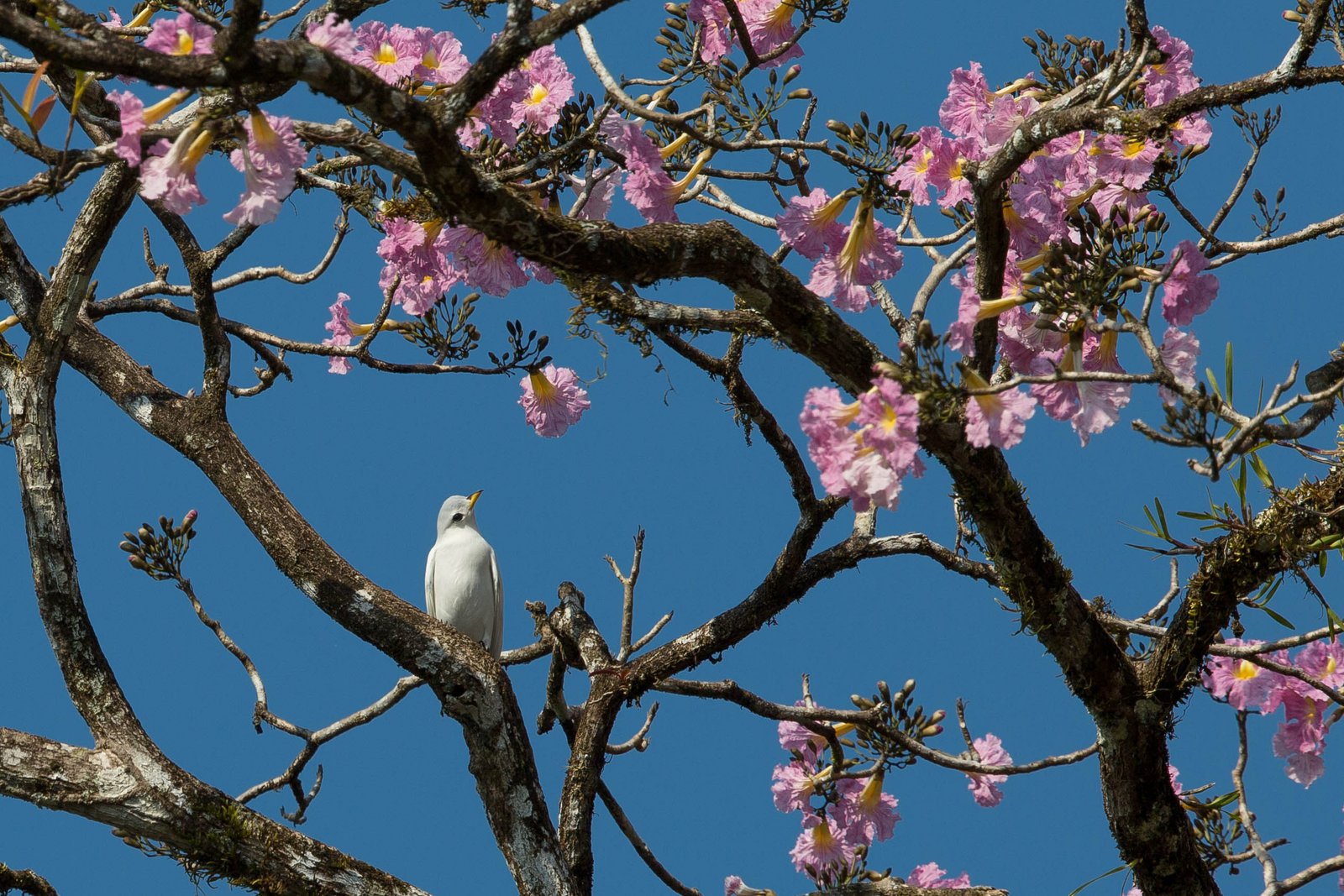
The Yellow-billed Cotinga is a white cotinga of mangroves and adjacent lowland forest along the Pacific coast. The male stands out by its snow-white plumage and yellow bill. The species lives only in south-western Costa Rica and western Panama and is therefore endemic to the guide area.
Voice
Usually silent; sometimes a soft, short tchk.
No recording with a suitable Creative Commons licence is available for this species yet.
Identification
18–20 cm. The male is entirely snow-white with a yellow to orange-yellow bill and a dark eye. The female is pale grey on head and back and whitish below, with dark grey wings with white edges to the coverts and tertials; her bill is also yellow, with a dark upper edge. Round-headed and short-tailed.
Confusion species
Snowy Cotinga Carpodectes nitidus has a dark bill and lives on the Caribbean slope; Black-tipped Cotinga Carpodectes hopkei is larger, has black wing tips and lives only in eastern Panama. Tityras, such as Masked Tityra Tityra semifasciata, have black wings and red bare skin around the eye and bill base.
Habitat
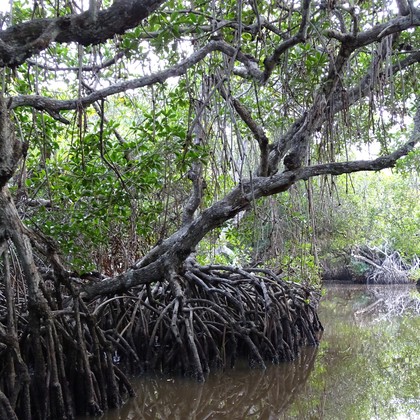
Mangroves and the lowland forest, gallery forest and forest edges behind them, mainly below 200 m. It uses the mangroves for nesting and roosting and by day searches for fruit in fruiting trees in the forest and in semi-open country with tall trees. Outside the breeding season birds wander locally along the coast and the adjacent interior.
Where the bird is most at home, classified by the vegetation units of Mexico and Central America.



Range and movements
Pacific coastal lowlands of south-western Costa Rica, mainly around the Térraba–Sierpe delta, the Osa Peninsula and the Golfo Dulce; in western Panama very scarce in the mangroves of Chiriquí. Does not occur outside the guide area.
- Resident
- dark = core range, pale = thinly spread
How and when to look
The most frequently used site is the area around the bridge at Rincón on the Golfo Dulce on Osa, where birds perch on high bare branches, especially early in the morning. Also from a boat in the Sierpe mangroves.
Conservation status
Near Threatened. Both range and population are small; the species is vulnerable to the loss of mangroves and lowland forest along the Pacific coast.
Scientific name
Carpodectes antoniae | Ridgway, 1884
Ridgway described the species in 1884 and placed it straight away in the genus where it still stands. The genus Carpodectes was introduced in 1865 by Salvin. Carpodectes is Greek, from karpos 'fruit' and dēktēs 'biter': 'fruit-biter', after the fruit diet. antoniae honours Antonia Zeledón (1834–1883), sister of the Costa Rican collector José Zeledón. The specimen the first description was based on came from Pirrís, southwestern Costa Rica.