All species › Waders, gulls and terns › Plovers and lapwings › Wilson's Plover
Position in the tree Birds Aves › Birds with a flexible palate Neognathae › All other modern birds Neoaves › Birds of the elements Elementaves › Cranes and waders Gruimorphae
Wilson's Plover | Anarhynchus wilsonia
Wilsons plevier | Chorlo pico grueso
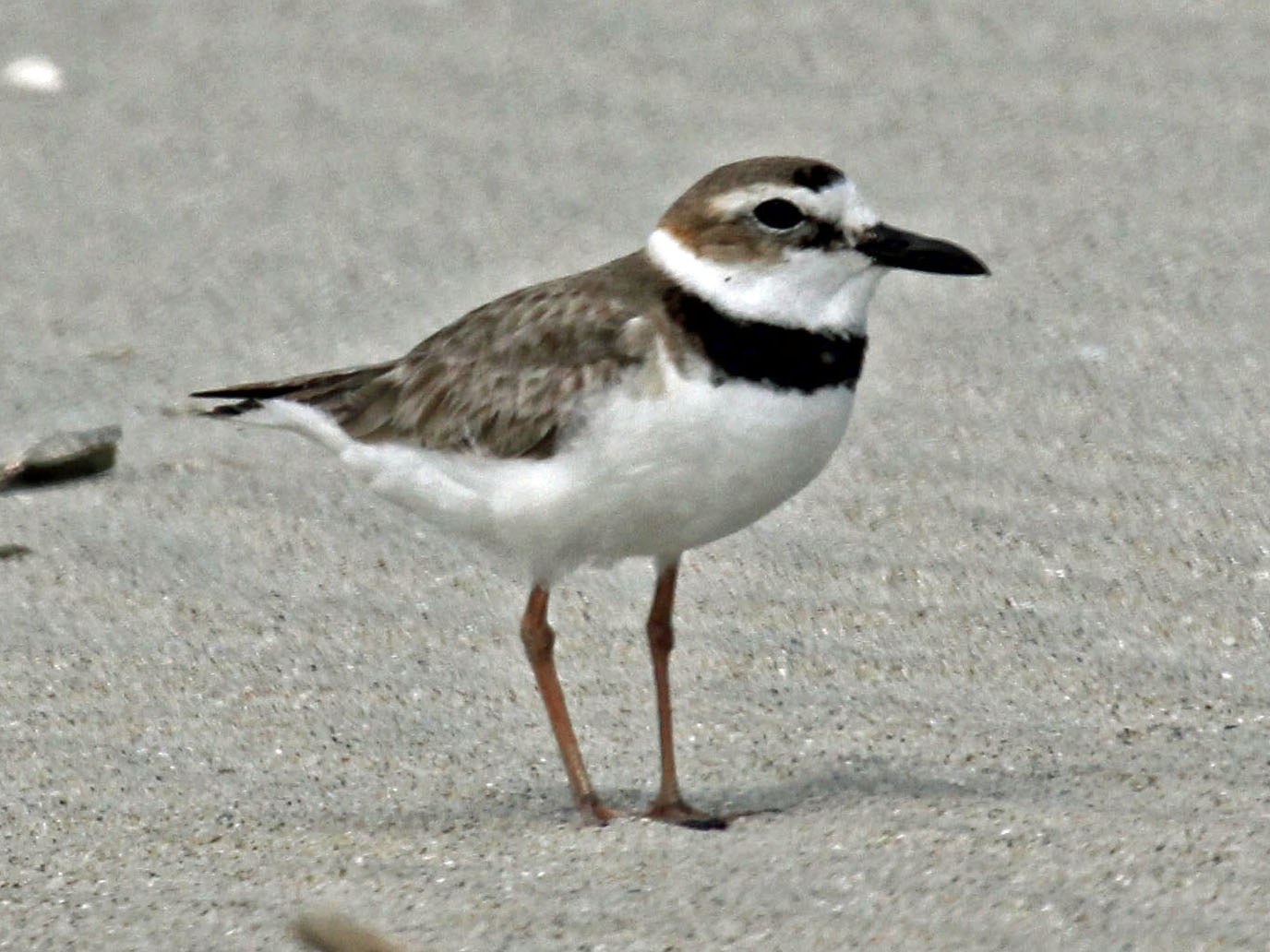
Wilson's Plover is a medium-sized plover with a strikingly heavy black bill, a bird of sandy beaches, mudflats and lagoons along both coasts of the guide area. It breeds at many sites along the Pacific and Gulf coasts; in winter birds from the south-eastern United States join them. It uses its heavy bill mainly to catch crabs.
Voice
A hard, short wheet or quip, and a dry, rattling dididid, especially when disturbed.
Recording: Robson Silva e Silva — CC BY-NC-SA 4.0 · converted to mono · xeno-canto
Identification
17–20 cm. A stocky plover with a large head and a long, heavy, all-black bill. The upperparts are grey-brown, the underparts white, with a white collar and a broad breast band: black in the breeding male, brown in the female, in non-breeding plumage and in juveniles. The forehead is white, with a black band across the forecrown in the male; the female often shows some rufous on the cheek and breast band. The legs are flesh-coloured to dull pink. In flight a narrow white wing bar.
Confusion species
Semipalmated Plover Charadrius semipalmatus is smaller and darker, with a short bill with an orange base and orange legs. Killdeer Charadrius vociferus is larger, with two breast bands and a long orange rump and tail. Collared Plover Anarhynchus collaris is smaller and slimmer, with a thin bill, no white collar and rufous on the head. Snowy Plover Anarhynchus nivosus is smaller and paler, with a thin bill and only dark patches on the sides of the breast.
Habitat
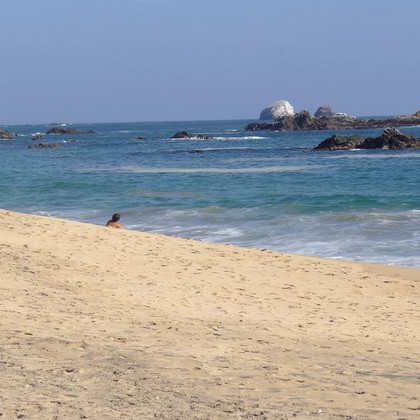
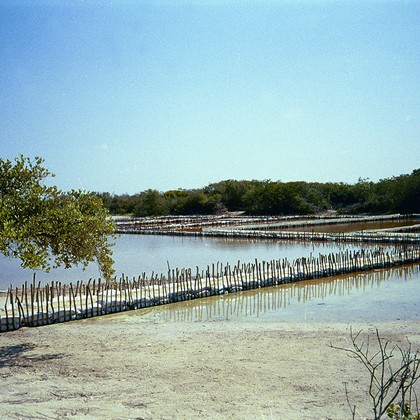
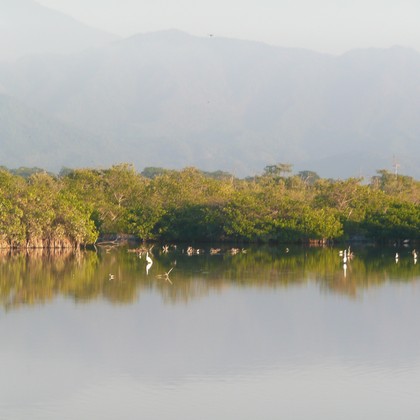
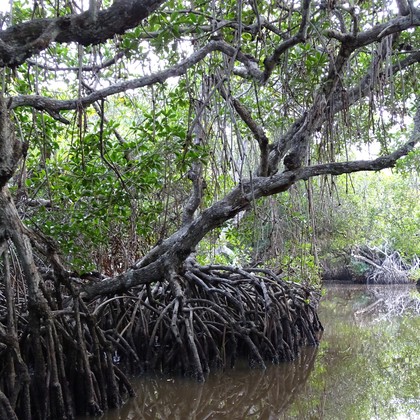
Sandy beaches, mudflats, edges of lagoons and estuaries, salt pans and the open, sandy edges of mangroves; rarely far from salt water. Feeds mainly on crabs, also on other small crustaceans, worms and insects. Nests in a scrape on sand or shell grit above the tideline.
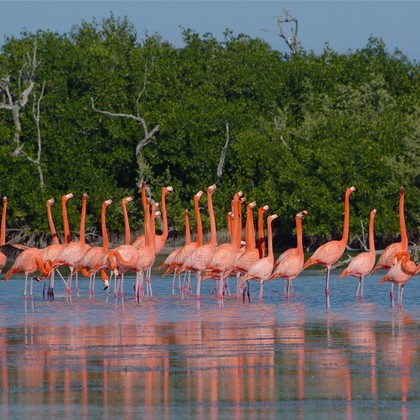
Where the bird is most at home, classified by the vegetation units of Mexico and Central America.
Range and movements
Along the Pacific coast from Baja California and the Gulf of California south to Panama, and along the Gulf coast from Tamaulipas to the Yucatán Peninsula and on along the Caribbean coast of Central America. Most numerous in north-western Mexico and along the coast of Tamaulipas; scarcer and local along the Caribbean coast of Central America. Outside the guide area along the coasts of the south-eastern United States, the West Indies and northern South America, south to Peru and Brazil.
- Resident
- Summer visitor (c. Apr–Sep)
- Winter visitor (c. Oct–Mar)
- dark = core range, pale = thinly spread
How and when to look
On wide sand flats and mudflats on a rising tide, often among other plovers; the heavy black bill is the first thing to catch the eye, even at a distance.
Conservation status
Not threatened. Locally the species is declining through coastal development, beach recreation and disturbance of breeding sites.
Scientific name
Anarhynchus wilsonia | (Ord, 1814)
Ord described the species in 1814 as Charadrius wilsonia; because it was later moved to another genus, the author and year stand in brackets. The genus Anarhynchus was introduced in 1832 by Quoy & Gaimard. Anarhynchus is Greek, from ana- 'backward' and rhunkhos 'bill', after the sideways-bent bill of the wrybill, the type species of the genus. wilsonia honours the Scottish-American ornithologist Alexander Wilson (1766–1813), the 'father of American ornithology'. The specimen the first description was based on came from Cape May, New Jersey.