All species › Swifts › Hummingbirds › White-throated Mountaingem
Position in the tree Birds Aves › Birds with a flexible palate Neognathae › All other modern birds Neoaves › Birds of the elements Elementaves › Nightjars and swifts Strisores
White-throated Mountaingem | Lampornis castaneoventris
Roodbuikjuweelkolibrie | Colibrí montañés gorgiblanco
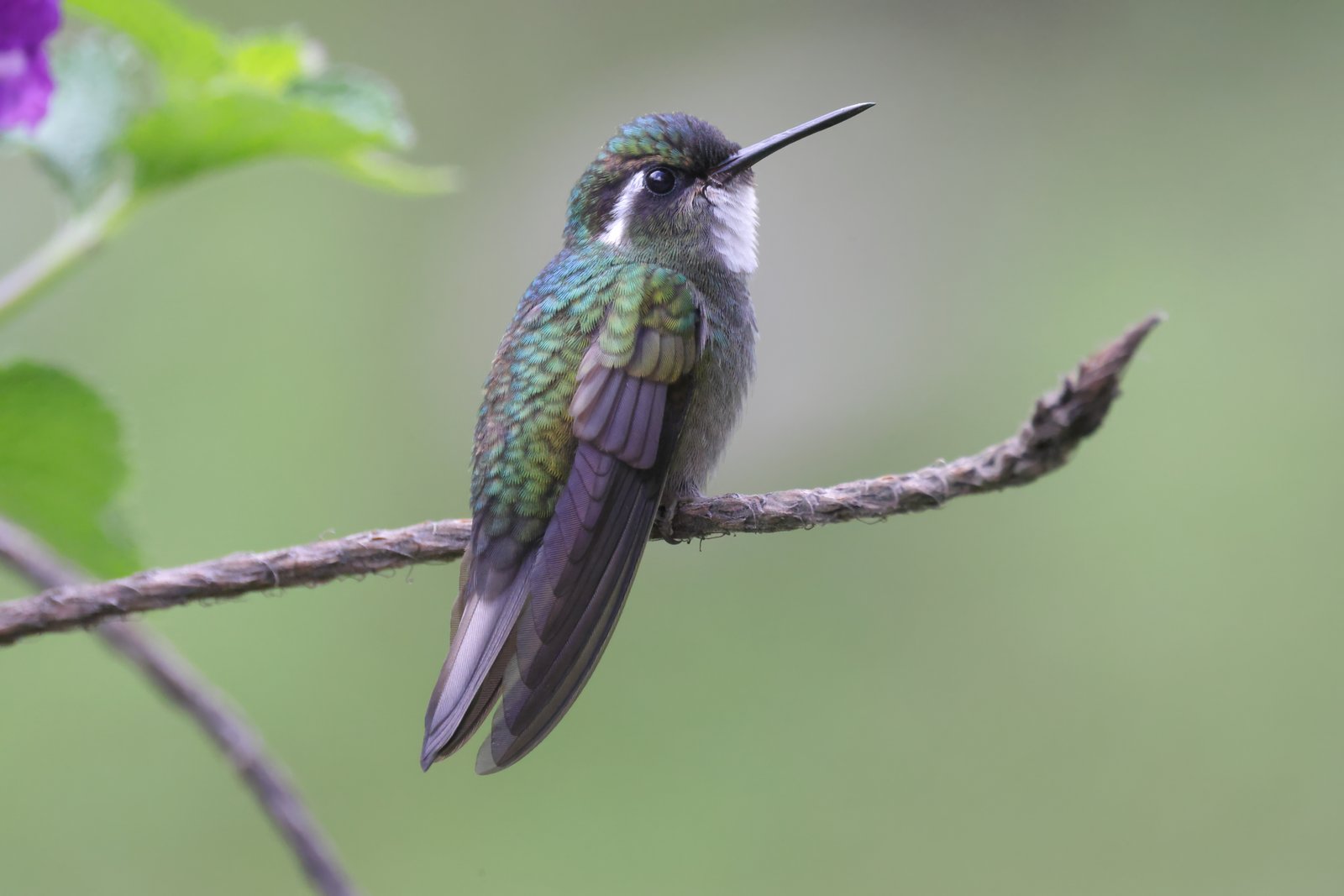
The White-throated Mountaingem is the mountaingem of the highest montane forests of Costa Rica and western Panama. The scientific name refers to the chestnut underparts of the female; the male has a white throat. At feeders in the oak forest of the Talamanca it is a regular visitor.
Voice
A dry chik, and in chases a rattling twitter.
No recording with a suitable Creative Commons licence is available for this species yet.
Identification
10–11 cm, with a straight black bill. The upperparts are green, with a white stripe behind the eye and a dark cheek patch. The male has a white throat and grey underparts; the tail is grey in Costa Rica and darker blue-black in Panama. The female has a cinnamon to chestnut throat and underparts and a grey or dark tail with pale tips.
Confusion species
Purple-throated Mountaingem Lampornis calolaemus lives lower in the mountains; the male has a purple throat and a blue-black tail. Females of the two species can hardly be separated in the field. White-bellied Mountaingem Lampornis hemileucus has a white belly and lives lower, on the Caribbean slope. Volcano Hummingbird Selasphorus flammula is much smaller and has rufous in the tail.
Habitat
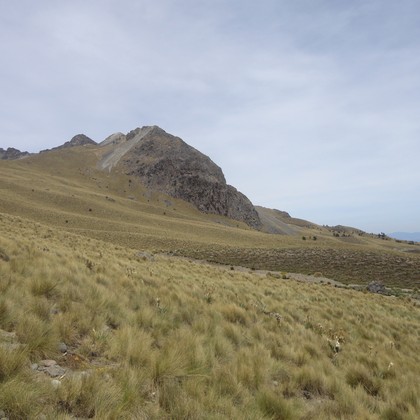
Oak forest and highland rainforest with mosses and bamboo, forest edges, scrub up to the treeline and gardens, at about 2000 to 3000 m, locally lower. It feeds in the understorey and middle strata, especially at flowers of ericaceous shrubs and salvias, and catches small insects.
Where the bird is most at home, classified by the vegetation units of Mexico and Central America.



Range and movements
Endemic to the guide area. In the highlands of Costa Rica, mainly in the Cordillera de Talamanca, and in western Panama in Chiriquí and adjacent Bocas del Toro.
- Resident
- dark = core range, pale = thinly spread
How and when to look
At lodge feeders in the San Gerardo de Dota valley and along the Pan-American Highway near Cerro de la Muerte in Costa Rica; in Panama on the slopes of Barú volcano and at Cerro Punta.
Conservation status
Not threatened. Common in suitable habitat. The range is small, but lies largely within protected areas.
Scientific name
Lampornis castaneoventris | (Gould, 1851)
Gould described the species in 1851 as Trochilus (--?) castaneoventris; because it was later moved to another genus, the author and year stand in brackets. The genus Lampornis was introduced in 1827 by Swainson. Lampornis is Greek, from lampē 'torch, light' and ornis 'bird': 'light-bird', after the glittering throat. castaneoventris is Latin, from castaneus 'chestnut' and venter 'belly', after the brownish belly. The specimen the first description was based on came from Cordillera de Chiriquí (c. 1,800 m), Panama.