All species › Swifts › Swifts › White-fronted Swift
Position in the tree Birds Aves › Birds with a flexible palate Neognathae › All other modern birds Neoaves › Birds of the elements Elementaves › Nightjars and swifts Strisores
White-fronted Swift | Cypseloides storeri
Witvoorhoofdgierzwaluw | Vencejo frente blanca
The White-fronted Swift is one of the least known birds of Mexico. The species was only described in 1992, from birds collected in Michoacán, and since then it has been confirmed at only a handful of sites in the west and south of the country. In the field it can hardly be told from other dark swifts, so its range and numbers are largely unknown.
Voice
Barely known. Flocks probably give dry, chirping or chipping calls like other Cypseloides swifts; a reliable description is lacking.
Recording: Nathan Pieplow — CC BY-NC-SA 4.0 · converted to mono · xeno-canto
Identification
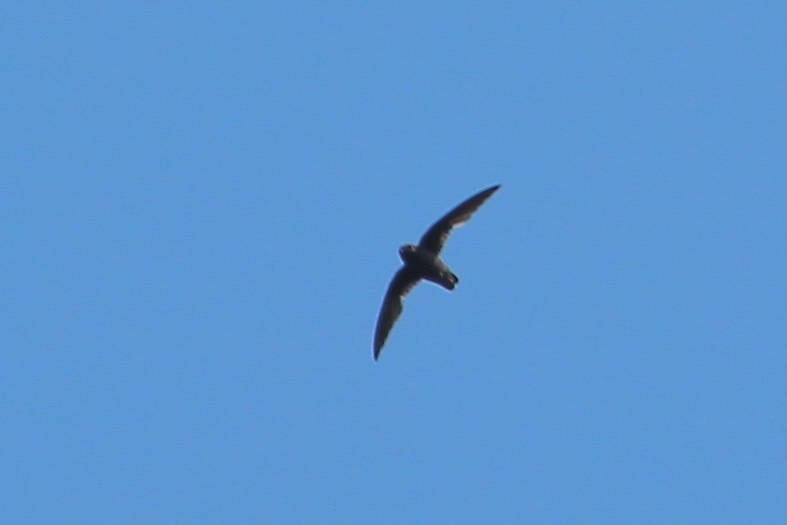
14–15 cm, stocky and uniformly dark blackish brown, with broad wings and a short, square tail. Forehead and lores are distinctly whitish, and a pale line often continues over the eye; this feature can only be seen at close range or on photographs. The throat is slightly greyer than the belly. Male and female are alike; juveniles have pale fringes to the feathers of the underparts. In flight the species cannot be told from related species at a distance.
Confusion species
American Black Swift Cypseloides niger is slimmer, with narrower wings and a longer tail, slightly forked in the male, and has less white on the forehead. White-chinned Swift Cypseloides cryptus is very similar, but has a white chin and less white on the forehead; it is not known from Mexico. Female and juvenile Chestnut-collared Swifts Streptoprocne rutila without a collar are smaller and slimmer, with a dark forehead. In the field many sightings of dark Cypseloides swifts remain uncertain.
Habitat
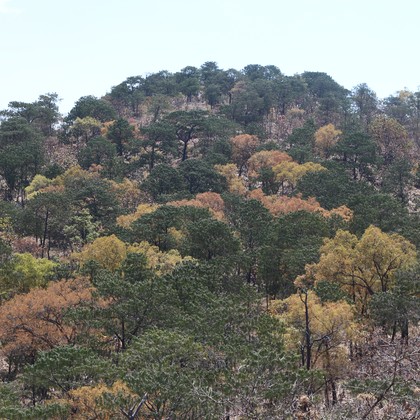
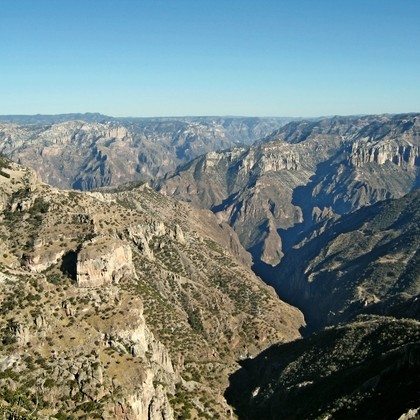
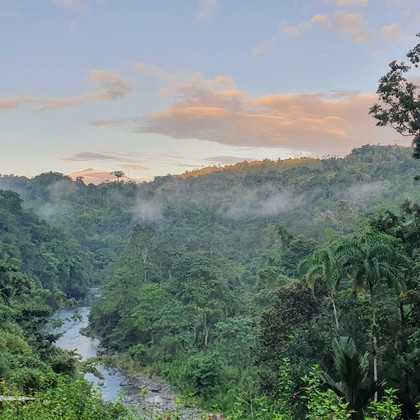
Recorded over pine-oak forest, montane forest and tropical dry forest in hill and mountain country, at roughly 1500 to 2500 m, and over valleys with rivers and waterfalls. Feeds on flying insects. Probably nests, like related species, on damp rock faces by waterfalls; nests have so far hardly been described, if at all.
Where the bird is most at home, classified by the vegetation units of Mexico and Central America.


Range and movements
Known only from Mexico, mainly from the mountains of Michoacán, with a few further records from Jalisco, Nayarit, Guerrero, the State of México and Oaxaca. A few reports from the highlands of Guatemala are unconfirmed. Because field identification is often uncertain, the true range is probably larger than the known one.
- Summer visitor (c. Apr–Sep)
- dark = core range, pale = thinly spread
How and when to look
Most records come from Michoacán, among other places around Tacámbaro, from May to July. Flocks of dark swifts at waterfalls and in mountain valleys are best photographed; only sharp photographs allow the white forehead and tail shape to be judged.
Conservation status
Data Deficient. So little is known about numbers, range and trends that the risk cannot be assessed. Its habitat in the mountains of western Mexico is under pressure from deforestation, but the effects on the species are unknown.
Scientific name
Cypseloides storeri | Navarro-Sigüenza, Peterson, Escalante P & Benítez-Diaz, 1992
Navarro-Sigüenza, Peterson, Escalante P & Benítez-Diaz described the species in 1992 and placed it straight away in the genus where it still stands. The genus Cypseloides was introduced in 1848 by Streubel. Cypseloides combines Cypselus, an old genus name for swifts (Greek kupselos), with Greek -oidēs 'resembling': 'swift-like'. storeri honours the American ornithologist Robert W. Storer (1914–2008), for his contributions to knowledge of the birds of Guerrero and Michoacán. The specimen the first description was based on came from Puerto del Gallo, Tlacotepec, Guerrero, Mexico.