All species › Grebes › Grebes › Western Grebe
Position in the tree Birds Aves › Birds with a flexible palate Neognathae › All other modern birds Neoaves › Flamingos and grebes Mirandornithes
Western Grebe | Aechmophorus occidentalis
Zwanenhalsfuut | Achichilique pico amarillo
The Western Grebe is a large black-and-white grebe with a long, slender neck and a dagger-shaped bill. In the guide area it occurs mainly as a winter visitor along the coasts of Baja California and in the Gulf of California; the lakes of the Mexican plateau also hold a small resident population of its own subspecies, A. o. ephemeralis. The species is closely related to Clark's Grebe, with which it was long treated as one species.
Voice
A loud, rasping, two-note krrrik-krrreek, mainly in the breeding season and in flocks; sometimes also heard in winter.
Recording: Bruce Lagerquist — CC BY-NC-SA 4.0 · converted to mono · xeno-canto
Identification
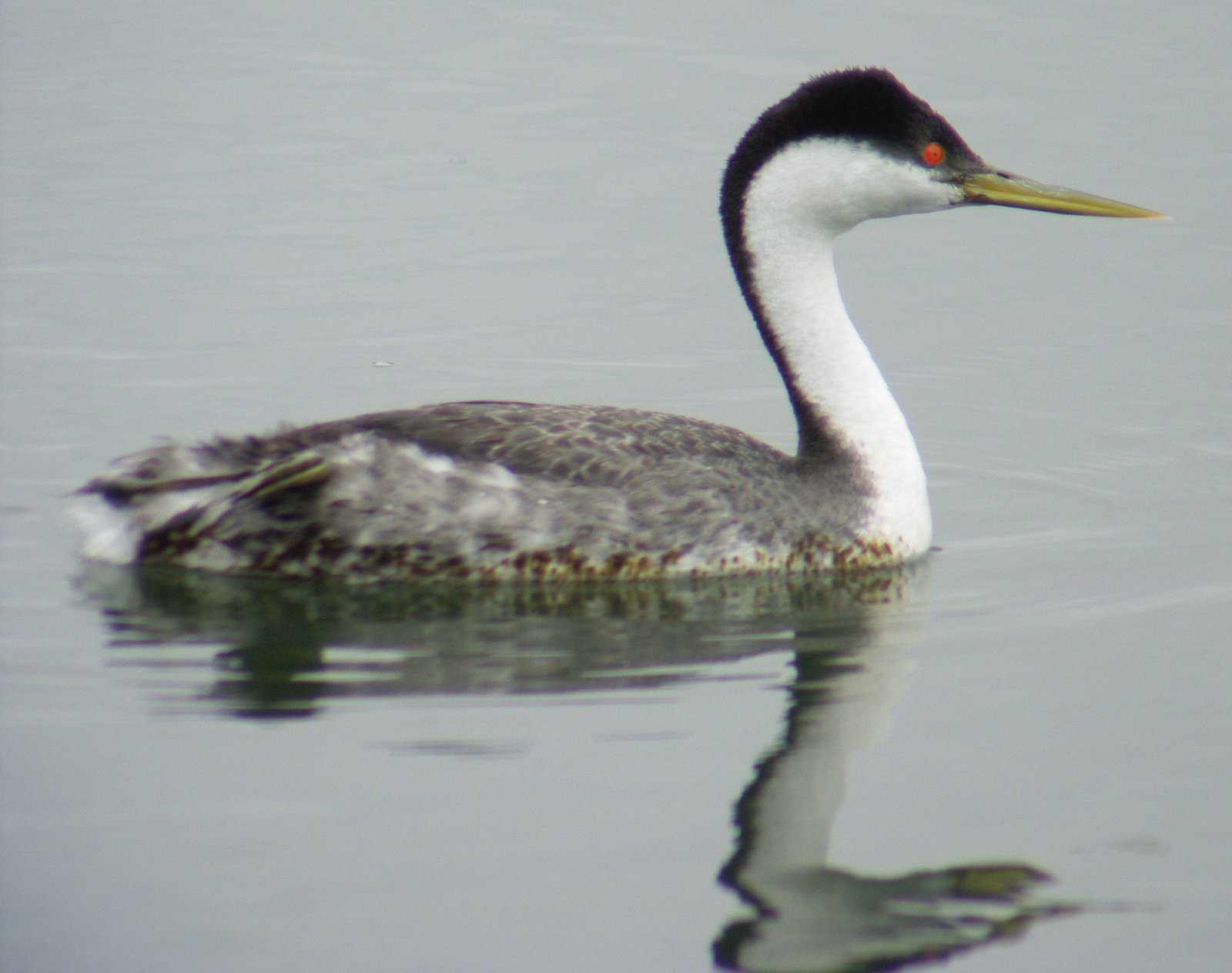
55–75 cm, slender, with a long neck, an elongated head and a long, straight, dagger-shaped bill. Upperparts, crown and hindneck blackish-grey, throat, foreneck and underparts white; the flanks are grey. The black cap extends below the eye, so that the red eye sits within the black. The bill is dull greenish-yellow with a dark ridge. In winter plumage the face round the eye becomes somewhat greyer. In flight a narrow white wing stripe across the inner wing. Birds of the plateau are smaller than the North American winter visitors.
Confusion species
Clark's Grebe Aechmophorus clarkii has a bright yellow to orange-yellow bill, a white face round the eye, paler flanks and, in flight, more white in the wing; in winter plumage the difference in face pattern is smaller and bill colour is the best feature. Intermediates occur. Common Loon Gavia immer and Pacific Loon Gavia pacifica have a thicker, shorter neck and a dark eye.
Habitat
In winter sheltered coastal bays, lagoons and shallow sea close to the coast, and larger lakes and reservoirs inland. Breeds on large, shallow freshwater lakes with reedbeds or other fringing vegetation. It eats mainly fish, caught by diving and spearing with the bill. The nest is a floating heap of plant material, often in colonies.
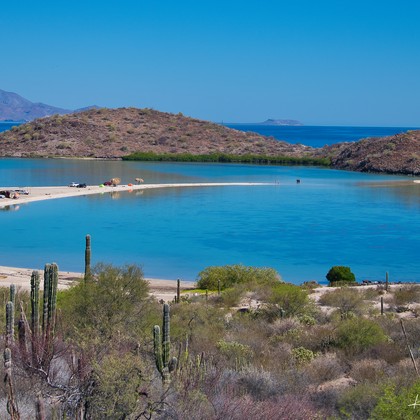
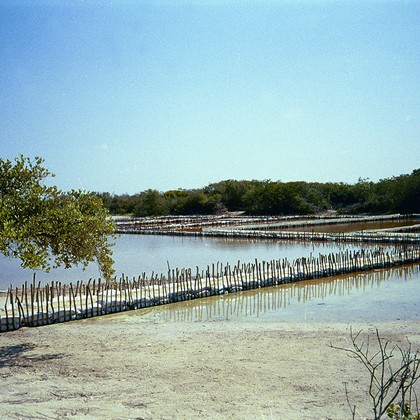
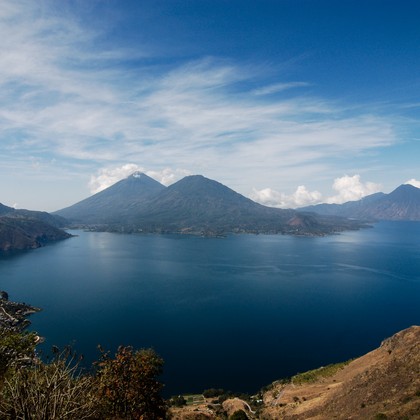
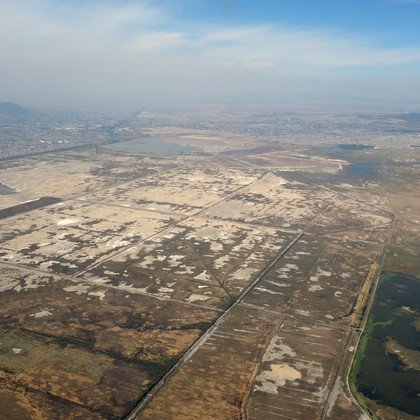
Where the bird is most at home, classified by the vegetation units of Mexico and Central America.
Range and movements
Winter visitor along the Pacific coast of Baja California and in the Gulf of California, in Baja California, Baja California Sur and Sonora, and scarcer along the Pacific coast of the mainland to Sinaloa and Nayarit; also on lakes and reservoirs of the interior from Chihuahua to Jalisco and Guanajuato. A small resident population (A. o. ephemeralis) breeds on lakes of the central plateau, such as in Jalisco, Michoacán and the State of México. Exceptional further south in the guide area. Outside the guide area it breeds in western Canada and the United States.
- Resident
- Winter visitor (c. Oct–Mar)
- dark = core range, pale = thinly spread
How and when to look
The best chance is from November to March along the coast of Baja California, for example near Ensenada and in the bays of the Gulf of California, often together with Clark's Grebe. In both species bill colour is the most reliable feature at a distance.
Conservation status
Not threatened. Numbers in North America are declining, among other things through oil pollution at sea, bycatch and the loss of breeding lakes. The small resident population on the Mexican plateau is vulnerable to the drying out and pollution of its lakes.
Scientific name
Aechmophorus occidentalis | (Lawrence, 1858)
Lawrence described the species in 1858 as Podiceps occidentalis; because it was later moved to another genus, the author and year stand in brackets. The genus Aechmophorus was introduced in 1862 by Coues. Aechmophorus is Greek, from aikhmē 'spear' and -phoros 'bearing': 'spear-bearer', after the long, dagger-like bill. occidentalis is Latin for 'western', after its range in western North America. The specimen the first description was based on came from Fort Steilacoom, Washington, United States.