All species › Cuckoos › Cuckoos › Striped Cuckoo
Position in the tree Birds Aves › Birds with a flexible palate Neognathae › All other modern birds Neoaves › Doves, turacos and allies Columbaves › Bustards, turacos and cuckoos Otidimorphae
Striped Cuckoo | Tapera naevia
Gestreepte koekoek | Cuclillo rayado
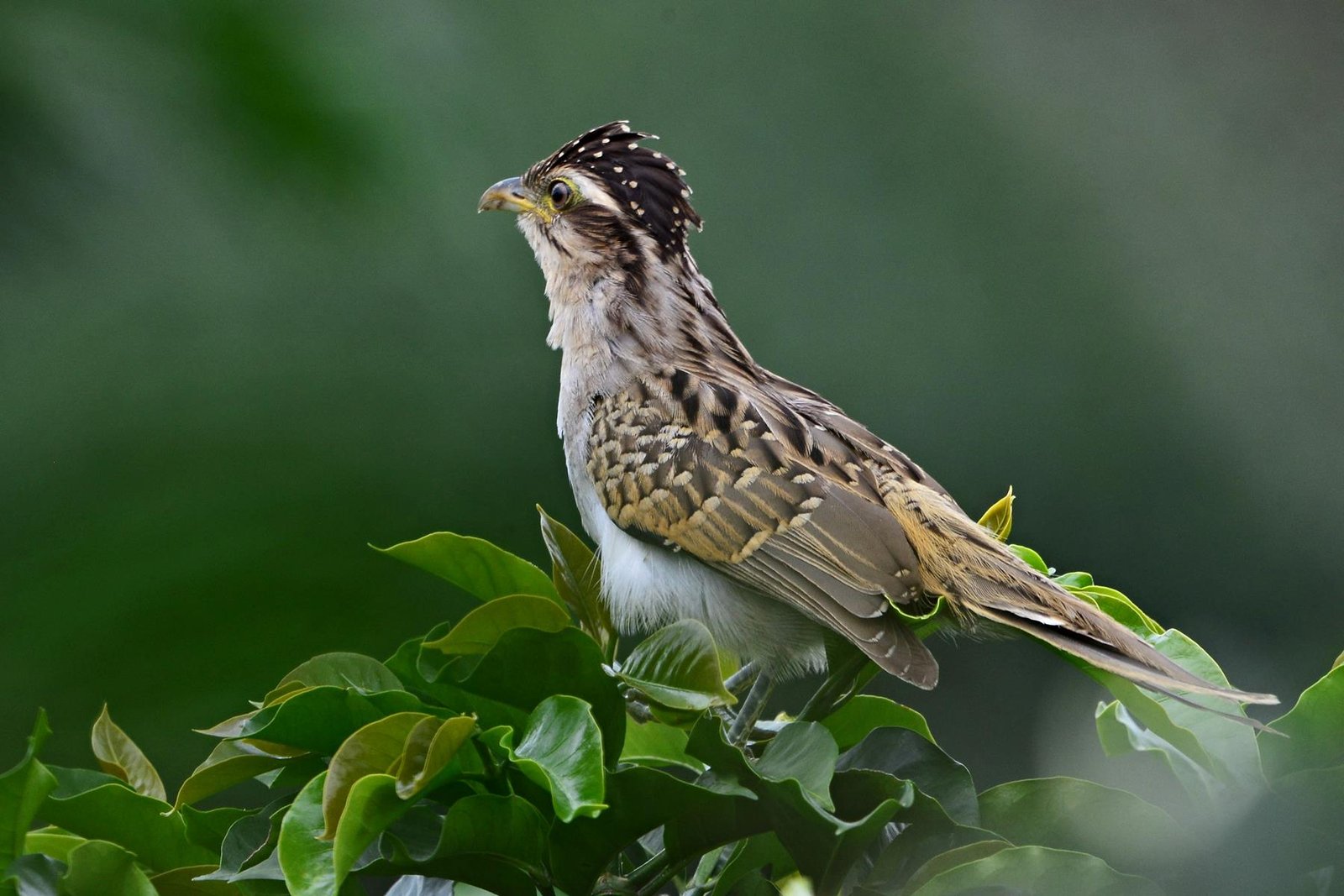
The Striped Cuckoo is a crested, brown-streaked cuckoo that is heard far more often than seen: its plaintive, whistled call sounds for hours from rough pastures and scrub in the lowlands, from southern Mexico to Panama. Unlike most American cuckoos it is a brood parasite: the female lays her eggs in the nests of other birds.
Voice
A clear, plaintive whistle of two or three notes, woo-weee or woo-woo-weee, the last note highest; also a longer series of rising whistles. It is repeated monotonously for long periods, also at night, often from a prominent branch, post or wire, and is ventriloquial, so that its source can scarcely be pinpointed.
Recording: Paul Molina Abril — CC BY-NC-SA 4.0 · converted to mono · xeno-canto
Identification
26–30 cm, with a long, graduated tail. The upperparts are grey-brown to sandy brown with broad blackish streaks; the crown is rufous with black streaks and forms a crest that is raised when excited. A pale supercilium contrasts with a dark stripe behind the eye. The throat and breast are pale buffish, the rest of the underparts dirty white without obvious markings. The bill is short and slightly curved. The black alula is extended in display and when alarmed. The sexes are alike; young birds are darker, with pale spots rather than streaks on the crown and upperparts.
Confusion species
Pheasant Cuckoo Dromococcyx phasianellus is larger and darker, with a small head, a very broad, long tail, black spots on the throat and breast and unstreaked, scaly upperparts; it lives inside forest. Lesser Ground Cuckoo Morococcyx erythropygus lacks streaks and crest, has rufous underparts and coloured bare skin around the eye. The combination of streaked upperparts, an erectile rufous crest and pale, unmarked underparts is diagnostic.
Habitat
Open and semi-open country with scattered bushes and trees: rough and overgrown pastures, field edges, scrub, young secondary growth and forest edges and the edges of marshes; mainly in the lowlands, locally up to about 1500 m. It lives alone and keeps hidden, foraging on or near the ground, mainly on grasshoppers, caterpillars and other large insects. The female lays her eggs in the nests of birds with closed or domed nests, especially spinetails; the chick kills the host's young soon after hatching.
Where the bird is most at home, classified by the vegetation units of Mexico and Central America.





Range and movements
From southern Mexico, in southern Veracruz, Oaxaca, Tabasco, Chiapas and the south of the Yucatán Peninsula, through Guatemala, Belize, El Salvador, Honduras, Nicaragua and Costa Rica to Panama, on both sides of the mountains. Outside the guide area over much of South America, east of the Andes to Bolivia, Paraguay and northern Argentina.
- Resident
- dark = core range, pale = thinly spread
How and when to look
Mostly found by its call, especially in the rainy season. A calling bird often sits fairly openly on a post, bush or wire, but against dry grass and twigs the streaks still make it inconspicuous. When calling it often raises the crest and extends the black alulae.
Conservation status
Least Concern. The species has a large range and benefits from open, human-modified land with scrub. In the guide area it is widespread and locally fairly common.
Scientific name
Tapera naevia | (Linnaeus, 1766)
Linnaeus described the species in 1766 as Cuculus naevius; because it was later moved to another genus, the author and year stand in brackets. The genus Tapera was introduced in 1819 by Thunberg. Tapera comes from the Tupi name Taperá, 'house-dwelling (bird)', originally for a kind of swallow. naevia is Latin, from naevius 'spotted, marked', after the streaked plumage. The specimen the first description was based on came from Cayenne, French Guiana.