All species › Passerines › Ovenbirds and woodcreepers › Spot-crowned Woodcreeper
Position in the tree Birds Aves › Birds with a flexible palate Neognathae › All other modern birds Neoaves › Landbirds Telluraves › Falcons, parrots and passerines Australaves › Falcons and passerines Eufalconimorphae › Parrots and passerines Psittacopasserae
Spot-crowned Woodcreeper | Lepidocolaptes affinis
Vlekkruinmuisspecht | Trepatroncos corona punteada
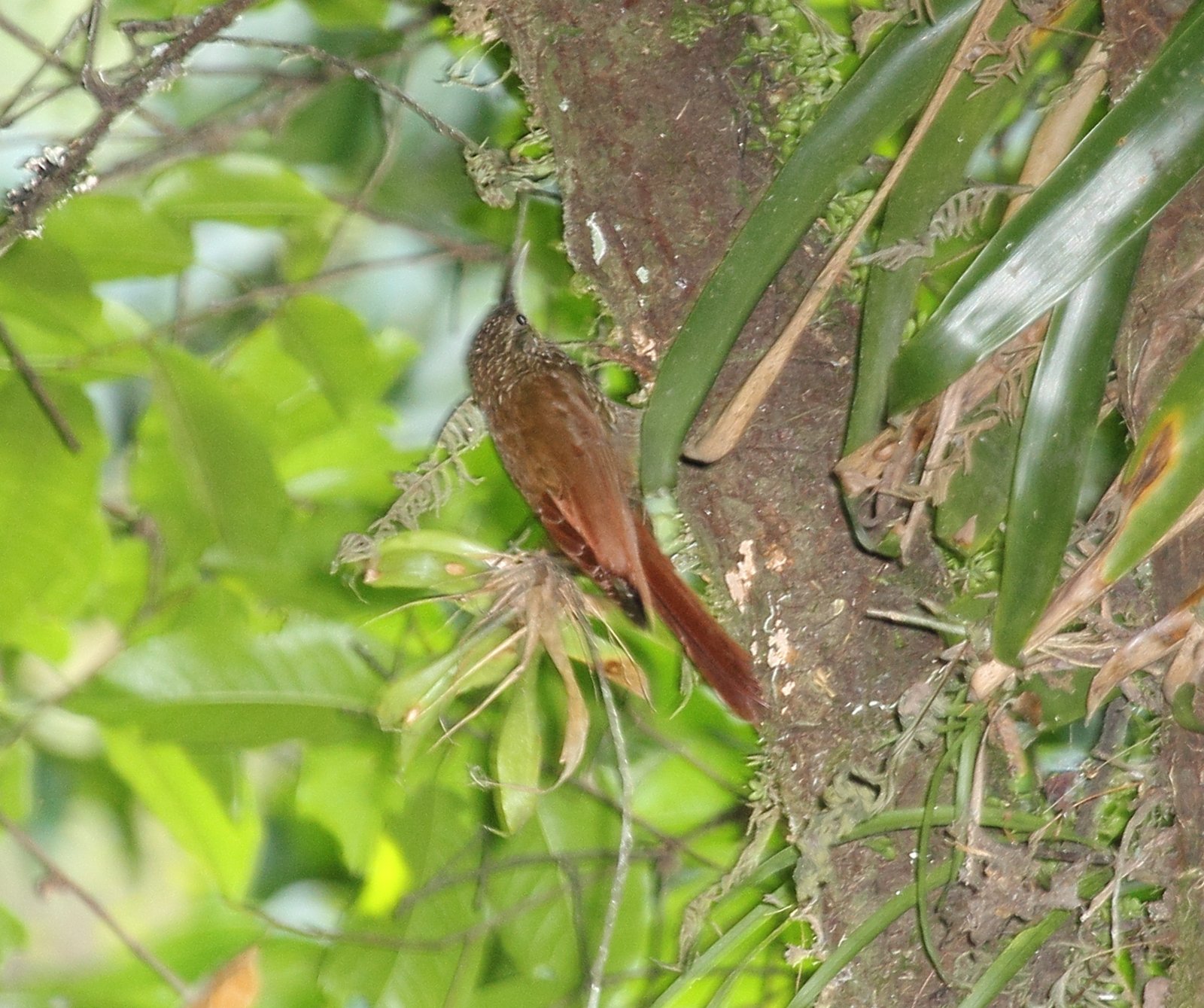
The Spot-crowned Woodcreeper is the woodcreeper of the montane forests of Mexico and Central America, recognised by the fine pale spots on the dark crown and the slightly decurved, pale bill. It is often seen in mixed-species flocks.
Voice
A series of high, thin, somewhat plaintive whistles. Also a short, sharp call.
Recording: Matthew L. Brady — CC BY-NC-SA 4.0 · shortened to the first 60 s, mono · xeno-canto
Identification
19–21 cm. Bill thin, slightly decurved and pale. Crown and nape dark brown with small pale buff spots. Back brown, wings and tail rufous. Underparts olive-brown with pale, black-edged, teardrop-shaped streaks; throat pale buff. Male and female are alike.
Confusion species
Streak-headed Woodcreeper Lepidocolaptes souleyetii lives lower, in the lowlands and foothills, and has streaks rather than spots on the crown. White-striped Woodcreeper Lepidocolaptes leucogaster of western Mexico has much whiter-streaked underparts. Brown-billed Scythebill Campylorhamphus pusillus has a much longer, strongly curved bill.
Habitat
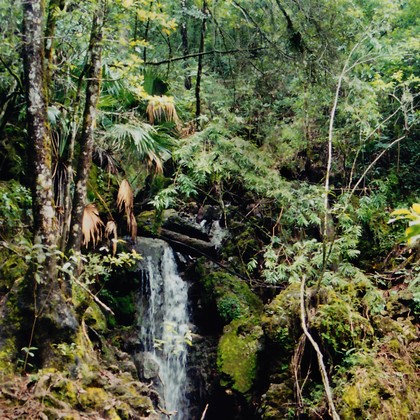
Humid montane forest and cloud forest, also pine-oak forest, forest edge and mature secondary forest, mostly above about 1000 m and up to the highest forests. It climbs trunks and branches, often among moss and epiphytes, and searches the bark for insects. It nests in a tree cavity.
Where the bird is most at home, classified by the vegetation units of Mexico and Central America.



Range and movements
Highlands of eastern and southern Mexico through Guatemala, El Salvador, Honduras, Nicaragua and Costa Rica to western Panama. Found only in the guide area; the similar woodcreeper of the Andes is treated as a separate species.
- Resident
- dark = core range, pale = thinly spread
How and when to look
In montane forest throughout Central America one of the commonest woodcreepers; look for it in mixed flocks, for example in the highlands of Costa Rica and Chiapas.
Conservation status
Not threatened. Common in montane forest, but dependent on forest.
Scientific name
Lepidocolaptes affinis | (de Lafresnaye, 1839)
De Lafresnaye described the species in 1839 as Dendrocolaptes affinis; because it was later moved to another genus, the author and year stand in brackets. The genus Lepidocolaptes was introduced in 1853 by Reichenbach. Lepidocolaptes is Greek, from lepis, lepidos 'scale' and kolaptēs 'chiseller, woodpecker', after the scaly markings on head and breast. affinis is Latin for 'related', after its resemblance to another woodcreeper. The specimen the first description was based on came from Mexico (not specified).