All species › Passerines › New World sparrows › Sooty-capped Chlorospingus
Position in the tree Birds Aves › Birds with a flexible palate Neognathae › All other modern birds Neoaves › Landbirds Telluraves › Falcons, parrots and passerines Australaves › Falcons and passerines Eufalconimorphae › Parrots and passerines Psittacopasserae
Sooty-capped Chlorospingus | Chlorospingus pileatus
Witbrauwtangare | Clorospingo cejiblanco
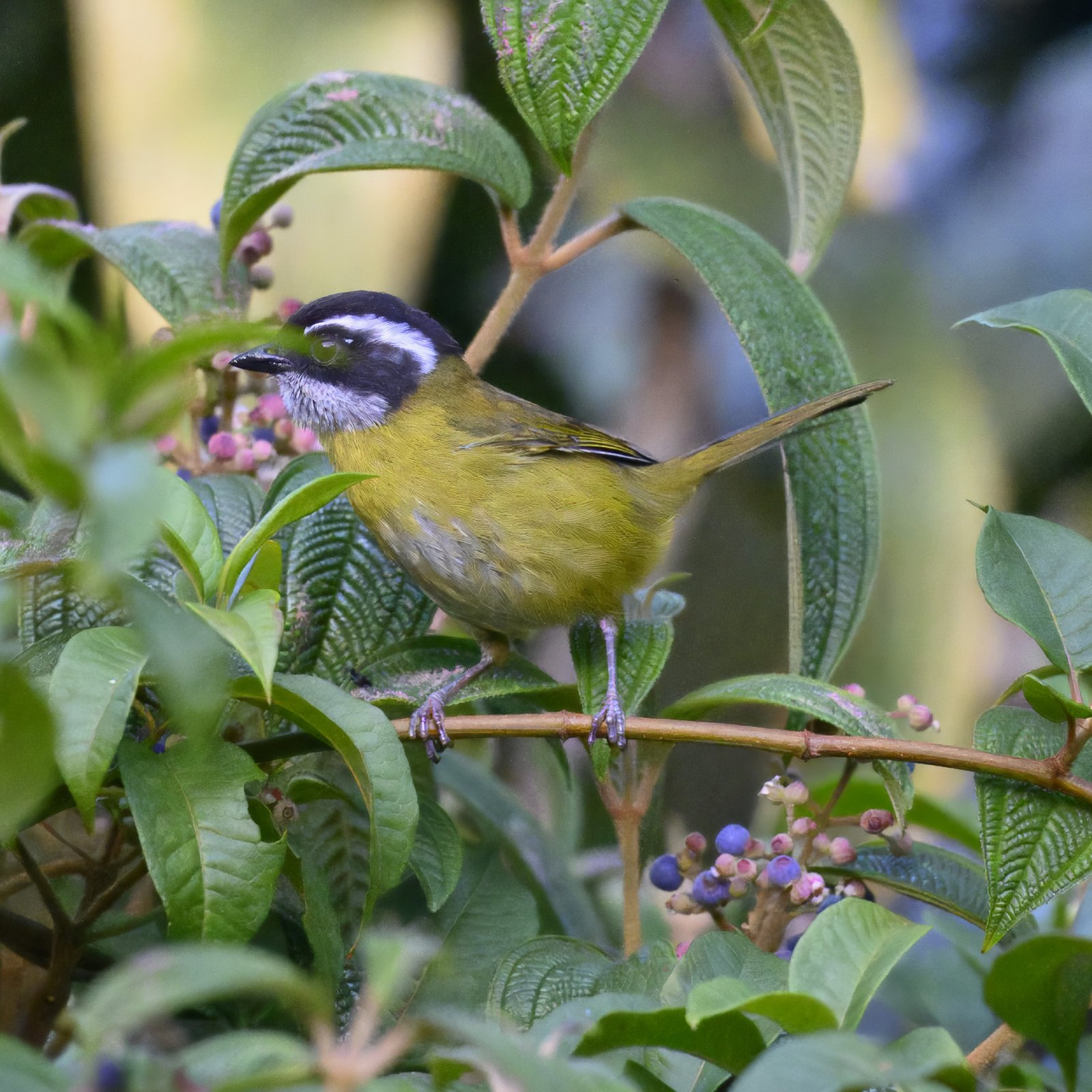
The Sooty-capped Chlorospingus is an olive songbird with a sooty-black head and a long white stripe behind the eye. It lives only in the high mountains of Costa Rica and western Panama and occurs higher up than the related Common Chlorospingus. Small groups are a regular part of mixed foraging flocks in highland forest.
Voice
Groups give high, thin tsit calls. The song is a squeaky, chattering series of high notes, often in the early morning.
Recording: Odirlei Vieira da Fonseca — CC BY-NC-SA 4.0 · shortened to the first 60 s, mono · xeno-canto
Identification
13 cm. Head sooty black to dark slate-grey, with a long, narrow white stripe running back from above the eye. Throat dull white with fine dark speckles; breast yellow-olive; belly greyish white with olive-grey flanks. Upperparts olive green. Bill dark and pointed. The sexes are alike.
Confusion species
Common Chlorospingus Chlorospingus flavopectus has a brownish-grey head with only a short white spot behind the eye and usually lives lower on the mountain slopes; where both occur, the difference in head colour and length of the white stripe is clearly visible. Ashy-throated Chlorospingus Chlorospingus canigularis has a plain grey throat and no white stripe behind the eye, and lives lower down.
Habitat
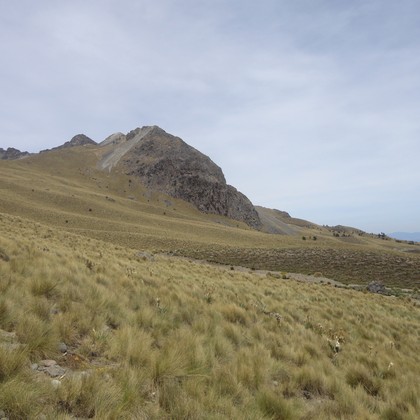
Montane rainforest and oak forest in the high mountains, mainly above about 1,600 metres and up to the treeline at around 3,000 metres; also bamboo, forest edges, scrub along the forest edge and elfin forest towards the páramo. It searches in small groups for insects and small fruits in the lower and middle levels.
Where the bird is most at home, classified by the vegetation units of Mexico and Central America.


Range and movements
Endemic to the highlands of Costa Rica and western Panama: the Cordillera Central and Cordillera de Talamanca in Costa Rica and the mountains of Chiriquí and Bocas del Toro into Veraguas in Panama.
- Resident
- dark = core range, pale = thinly spread
How and when to look
In the highland forest of the Talamanca one of the most frequently seen species in mixed foraging flocks; especially along forest edges and roadsides at high elevation often seen at close range.
Conservation status
Not threatened (LC). Small range, but common in suitable highland forest; a large part of that forest lies within protected areas.
Scientific name
Chlorospingus pileatus | Salvin, 1865
Salvin described the species in 1865 and placed it straight away in the genus where it still stands. The genus Chlorospingus was introduced in 1851 by Cabanis. Chlorospingus is Greek, from khlōros 'green' and spingos 'finch', after the olive-green upperparts. pileatus is Latin for 'capped', after the dark crown set off by a bold white eyebrow. The specimen the first description was based on came from Irazú Volcano, Costa Rica.