All species › Passerines › New World sparrows › Common Chlorospingus
Position in the tree Birds Aves › Birds with a flexible palate Neognathae › All other modern birds Neoaves › Landbirds Telluraves › Falcons, parrots and passerines Australaves › Falcons and passerines Eufalconimorphae › Parrots and passerines Psittacopasserae
Common Chlorospingus | Chlorospingus flavopectus
Briltangare | Clorospingo común
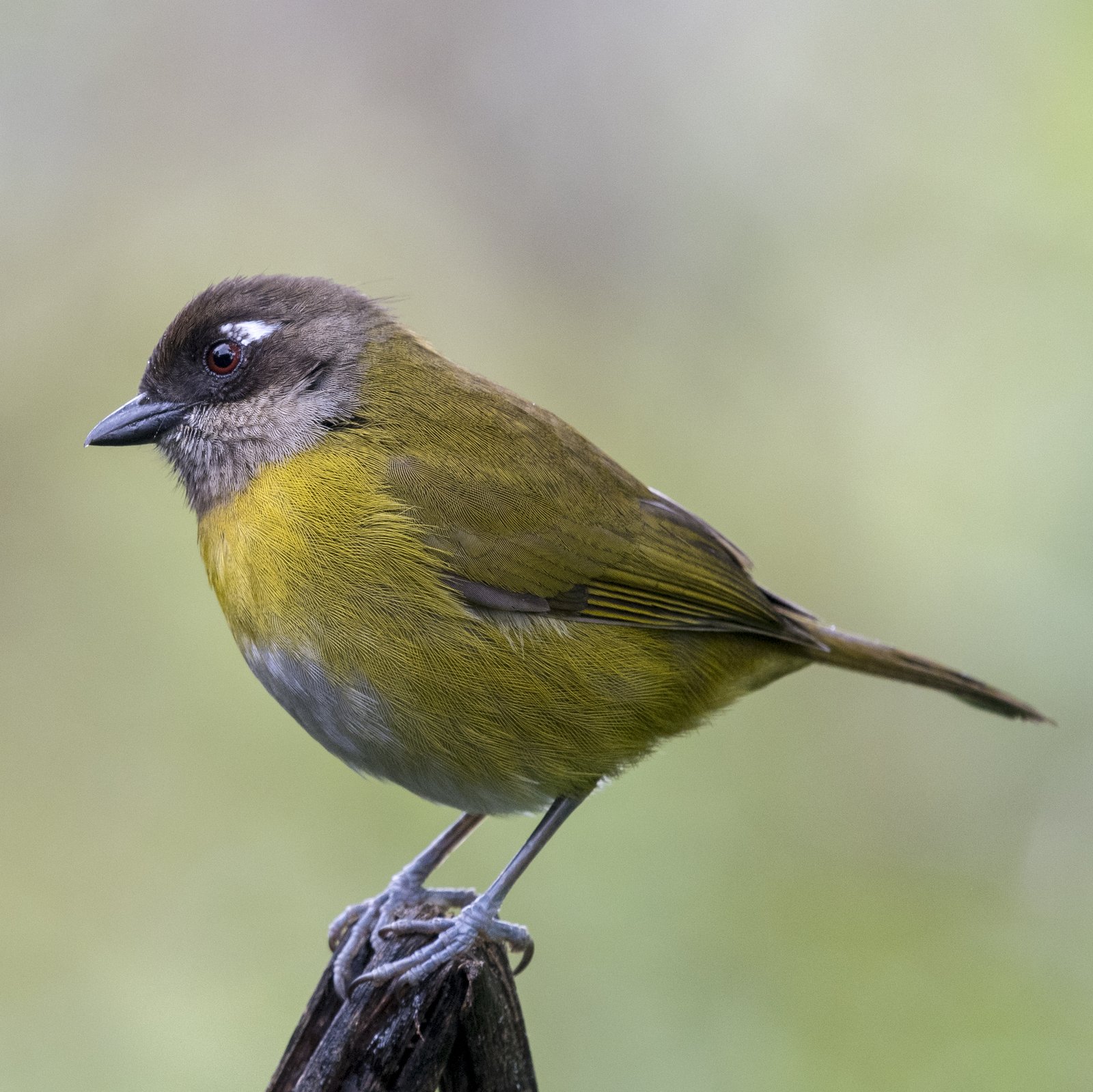
The Common Chlorospingus is an olive songbird of montane forest, formerly placed with the tanagers but now classified with the New World sparrows. It is the most widespread and numerous Chlorospingus in the guide area. Small groups often form the core of mixed foraging flocks in montane forest.
Voice
Groups give a constant stream of short, sharp chit and tsip calls. The song is a rapid series of high, dry notes that sometimes runs into a short, chattering trill.
Recording: Juan Freile — CC BY-NC-SA 4.0 · converted to mono · xeno-canto
Identification
13–14 cm. Upperparts olive green; head brownish grey to dark olive-grey, with a white spot or short stripe behind the eye. Throat dull white with fine dark speckles; broad yellow-olive breast band; belly white, flanks olive-grey. Bill dark, fairly short and pointed. The colour of the head and eye and the size of the white eye spot vary from region to region. The sexes are alike.
Confusion species
Sooty-capped Chlorospingus Chlorospingus pileatus, in the highlands of Costa Rica and western Panama, has a sooty-black head with a long white stripe behind the eye. Ashy-throated Chlorospingus Chlorospingus canigularis has a plain grey throat without speckles and no white spot behind the eye. Yellow-throated Chlorospingus Chlorospingus flavigularis has a yellow throat and grey underparts without a yellow breast band.
Habitat
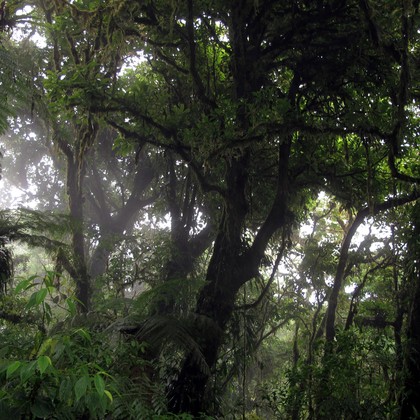
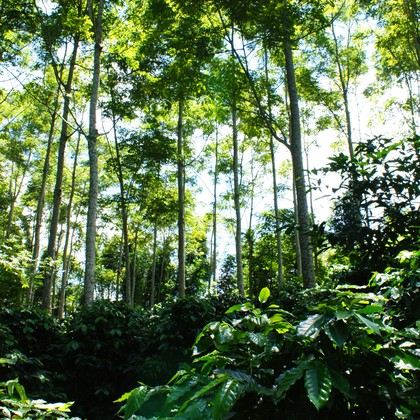
Humid montane forest, cloud forest and pine-oak forest, mainly between about 600 and 2,500 metres; also forest edges, scrubby clearings and shade coffee. It moves in small groups through the middle and lower levels of the forest and often joins mixed foraging flocks. It eats insects, berries and other small fruits.
Where the bird is most at home, classified by the vegetation units of Mexico and Central America.




Range and movements
From eastern and southern Mexico, from San Luis Potosí and Veracruz to Guerrero, Oaxaca and Chiapas, through the highlands of Central America to Panama, and on in the Andes of South America to Bolivia and north-western Argentina. Absent from the Yucatán Peninsula and the low, dry regions.
- Resident
- dark = core range, pale = thinly spread
How and when to look
In montane forest often first noticed by the persistent calls of a group moving through the canopy; where such groups are found, other species of a mixed foraging flock often follow.
Conservation status
Not threatened (LC). Widespread and common in suitable montane forest; adapts reasonably well to forest edges and shade coffee, but has declined locally through deforestation.
Scientific name
Chlorospingus flavopectus | (de Lafresnaye, 1840)
De Lafresnaye described the species in 1840 as Arremon flavo-pectus; because it was later moved to another genus, the author and year stand in brackets. The genus Chlorospingus was introduced in 1851 by Cabanis. Chlorospingus is Greek, from khlōros 'green' and spingos 'finch', after the olive-green upperparts. flavopectus is Latin, from flavus 'yellow' and pectus 'breast', after the yellow breast band. The specimen the first description was based on came from Bogotá, Colombia.