All species › Waders, gulls and terns › Plovers and lapwings › Snowy Plover
Position in the tree Birds Aves › Birds with a flexible palate Neognathae › All other modern birds Neoaves › Birds of the elements Elementaves › Cranes and waders Gruimorphae
Snowy Plover | Anarhynchus nivosus
Sneeuwplevier | Chorlo nevado
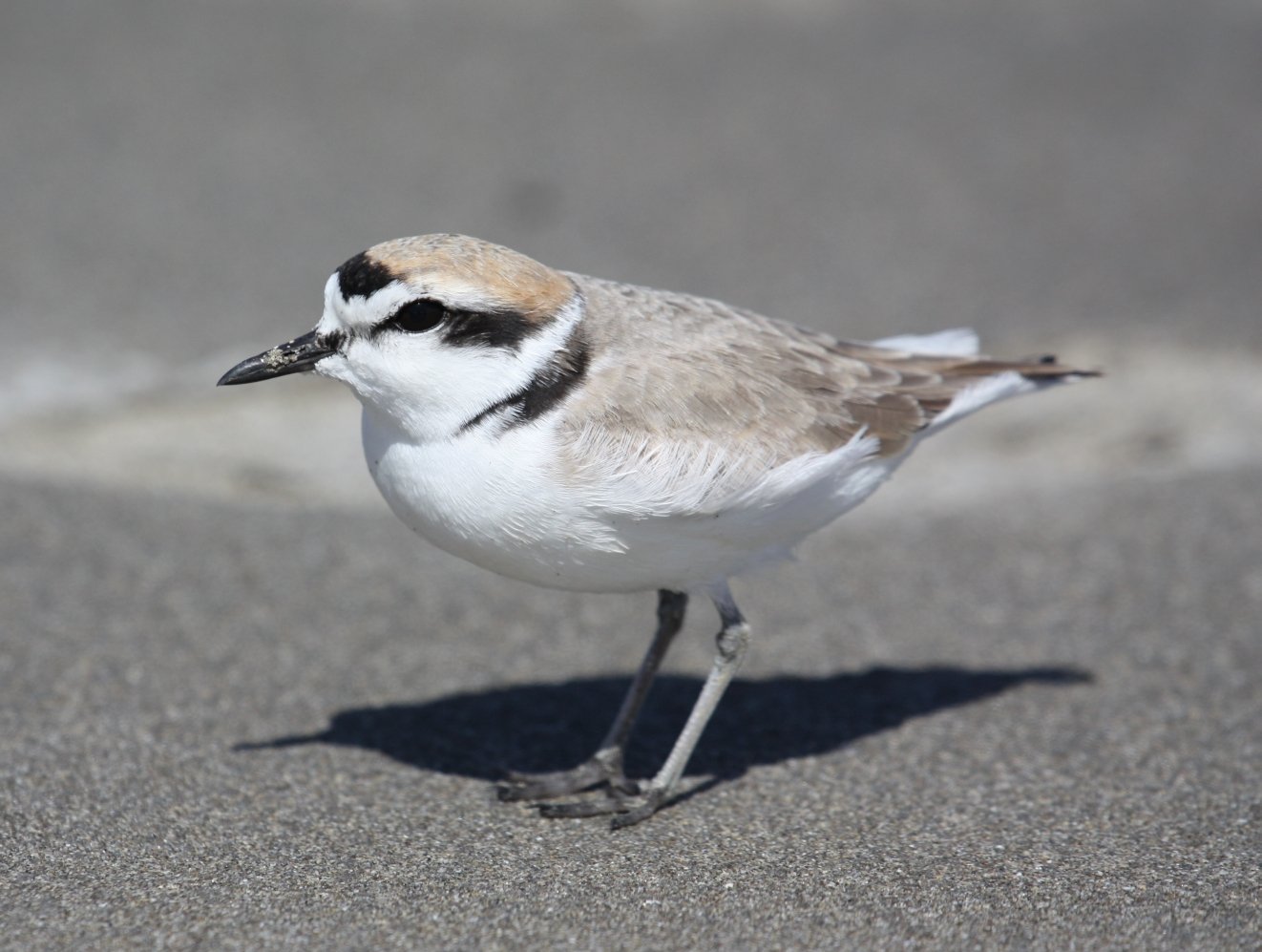
The Snowy Plover is a small, pale plover of bare salt flats, quiet beaches and the shores of salt lakes. In the guide area it breeds mainly in north-western Mexico, along the Gulf coast and at salt lakes on the plateau; in winter birds from the United States join them. For a long time it was treated as a subspecies of the Old World Kentish Plover.
Voice
A soft, slightly husky whistled chu-wee and a low, short krut or prrt, among others when flushed. Around the nest short peeps and a soft rattling alarm.
Recording: Paul Marvin — CC BY-NC-SA 4.0 · shortened to the first 60 s, mono · xeno-canto
Identification
15–17 cm. A small, slender plover with a rounded head, a thin, pointed black bill and dark grey to blackish legs. The upperparts are pale sandy grey, the underparts bright white, with a white hind collar. Instead of a breast band it has a dark patch on each side of the breast. In breeding plumage these patches, a stripe behind the eye and a band across the forecrown are black in the male; in the female and in non-breeding plumage they are brownish. Juveniles have pale feather fringes on the back. In flight a white wing bar and white sides to the tail.
Confusion species
Piping Plover Charadrius melodus is just as pale but stockier, with a short, stubby bill, orange-yellow legs and a white rump. Semipalmated Plover Charadrius semipalmatus is darker, with a complete breast band and orange legs. Wilson's Plover Anarhynchus wilsonia is larger, with a heavy bill and a complete breast band, and Collared Plover Anarhynchus collaris has a complete narrow breast band, pale legs and no white hind collar.
Habitat
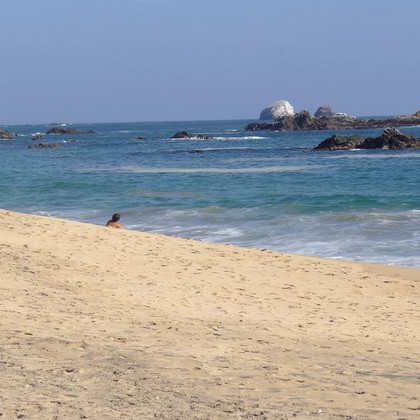
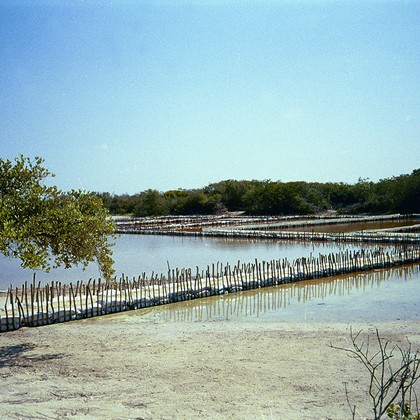
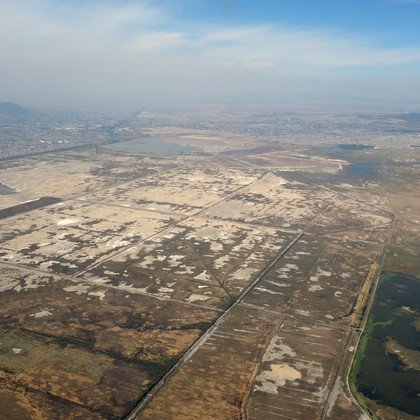
Bare salt pans and the dry edges of coastal lagoons, quiet wide sandy beaches and the bare shores of inland salt and soda lakes; locally also mudflats. Forages on open, flat ground for small crustaceans, flies, beetles and worms. The nest is a shallow scrape on bare sand or salt crust, often lined with shell fragments; the parents try to lure intruders away with distraction displays.
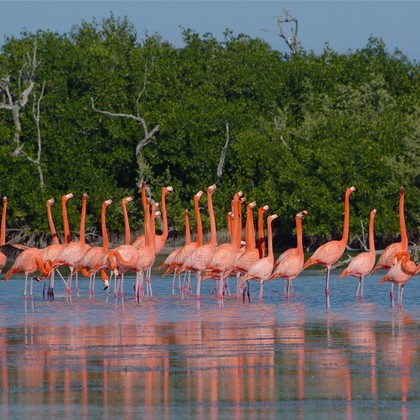
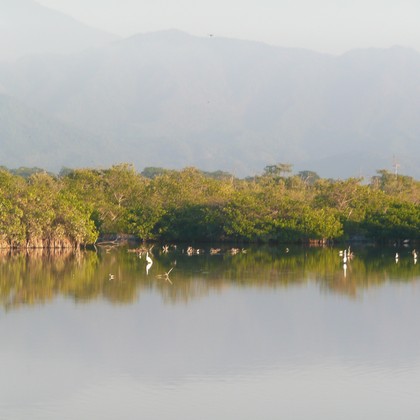
Where the bird is most at home, classified by the vegetation units of Mexico and Central America.
Range and movements
Breeds along the coasts of Baja California and the Gulf of California, in Sonora and Sinaloa, at salt lakes on the plateau of northern and central Mexico, along the Gulf coast of Tamaulipas and on the north coast of Yucatán. In winter also along the Pacific coast south to Nayarit, Jalisco, Colima and Guerrero. South of Mexico only a few records are known, including from Guatemala, Costa Rica and Panama. Outside the guide area along the coasts of the United States, in the Great Basin, in the West Indies and along the coast of Peru and Chile.
- Winter visitor (c. Oct–Mar)
- dark = core range, pale = thinly spread
How and when to look
On salt pans and remote sand flats best scanned with a telescope from the edge, as the pale birds only stand out against the white salt when they move. In the breeding season breeding sites are best avoided; a bird running away low or trailing a wing has a nest or young nearby.
Conservation status
Near Threatened. The populations are small and fragmented and are declining in many places through coastal development, beach recreation, vehicles on beaches, loose dogs and predation. In Mexico many breeding sites lie on salt pans and beaches where tourism and salt extraction are increasing.
Scientific name
Anarhynchus nivosus | (Cassin, 1858)
Cassin described the species in 1858 as Aegialitis nivosa; because it was later moved to another genus, the author and year stand in brackets. The genus Anarhynchus was introduced in 1832 by Quoy & Gaimard. Anarhynchus is Greek, from ana- 'backward' and rhunkhos 'bill', after the sideways-bent bill of the wrybill, the type species of the genus. nivosus is Latin for 'snowy', after the very pale plumage. The specimen the first description was based on came from Presidio, San Francisco, California.