All species › Passerines › Wrens › Sinaloa Wren
Position in the tree Birds Aves › Birds with a flexible palate Neognathae › All other modern birds Neoaves › Landbirds Telluraves › Falcons, parrots and passerines Australaves › Falcons and passerines Eufalconimorphae › Parrots and passerines Psittacopasserae
Sinaloa Wren | Thryophilus sinaloa
Sinaloawinterkoning | Chivirín sinaloense
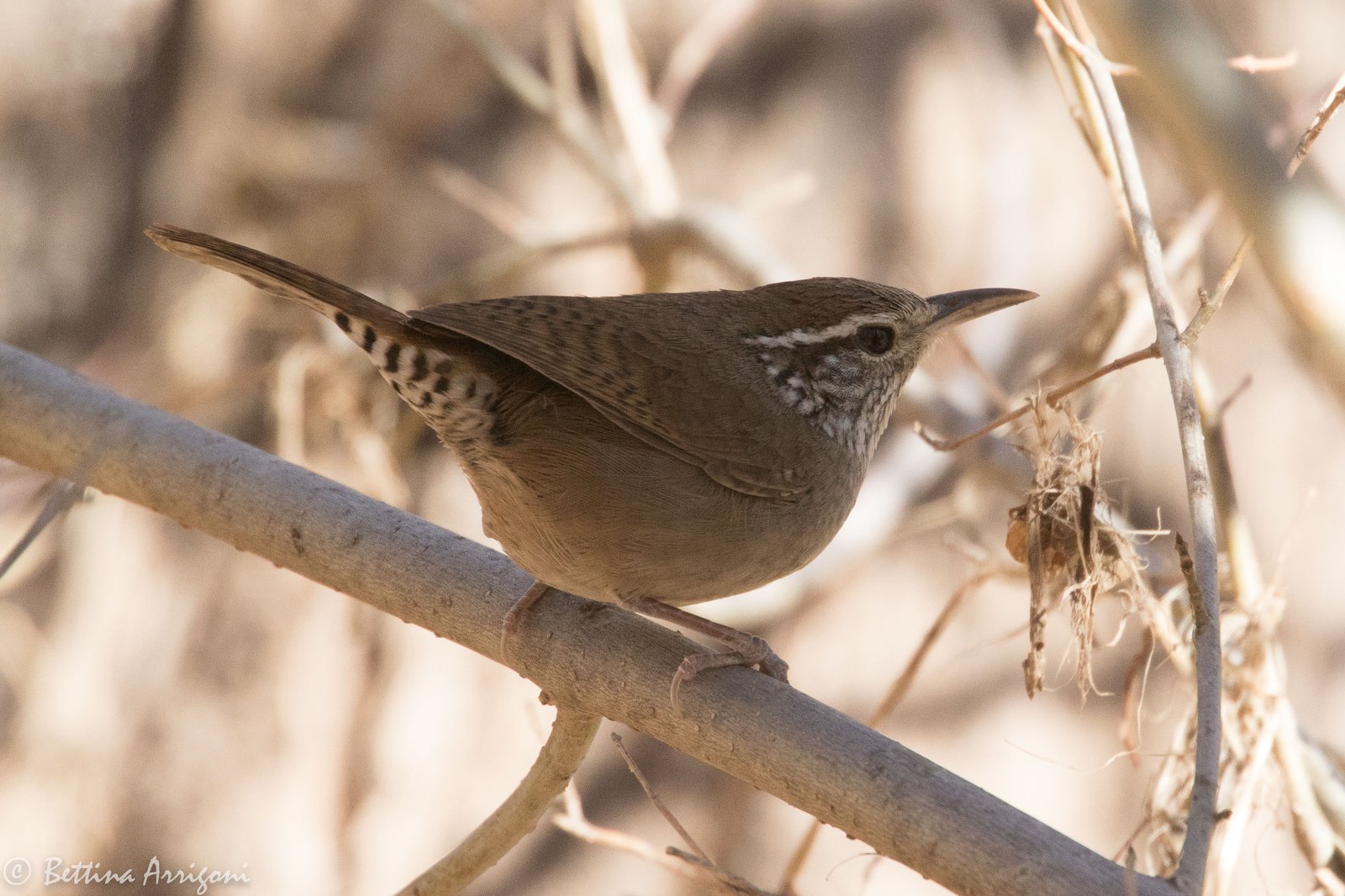
The Sinaloa Wren is a brown wren of dry forest in western Mexico, with a white supercilium, pale underparts and a dark-streaked patch on the side of the neck. It occurs only in Mexico and lives in pairs in dense scrub.
Voice
A varied song of clear, rolling whistled phrases, each repeated several times; pairs often sing in duet. Call a dry, nasal chatter.
Recording: Jules Evens — CC BY-NC-SA 4.0 · converted to mono · xeno-canto
Identification
13–14 cm. Upperparts greyish brown, tail more rufous with narrow black bars. White supercilium, cheeks white with fine dark streaks; on the side of the neck a blackish patch streaked with white. Underparts whitish, flanks and lower belly buff-brown. Sexes alike.
Confusion species
Happy Wren Pheugopedius felix has a boldly black-and-white streaked face and a buff breast. Banded Wren Thryophilus pleurostictus has black bars on the flanks. Bewick's Wren Thryomanes bewickii is greyer, with a longer, white-cornered tail, and lives mainly in dry highland scrub.
Habitat
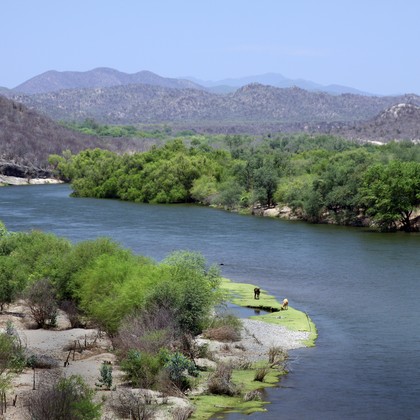
Dense scrub and undergrowth in dry deciduous and thorn forest, riverside and canyon scrub and the edges of oak forest in the lower mountains. It forages low in vegetation for insects and spiders.
Where the bird is most at home, classified by the vegetation units of Mexico and Central America.



Range and movements
Pacific slope of western Mexico, from southern Sonora and south-western Chihuahua south to Guerrero. Does not occur outside the guide area.
- Resident
- dark = core range, pale = thinly spread
How and when to look
Regularly found in dry forest around San Blas in Nayarit. Listen for the loud whistled phrases from dense scrub, then look for the patch on the neck.
Conservation status
Not threatened. Fairly common in dry forest; tolerates secondary growth.
Scientific name
Thryophilus sinaloa | Baird, 1864
Baird described the species in 1864 and placed it straight away in the genus where it still stands. He introduced the genus Thryophilus in that same work. Thryophilus is Greek, from thruon 'reed, rush' and philos 'lover': 'reed-lover'. sinaloa refers to the Mexican state of Sinaloa, where the type was collected near Mazatlán. The specimen the first description was based on came from Mazatlán, Sinaloa, Mexico.