All species › Swifts › Hummingbirds › Sapphire-throated Hummingbird
Position in the tree Birds Aves › Birds with a flexible palate Neognathae › All other modern birds Neoaves › Birds of the elements Elementaves › Nightjars and swifts Strisores
Sapphire-throated Hummingbird | Chrysuronia coeruleogularis
Saffierkeelkolibrie | Colibrí gorjizafiro
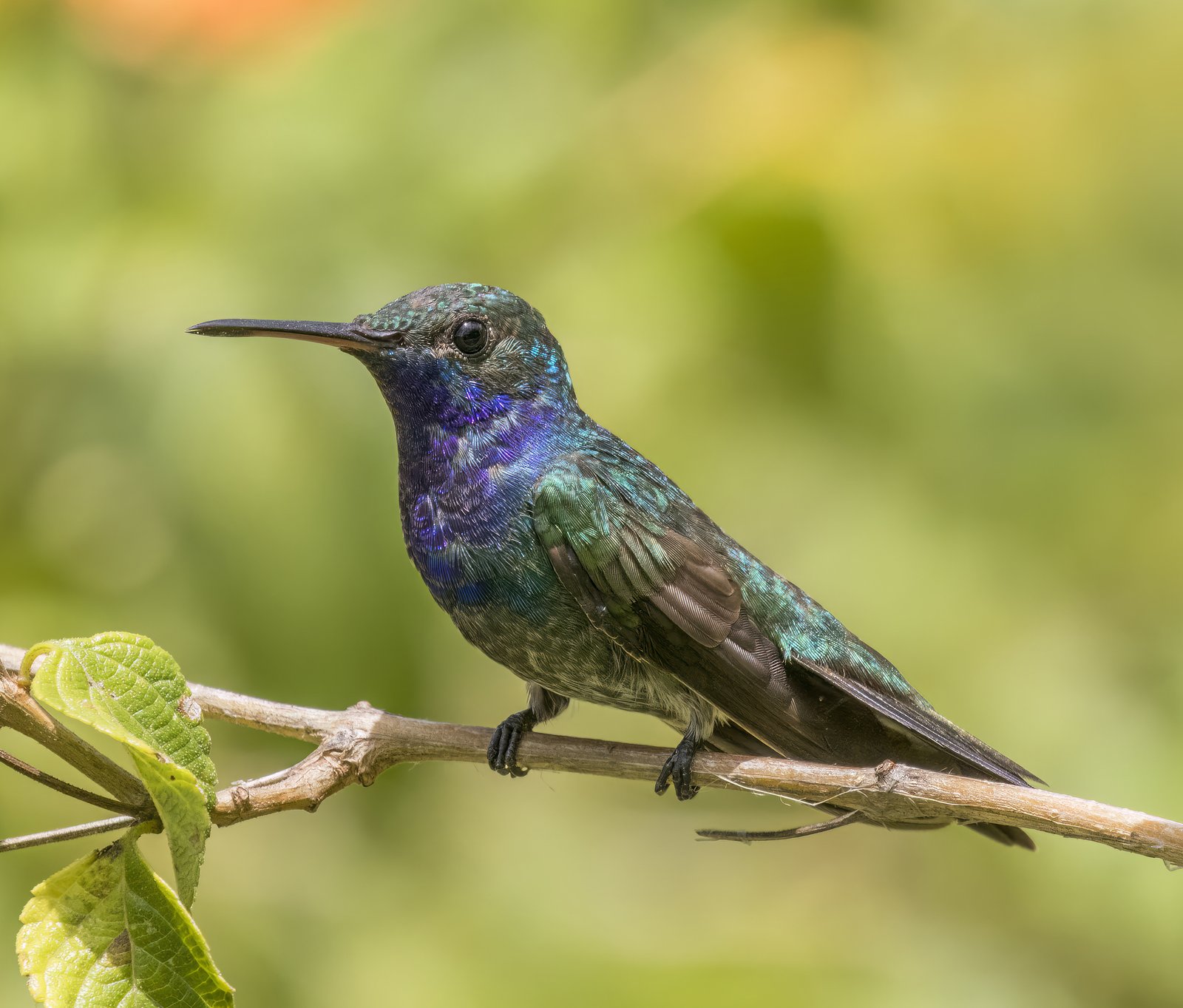
The Sapphire-throated Hummingbird is a small hummingbird of the dry Pacific lowlands of Panama, where it lives mainly in mangroves, scrub and savanna. The male has a glittering blue-violet throat and a forked tail. Since the 2010s the species has also occurred in south-west Costa Rica.
Voice
A dry chit, and in chases a rapid, dry twitter.
Recording: Kent Livezey — CC BY-NC-SA 4.0 · converted to mono · xeno-canto
Identification
8–9 cm, with a straight bill: the upper mandible is black, the lower mandible red with a dark tip. The male is glittering green, with a blue-violet throat and upper breast, white undertail coverts and a forked, steel-blue to blue-black tail. The female has green upperparts, white underparts with green spots on the flanks and a forked tail with whitish tips to the outer feathers.
Confusion species
Mangrove Hummingbird Chrysuronia boucardi has a green throat, a white belly and an unforked, bronze-green tail. Garden Emerald Chlorostilbon assimilis is smaller, has a black bill and the male has a green throat. Charming Hummingbird Polyerata decora has a blue breast but a green throat, a grey belly and a rounded tail. Violet-capped Hummingbird Goldmania violiceps has a violet crown and lives in humid forest in eastern Panama.
Habitat
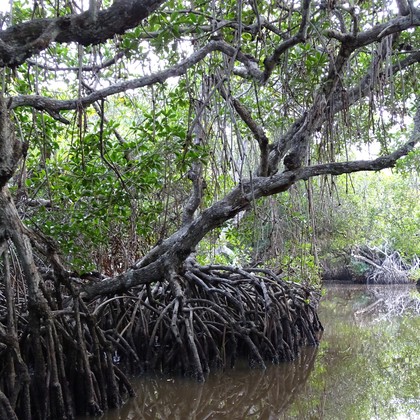
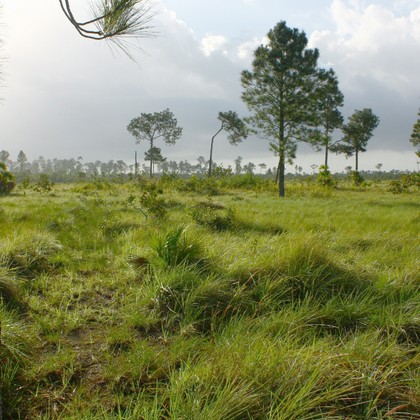
Mangroves, dry forest and scrub, savanna and wooded pasture, forest edges and gardens, from sea level to about 600 m. It often feeds low down at flowers of shrubs and herbs.
Where the bird is most at home, classified by the vegetation units of Mexico and Central America.




Range and movements
In the guide area in Panama, mainly in the Pacific lowlands from Chiriquí to Panamá province, locally to Darién, also on the Pearl Islands and on the Caribbean side in the Canal area; since the 2010s also in extreme south-west Costa Rica, around Ciudad Neily. Outside the guide area in northern Colombia.
- Resident
- dark = core range, pale = thinly spread
How and when to look
In mangroves and scrub along the Bay of Panama around Panama City, in the dry savannas of Coclé and Herrera on the Azuero Peninsula, and in the Canal area. In Costa Rica in the rice fields and scrub around Ciudad Neily.
Conservation status
Least Concern. Fairly common in open and semi-open country, although mangroves are declining through coastal development.
Scientific name
Chrysuronia coeruleogularis | (Gould, 1851)
Gould described the species in 1851 as Trochilus (--?) coeruleogularis; because it was later moved to another genus, the author and year stand in brackets. The genus Chrysuronia was introduced in 1850 by Bonaparte. Chrysuronia is Greek, from khrusos 'gold' and oura 'tail', after the golden-glossed tail. coeruleogularis is Latin, from caeruleus 'blue' and gula 'throat', after the male's sapphire-blue throat. The specimen the first description was based on came from David, Chiriquí, Panama.