All species › Passerines › Thrushes and allies › Russet Nightingale-Thrush
Position in the tree Birds Aves › Birds with a flexible palate Neognathae › All other modern birds Neoaves › Landbirds Telluraves › Falcons, parrots and passerines Australaves › Falcons and passerines Eufalconimorphae › Parrots and passerines Psittacopasserae
Russet Nightingale-Thrush | Catharus occidentalis
Roodbruine dwerglijster | Zorzal mexicano
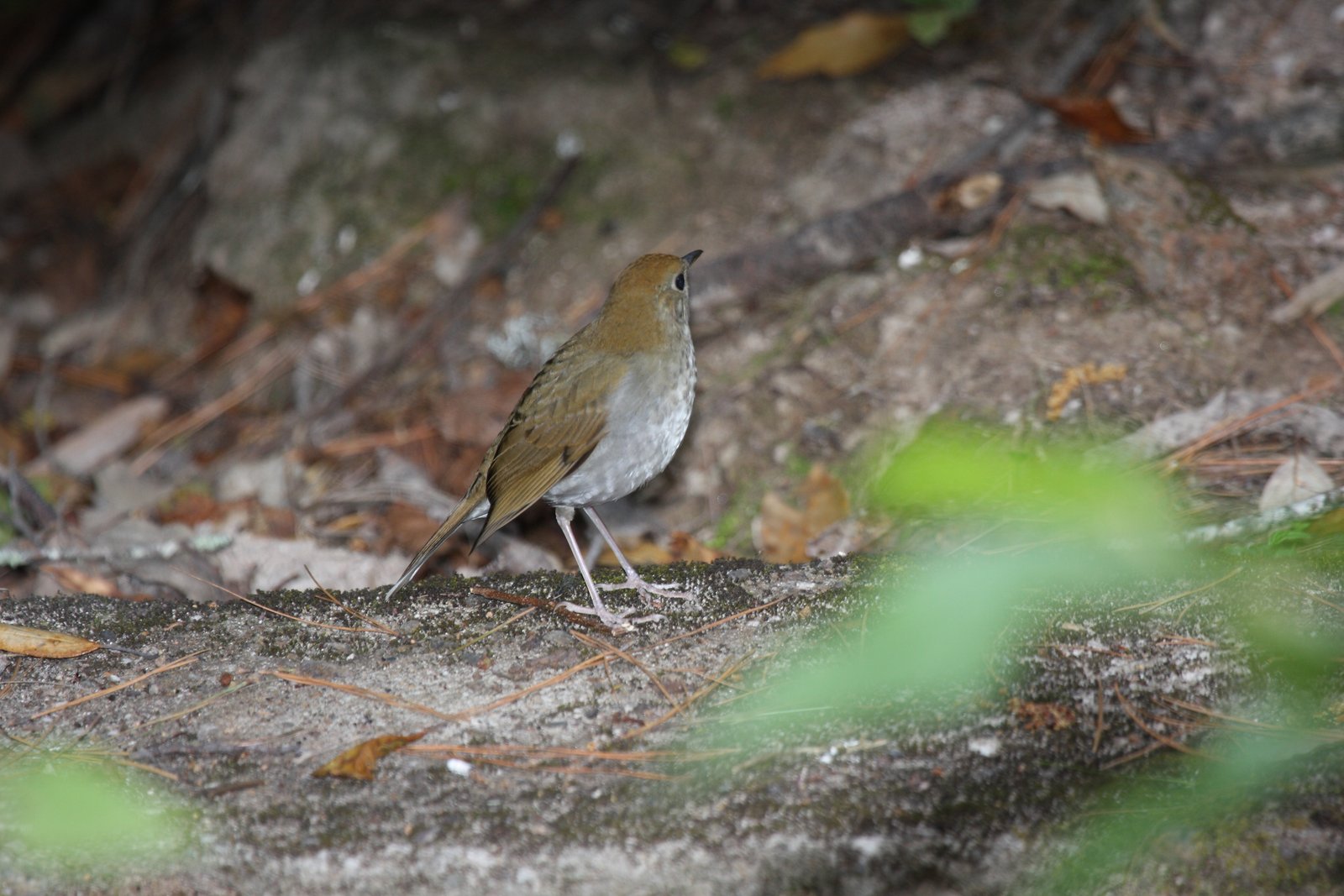
The Russet Nightingale-Thrush is a warm russet nightingale-thrush found only in the mountains of Mexico, in pine-oak and conifer forest. It lives hidden in the shrub layer and on the forest floor and is noticed mainly by its song and calls.
Voice
The song is a short, varied series of clear and slightly nasal whistled notes, often with a rising or falling ending, repeated at intervals. Calls include a nasal, plaintive reeh and a dry chuk.
Recording: Richard E. Webster — CC BY-NC-SA 4.0 · converted to mono · xeno-canto
Identification
15–17 cm. Upperparts, wings and tail uniform warm russet-brown; the crown does not contrast with the back. Cheeks greyish with a faint pale eye-ring. Throat whitish, breast buff to greyish with faint, blurry dark spots, flanks greyish-brown, belly whitish. Upper mandible dark, lower mandible yellowish with a dark tip; legs pale pinkish-brown. The sexes are alike.
Confusion species
Ruddy-capped Nightingale-Thrush Catharus frantzii, which occurs in part of the range, has a rufous crown contrasting with a more olive-brown back and a plain grey breast without spots. Hermit Thrush Catharus guttatus, present in the same forests in winter, is more olive-brown with a rufous tail, a distinct white eye-ring and sharp black breast spots. Orange-billed Nightingale-Thrush Catharus aurantiirostris has an all-orange bill and orange legs.
Habitat
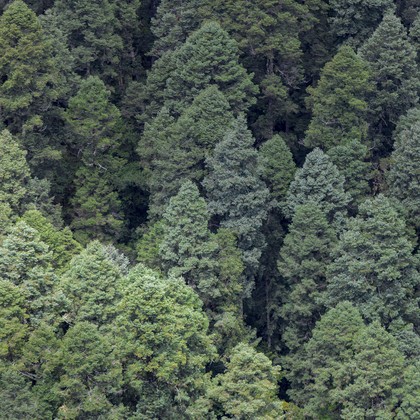
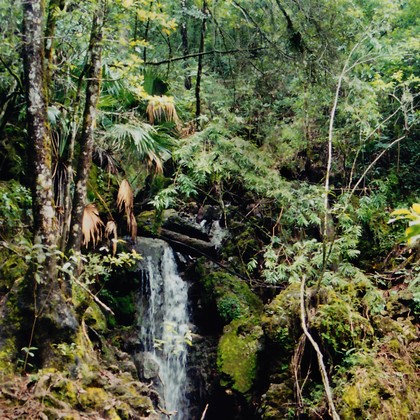
Understorey of humid and semi-humid pine-oak forest, oak forest and high-elevation conifer forest with dense shrubs, also ravines and the moister edges of cloud forest; mostly between 1500 and 3500 m. It forages on the forest floor for insects and also eats small fruits.
Where the bird is most at home, classified by the vegetation units of Mexico and Central America.


Range and movements
Only in the guide area and only in Mexico: the Sierra Madre Occidental from south-western Chihuahua and eastern Sonora, the Sierra Madre Oriental from Nuevo León and Tamaulipas, the Trans-Mexican Volcanic Belt and the mountains of Guerrero and Oaxaca.
- Resident
- dark = core range, pale = thinly spread
How and when to look
Regularly heard in the mountains around Mexico City and in the pine-oak forests of Durango and Jalisco. It is most active at dawn and dusk and then sings from a low, hidden perch.
Conservation status
Not threatened (LC). Widespread in Mexican montane forests. Logging and forest fires locally degrade the dense shrub layer on which the species depends.
Scientific name
Catharus occidentalis | Sclater, 1859
Sclater described the species in 1859 and placed it straight away in the genus where it still stands. The genus Catharus was introduced in 1850 by Bonaparte. Catharus is from Ancient Greek katharos 'pure, clean', a name given for the clean plumage of the orange-billed nightingale-thrush. occidentalis is Latin for 'western', after the species' western range among the nightingale-thrushes. The specimen the first description was based on came from Totontepec, Oaxaca, Mexico.