All species › Cranes, rails and allies › Rails, gallinules and coots › Russet-naped Wood Rail
Position in the tree Birds Aves › Birds with a flexible palate Neognathae › All other modern birds Neoaves › Birds of the elements Elementaves › Cranes and waders Gruimorphae
Russet-naped Wood Rail | Aramides albiventris
Witbuikbosral | Rascón nuca canela
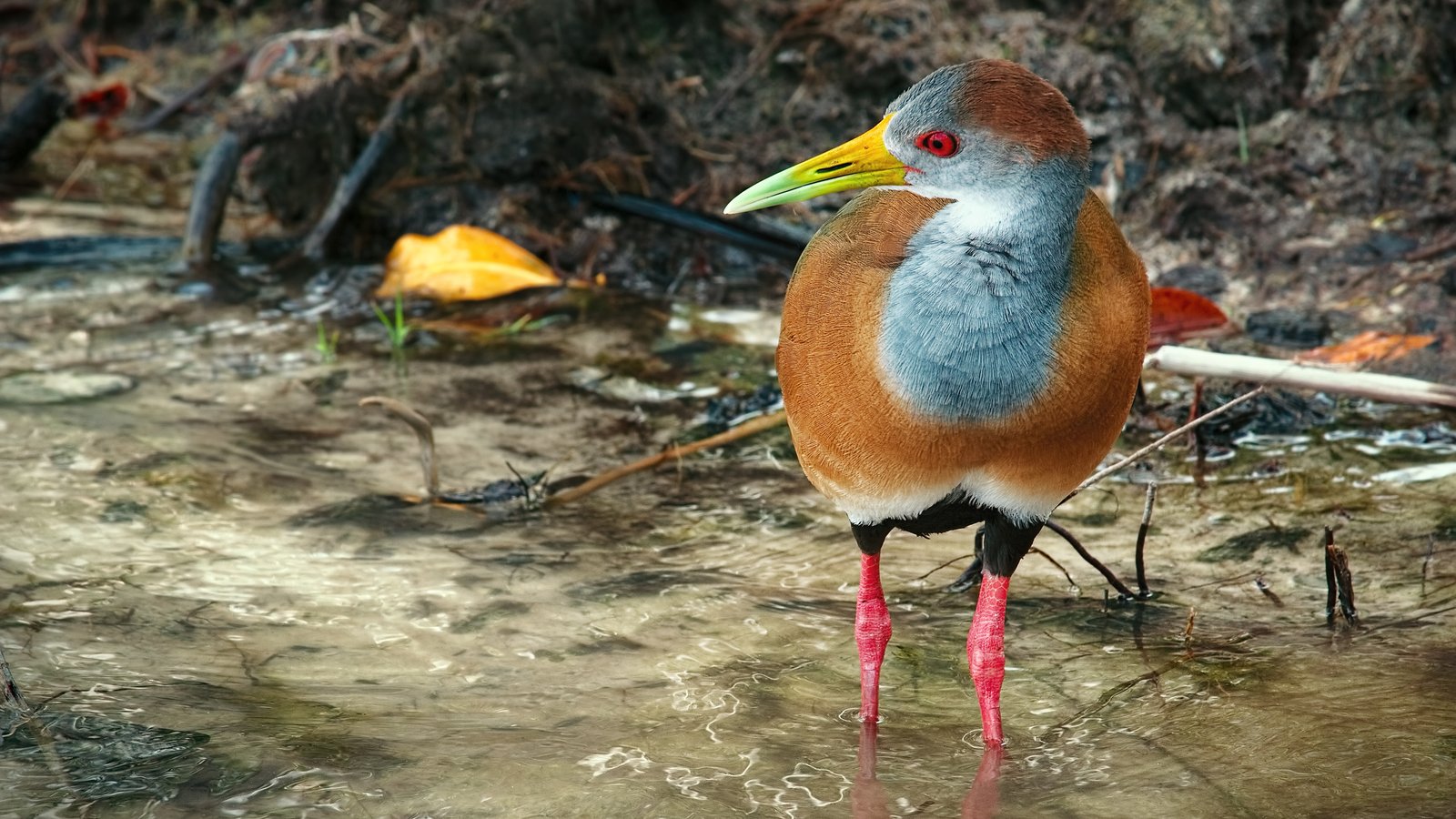
The Russet-naped Wood Rail is a large wood rail with a grey head and neck, a rufous nape and breast and black rear parts. It lives in swamp forest, mangroves and along streams and lagoons in the lowlands and is most noticeable for the loud, cackling duets of pairs at dusk. It ranges from southern Mexico to northern Costa Rica and is thus almost confined to the guide area. Until recently it was treated as one species with Grey-cowled Wood Rail.
Voice
A loud, exuberant cackling, often as a duet or by several birds, with repeated phrases such as pop-tiyi pop-tiyi ko-ko-ko-ko, mainly at dawn and dusk. In alarm a hoarse cackle or loud clucking.
Recording: GABRIEL LEITE — CC BY-NC-SA 4.0 · converted to mono · xeno-canto
Identification
33–38 cm, a large, long-legged rail with a long, slightly flattened bill. Head and foreneck are grey, the throat whitish. The hindcrown and nape are rufous to cinnamon and merge into the olive-brown mantle. Breast and flanks are rusty brown, greyer or paler in some populations; belly, rump and the short tail are black. The bill is greenish-yellow with a yellower tip, the eye red and the legs coral-red. The sexes are alike; juveniles are duller. Walks with the tail cocked and seldom flies.
Confusion species
Grey-cowled Wood Rail Aramides cajaneus, in Costa Rica and Panama, is very similar, but has an entirely grey neck reaching onto the upper back and only a brown patch on the hindcrown, without a rufous nape. Rufous-necked Wood Rail Aramides axillaris is smaller, with an entirely chestnut head and neck. Uniform Crake Amaurolimnas concolor is much smaller and entirely brown.
Habitat
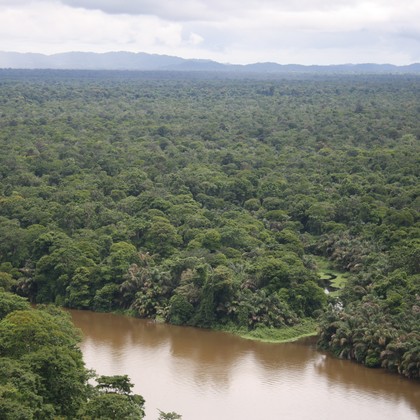
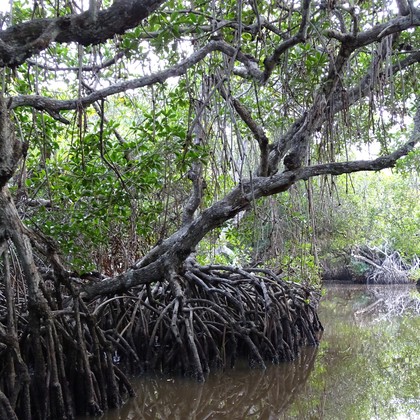
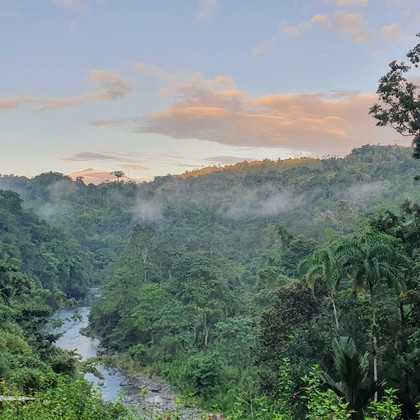
Swamp forest, mangroves, flooded forest, the banks of streams, rivers and lagoons in lowland forest and wet forest edges; also in secondary forest, humid seasonal forest on the Yucatán Peninsula and locally in parks and grounds with water close to forest. Forages on the ground, mainly at dusk, for invertebrates, crabs, frogs, seeds and fruit. Pairs stay together year-round and defend a territory. The nest is a cup of twigs and leaves in a shrub or low tree.
Where the bird is most at home, classified by the vegetation units of Mexico and Central America.




Range and movements
On the Atlantic side of Mexico from southern Veracruz through Tabasco and northern Oaxaca and Chiapas to the whole Yucatán Peninsula; further in Belize, northern Guatemala, Honduras, Nicaragua and northern Costa Rica, mainly in the Caribbean lowlands. Scarce and local on the Pacific side. Fairly common in Belize and on the Yucatán Peninsula. The species does not occur outside the guide area.
- Resident
- dark = core range, pale = thinly spread
How and when to look
In Belize, for example around the lagoons of Crooked Tree, and on the Yucatán Peninsula birds often show at the edge of water and forest, especially early in the morning. In northern Costa Rica along rivers and in swamp forest of the Caribbean lowlands. The duet at dusk reveals territories.
Conservation status
Least Concern. Fairly common in much of its range. Deforestation, drainage of swamp forest and clearance of mangroves locally reduce its habitat.
Scientific name
Aramides albiventris | Lawrence, 1868
Lawrence described the species in 1868 and placed it straight away in the genus where it still stands. The genus Aramides was introduced in 1845 by Pucheran. Aramides is Aramus (Limpkin) with Greek -oidēs 'resembling': 'Limpkin-like'. albiventris is Latin, from albus 'white' and venter 'belly', after the pale patch on the lower belly. The specimen the first description was based on came from Belize.