All species › Passerines › New World sparrows › Rufous-crowned Sparrow
Position in the tree Birds Aves › Birds with a flexible palate Neognathae › All other modern birds Neoaves › Landbirds Telluraves › Falcons, parrots and passerines Australaves › Falcons and passerines Eufalconimorphae › Parrots and passerines Psittacopasserae
Rufous-crowned Sparrow | Aimophila ruficeps
Roestkruingors | Zacatonero corona rufa
The Rufous-crowned Sparrow is a slim, grey sparrow with a rufous crown that lives on dry, rocky slopes with grass and scattered shrubs. It occurs from the south-western United States to southern Mexico. Pairs stay in their territory year-round.
Voice
The song is a fast, somewhat jumbled, chattering series of notes. The best-known call is a nasal, repeated dear-dear-dear; also a thin tsip.
Recording: Manuel Grosselet — CC BY-NC-SA 4.0 · converted to mono · xeno-canto
Identification
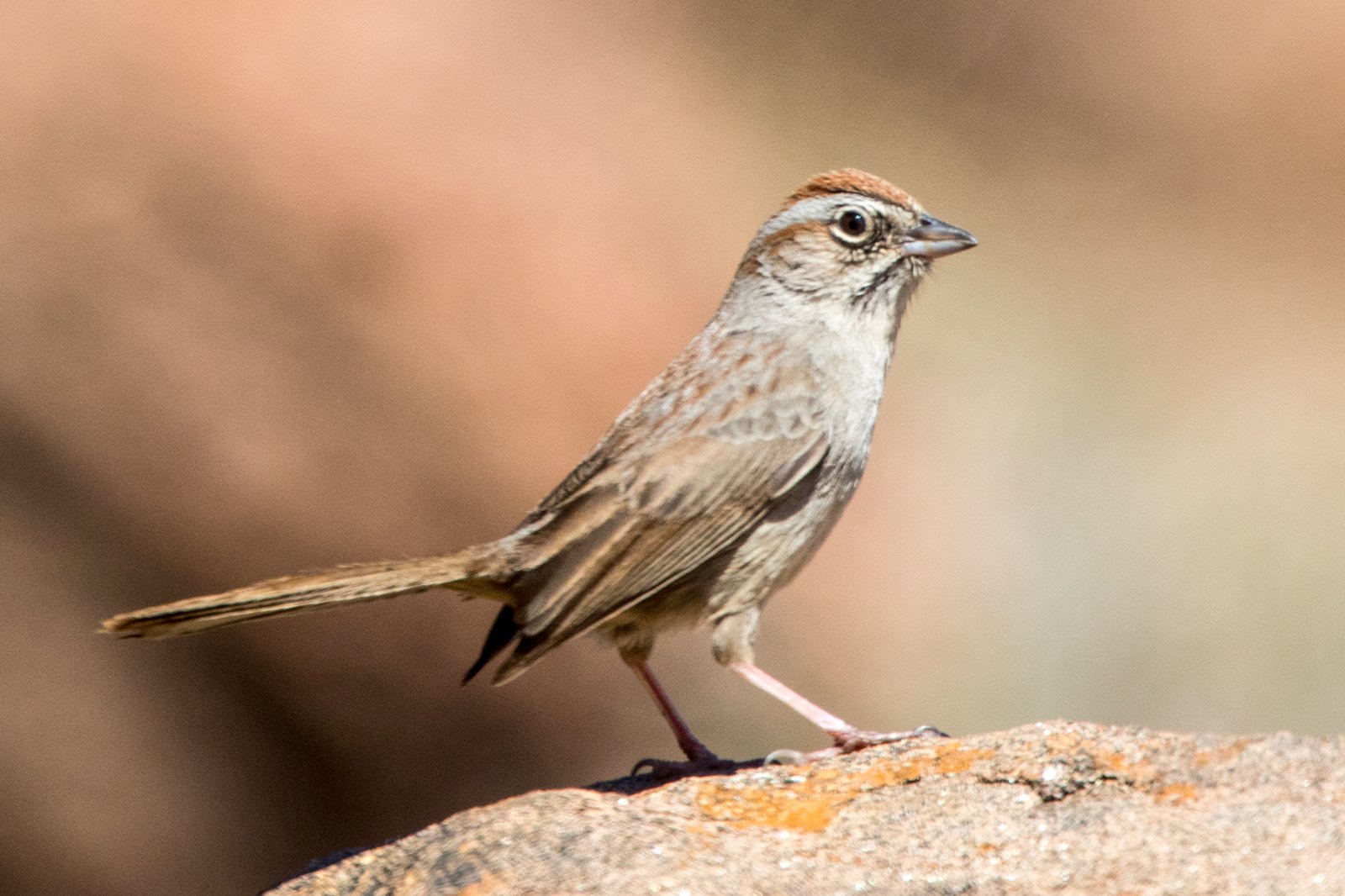
13–15 cm. Crown plain rufous, sometimes with a faint grey central stripe; broad grey supercilium, white in front of the eye, and a narrow rufous eye-stripe. A conspicuous white eye-ring and a sharp black malar stripe beside a white moustachial stripe. Back grey-brown with rufous streaks. Underparts plain grey, flanks pale brown. Bill fairly slender, with a yellowish lower mandible. Tail fairly long and rounded, without white edges. The sexes are alike.
Confusion species
Rusty Sparrow Aimophila rufescens is larger, with a heavy two-toned bill, a more heavily streaked back and no obvious eye-ring. Chipping Sparrow Spizella passerina also has a rufous crown in breeding plumage, but is smaller, with a black eye-stripe, a white supercilium, a notched tail and no black malar stripe. Rufous-winged Sparrow Peucaea carpalis has a streaked crown with rufous sides, two dark whisker stripes and a rufous patch at the bend of the wing.
Habitat
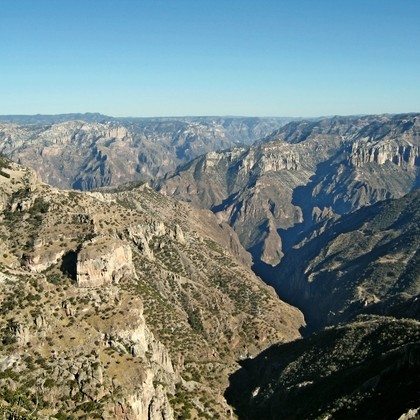
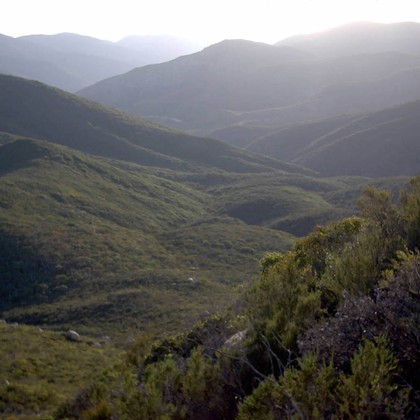
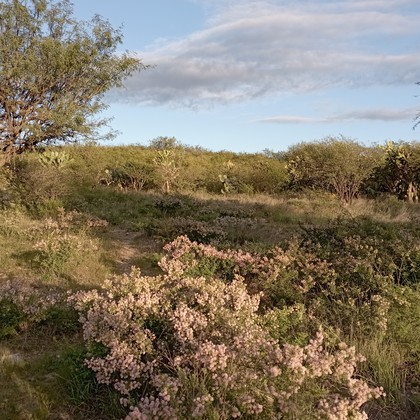
Open, rocky slopes and canyon walls with grass and scattered low shrubs, also chaparral, oak scrub, semi-desert grassland and open pine-oak woodland, mostly between about 500 and 3000 m. It feeds on the ground among grass and stones on seeds and insects.
Where the bird is most at home, classified by the vegetation units of Mexico and Central America.


Range and movements
From California, Arizona, New Mexico, Texas and Oklahoma southwards. In the guide area in northern Baja California and from Sonora, Chihuahua and Coahuila along both Sierra Madres and across the central plateau to Jalisco, Michoacán, Guerrero, Puebla, Veracruz and Oaxaca.
- Resident
- dark = core range, pale = thinly spread
How and when to look
On rocky, grassy slopes found by listening for the nasal dear-dear-dear call; the bird then often perches briefly on a boulder or shrub.
Conservation status
Not threatened (LC). Widespread; locally declining through development of hillsides and the loss of open scrub to overly frequent fires.
Scientific name
Aimophila ruficeps | (Cassin, 1852)
Cassin described the species in 1852 as Ammodromus ruficeps; because it was later moved to another genus, the author and year stand in brackets. The genus Aimophila was introduced in 1837 by Swainson. Aimophila is Greek, from haimos 'thicket' and philos 'loving': 'thicket-lover'. ruficeps is Latin, from rufus 'red' and -ceps '-headed', after the rufous crown. The specimen the first description was based on came from Calaveras River near Stockton, California.