All species › Passerines › New World warblers › Rufous-capped Warbler
Position in the tree Birds Aves › Birds with a flexible palate Neognathae › All other modern birds Neoaves › Landbirds Telluraves › Falcons, parrots and passerines Australaves › Falcons and passerines Eufalconimorphae › Parrots and passerines Psittacopasserae
Rufous-capped Warbler | Basileuterus rufifrons
Roodkapzanger | Chipe gorra rufa
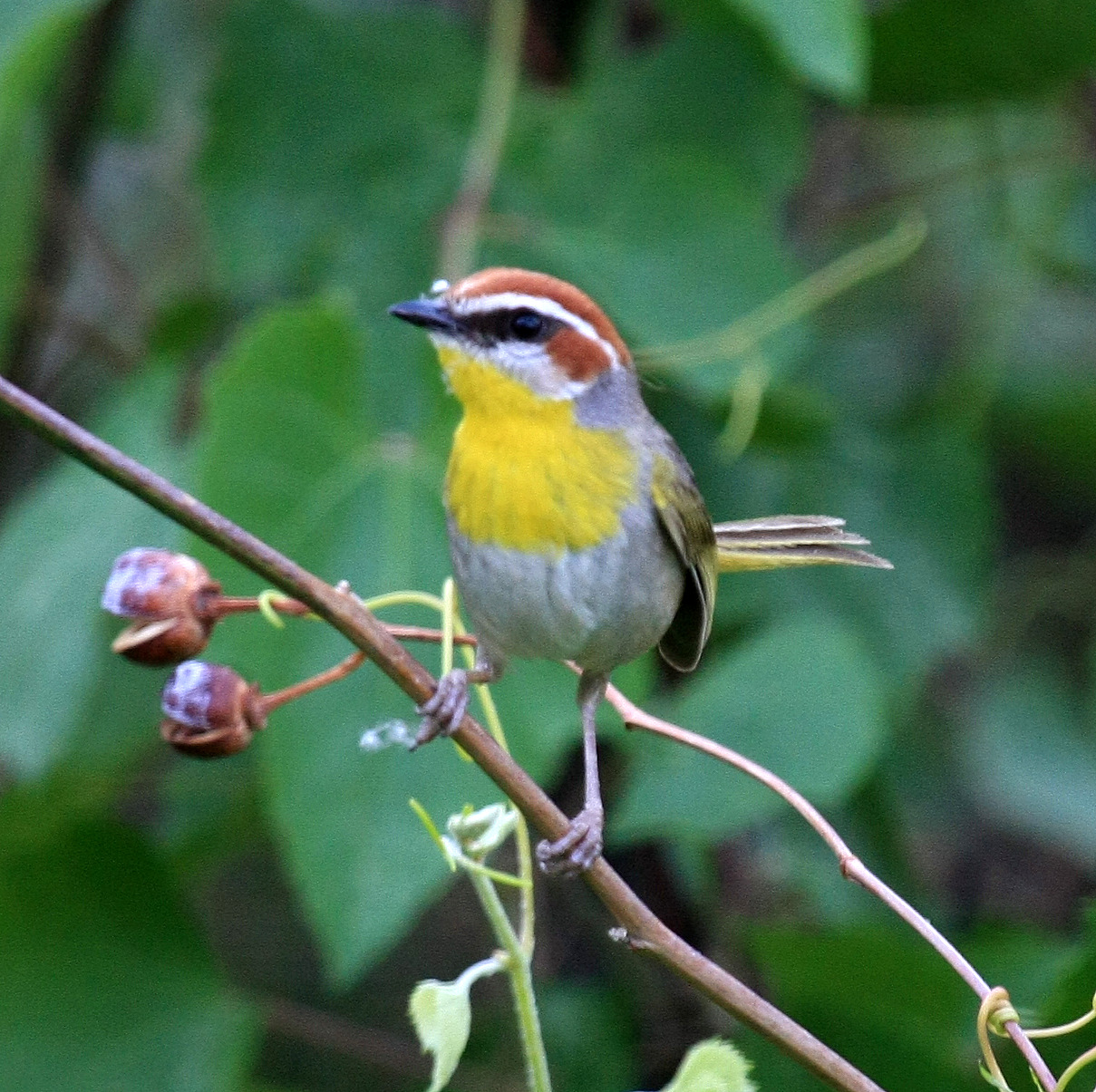
The Rufous-capped Warbler is a small warbler with a rufous crown and cheek separated by a white eyebrow, and a long tail that is often held cocked. It lives in scrub and forest edges from Mexico to Guatemala.
Voice
The song is an accelerating series of dry chips ending in a short, clear flourish, roughly chip chip chip chip-chewee-chee. The call is a dry tsik or chik.
Recording: Manuel Grosselet — CC BY-NC-SA 4.0 · converted to mono · xeno-canto
Identification
12–13 cm. Crown and cheek patch rufous, separated by a broad white eyebrow; below that a white stripe along the throat. Upperparts olive-grey to olive-green. Throat and breast yellow, belly dull white to greyish; in northern Mexico the yellow is limited to the throat, further south it extends over the breast. Tail long, often flicked and held cocked. Sexes alike.
Confusion species
Chestnut-capped Warbler Basileuterus delattrii, whose range meets this species' in Guatemala, has entirely yellow underparts including the undertail coverts and a more chestnut head; intermediate birds occur in the contact zone. Golden-browed Warbler Basileuterus belli has a yellow eyebrow and all-yellow underparts and lives in more humid montane forest.
Habitat
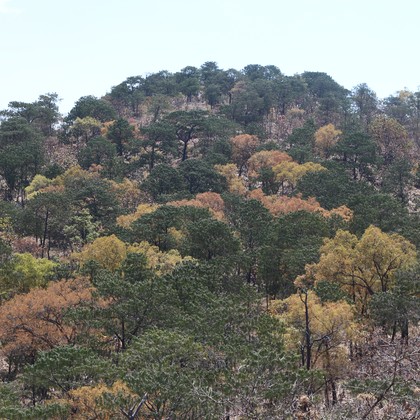
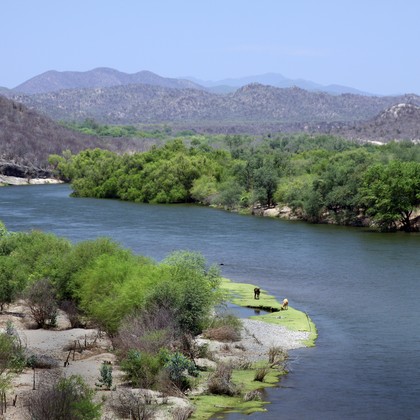
Dry and semi-humid scrub, thorn scrub, forest edges, open oak and pine-oak woodland, ravines with bushes and shade coffee, from sea level to about 3000 m. It searches for insects low in the vegetation and on the ground.
Where the bird is most at home, classified by the vegetation units of Mexico and Central America.





Range and movements
Occurs from Sonora, Chihuahua, Coahuila and Nuevo León south through much of Mexico to Chiapas and Guatemala; a vagrant to southern Arizona and Texas. On the range map the area extends into southern Central America; that part refers to Chestnut-capped Warbler, which in the underlying occurrence data is partly still included in this species.
- Resident
- dark = core range, pale = thinly spread
How and when to look
Often seen in scrub along roads and forest edges in the highlands of central and southern Mexico, where the bird hops from branch to branch with its tail cocked; the dry, accelerating song is distinctive.
Conservation status
Not threatened (LC). Common and widespread; locally benefits from scrub after logging.
Scientific name
Basileuterus rufifrons | (Swainson, 1838)
Swainson described the species in 1838 as Setophaga rufifrons; because it was later moved to another genus, the author and year stand in brackets. The genus Basileuterus was introduced in 1848 by Cabanis. Basileuterus is Greek, from basileuteros 'more kingly', after the coloured crown stripe recalling a little crown. rufifrons is Latin, from rufus 'red' and frons 'forehead', after the rufous crown. The specimen the first description was based on came from Mexico (possibly Real Arriba, Veracruz).