All species › Passerines › Shrike-babblers, Erpornis and vireos › Rufous-browed Peppershrike
Position in the tree Birds Aves › Birds with a flexible palate Neognathae › All other modern birds Neoaves › Landbirds Telluraves › Falcons, parrots and passerines Australaves › Falcons and passerines Eufalconimorphae › Parrots and passerines Psittacopasserae
Rufous-browed Peppershrike | Cyclarhis gujanensis
Roodbrauwpeperklauwier | Vireón ceja rufa
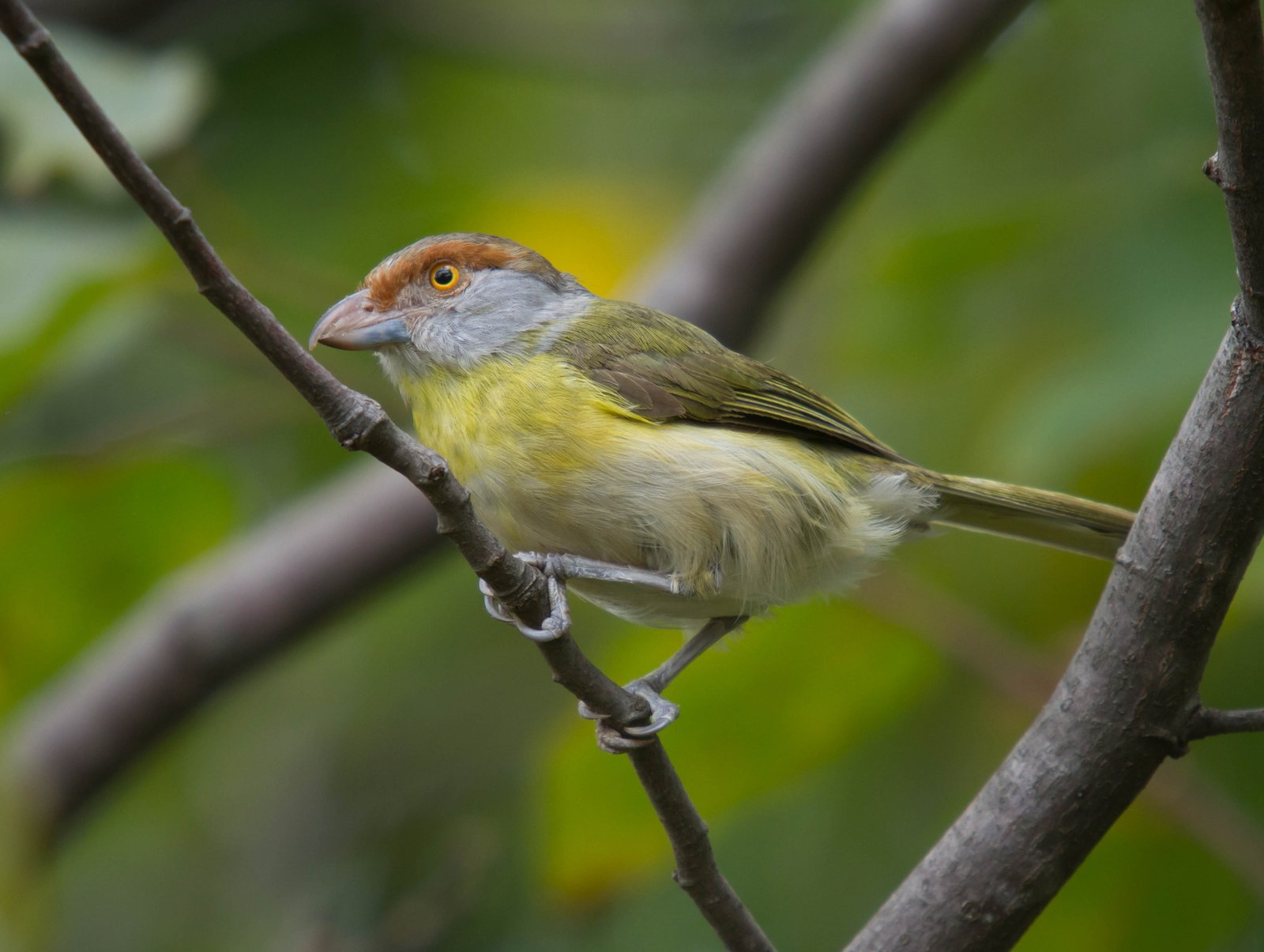
The Rufous-browed Peppershrike is a stocky, big-headed relative of the vireos with a heavy, laterally compressed, hook-tipped bill. It moves slowly through the foliage and is heard far more often than seen. In the guide area it occurs from Mexico to Panama, in a wide range of forest and semi-open habitats.
Voice
The song is a short, rich, varied whistled phrase repeated many times in succession, after which the bird switches to another phrase. Sings throughout the day, even in the midday heat.
Recording: Juan Freile — CC BY-NC-SA 4.0 · converted to mono · xeno-canto
Identification
14–16 cm. Head grey with a broad rufous supercilium that continues onto the forehead; eye orange to reddish. Upperparts olive-green. Throat and breast yellow, belly whitish to greyish; the amount of yellow varies between subspecies. Bill heavy, pale horn to pinkish, with a hooked tip. Legs pinkish grey.
Confusion species
The rufous brow and heavy pale bill rule out confusion with any other species in the guide area. The shrike-vireos Vireolanius also have heavy bills but are brighter green and lack the rufous brow; Chestnut-sided Shrike-Vireo Vireolanius melitophrys has a yellow brow and a black eye-stripe.
Habitat
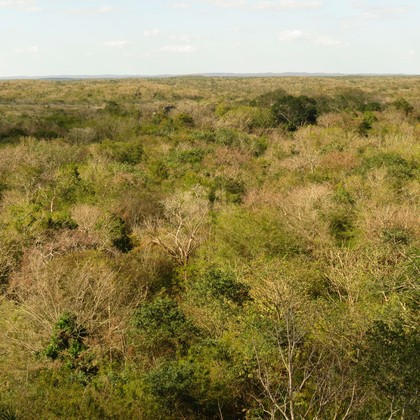
Forest edges, secondary forest, dry forest, scrub with trees, pine-oak forest, coffee plantations, parks and wooded gardens, from sea level into the mountains. Avoids the interior of continuous humid forest. Forages slowly in the canopy for large insects and caterpillars.
Where the bird is most at home, classified by the vegetation units of Mexico and Central America.






Range and movements
From eastern and southern Mexico (including the Yucatán Peninsula and Cozumel) through all of Central America to Panama. Outside the guide area across much of South America, south to Argentina.
- Resident
- dark = core range, pale = thinly spread
How and when to look
The endlessly repeated song is usually the first clue; the bird itself often sits still and well hidden in dense foliage and takes patient searching to find.
Conservation status
Not threatened. Common and widespread; benefits from semi-open country with trees.
Scientific name
Cyclarhis gujanensis | (Gmelin, 1789)
Gmelin described the species in 1789 as Tanagra gujanensis; because it was later moved to another genus, the author and year stand in brackets. The genus Cyclarhis was introduced in 1824 by Swainson. Cyclarhis is Greek, from kuklos 'circle' and rhis, rhinos 'nostrils', after the round nostrils. gujanensis means 'from Guiana', after the type locality in French Guiana. The specimen the first description was based on came from French Guiana.