All species › Parrots › African and New World parrots › Pacific Parakeet
Position in the tree Birds Aves › Birds with a flexible palate Neognathae › All other modern birds Neoaves › Landbirds Telluraves › Falcons, parrots and passerines Australaves › Falcons and passerines Eufalconimorphae › Parrots and passerines Psittacopasserae
Pacific Parakeet | Psittacara strenuus
Pacifische aratinga | Perico centroamericano
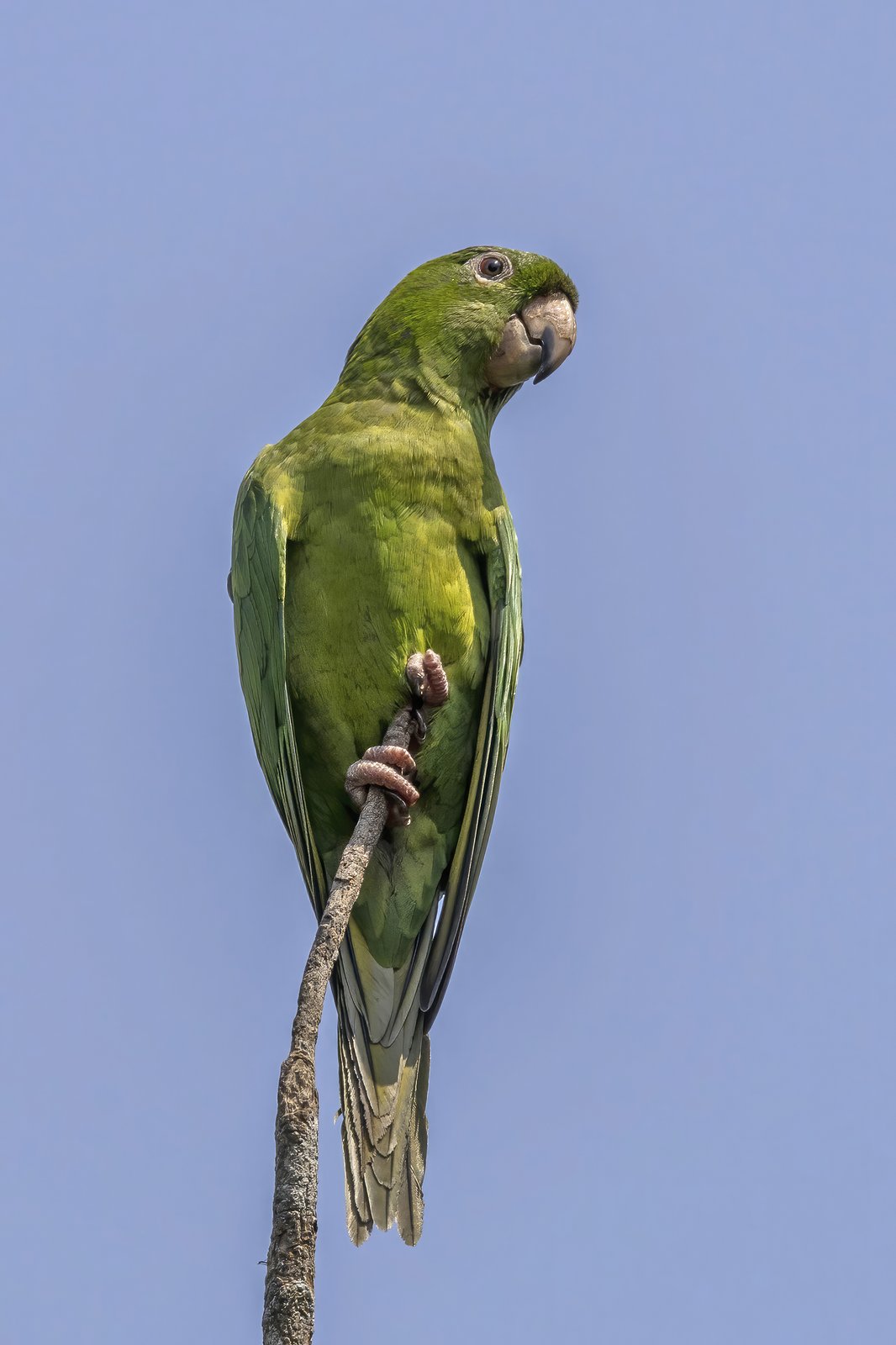
The Pacific Parakeet is a medium-sized, all-green parakeet with a long, pointed tail from the Pacific side of northern Central America. It was long regarded as a subspecies of the Green Parakeet. A well-known colony lives in the crater of the Masaya volcano in Nicaragua, where the birds roost and nest in the crater wall, above the sulphurous fumes.
Voice
Loud and shrill; a grating kreek-kreek, rapidly repeated in flight, and constant screeching at roosts and colonies.
Recording: Oscar Campbell — CC BY-NC-SA 4.0 · converted to mono · xeno-canto
Identification
32 cm, with a long, pointed tail. All green, slightly more yellowish below; some birds have a few red feathers on the neck or throat. The underside of the flight feathers and tail is olive-yellow. The eye is orange-red with a bare, pale eye-ring; the bill is horn-coloured and relatively heavy. Male and female are alike.
Confusion species
The Green Parakeet Psittacara holochlorus is very similar; the form of the highlands from Guatemala to Nicaragua has an orange-red throat. Finsch's Parakeet Psittacara finschi, from southern Nicaragua southwards, has a red forehead and red and yellow on the edge of the wing. The Orange-fronted Parakeet Eupsittula canicularis is smaller, with an orange forehead and a blue crown. The Olive-throated Parakeet Eupsittula nana is smaller, with an olive-brown throat and breast.
Habitat
Deciduous and semi-deciduous forest, gallery forest, swamp forest, dry scrub, pine-oak forest in the mountains and semi-open country with trees; also city parks and gardens. From sea level to about 2600 m. It eats seeds, fruit and flowers. It nests in tree cavities and in rock faces, sometimes in colonies.
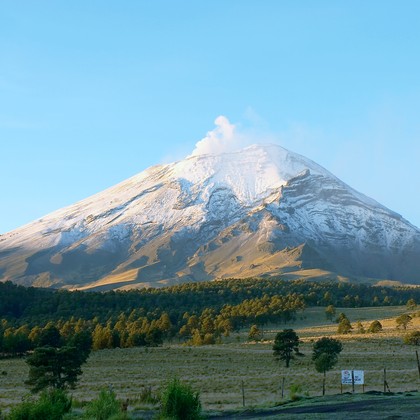
Where the bird is most at home, classified by the vegetation units of Mexico and Central America.






Range and movements
On the Pacific side from extreme eastern Oaxaca and Chiapas through Guatemala, El Salvador and southern Honduras to Nicaragua, to about the middle of the country; also in the interior and highlands of these countries. It does not occur outside the guide area.
- Resident
- dark = core range, pale = thinly spread
How and when to look
In Volcán Masaya National Park near Managua groups fly into the Santiago crater in the late afternoon, passing through the gases to their roosts in the crater wall. Groups also visit parks and street trees in Guatemala City, San Salvador and Managua.
Conservation status
Not evaluated separately; the IUCN includes it in the Green Parakeet, which as a whole is not threatened. It is trapped for the cage-bird trade and suffers from the loss of dry forest, but is still common locally, also in cities.
Scientific name
Psittacara strenuus | (Ridgway, 1915) (GBIF: Aratinga strenua)
Ridgway described the species in 1915 as Conurus holochlorus strenuus; because it was later moved to another genus, the author and year stand in brackets. The genus Psittacara was introduced in 1825 by Vigors. Psittacara joins Greek psittakos 'parrot', Latin psittacus, with the genus name Ara, the macaws. strenuus is Latin for 'vigorous, strong', presumably after its sturdier build compared with the Green Parakeet. The specimen the first description was based on came from Ometepe, Nicaragua.