All species › Passerines › Tanagers and allies › Olive-grey Saltator
Position in the tree Birds Aves › Birds with a flexible palate Neognathae › All other modern birds Neoaves › Landbirds Telluraves › Falcons, parrots and passerines Australaves › Falcons and passerines Eufalconimorphae › Parrots and passerines Psittacopasserae
Olive-grey Saltator | Saltator olivascens
Caribische grijze saltator | Pepitero oliváceo
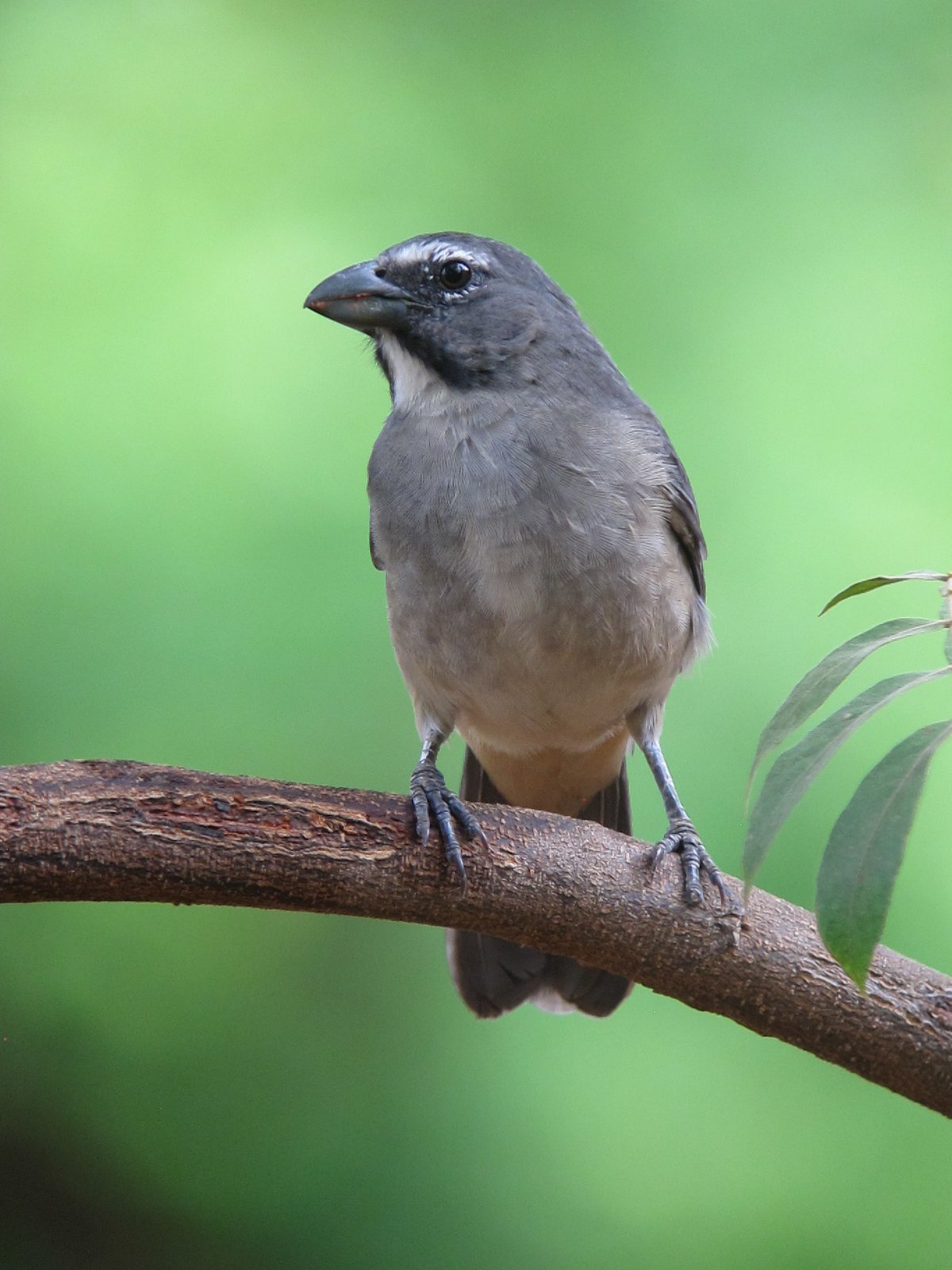
The Olive-grey Saltator is a large, grey tanager with a heavy black bill, a white supercilium and a white throat. It belongs to the grey saltator complex and is the South American counterpart of the Cinnamon-bellied Saltator. In the guide area it occurs only in eastern Panama, where it has been recorded regularly only recently, mainly on cleared land in Darién.
Voice
Song a loud, clear series of a few whistled notes, often ending in a longer, falling note; the song varies between regions. Call a sharp chink.
Recording: Hernán Arias — CC BY-NC-SA 4.0 · converted to mono · xeno-canto
Identification
20–21 cm. Upperparts grey with an olive tinge, head greyer with a white supercilium extending behind the eye. Throat white, bordered at the side by a black malar stripe. Breast grey, belly and undertail coverts pale buff, less warm than in Cinnamon-bellied Saltator. Bill heavy and black. Male and female alike; young birds are more olive, with a yellowish supercilium and a yellow-tinged throat.
Confusion species
Cinnamon-bellied Saltator Saltator grandis is purer grey above and warmer cinnamon on the belly; in Panama it lives only in the west (Bocas del Toro and Chiriquí), so the two do not occur together in the guide area. Buff-throated Saltator Saltator maximus has olive-green upperparts and a buff lower throat. Streaked Saltator Saltator striatipectus has a streaked breast.
Habitat
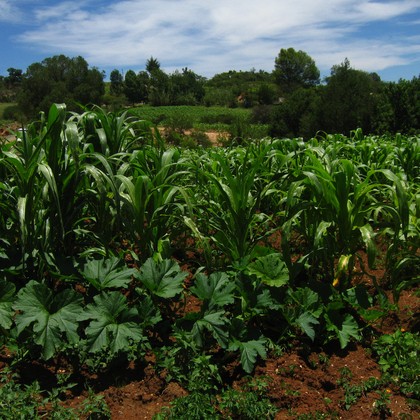
Open and semi-open lowland country: pasture with scattered trees and hedgerows, scrub, forest edges, farmyards and gardens. In Darién mainly in cleared farmland along roads. It eats fruit, flowers, buds and leaves, supplemented with insects. It usually lives in pairs.
Where the bird is most at home, classified by the vegetation units of Mexico and Central America.



Range and movements
In the guide area only in eastern Panama, mainly in Darién Province and the adjacent Emberá territory, where it appears to be spreading with deforestation. Outside the guide area in northern and eastern Colombia, Venezuela, Trinidad, Guyana, Suriname, French Guiana and northern Brazil.
- Resident
- dark = core range, pale = thinly spread
How and when to look
Most often seen along the Pan-American Highway in Darién, in open farmland with scattered trees and hedgerows. Singing birds often perch at the top of an isolated tree.
Conservation status
Not threatened (LC). Common in the South American part of its range; in the guide area a recent, still small population that benefits from forest clearance.
Scientific name
Saltator olivascens | Cabanis, 1849
Cabanis described the species in 1849 and placed it straight away in the genus where it still stands. The genus Saltator was introduced in 1816 by Vieillot. Saltator is Latin for 'dancer, leaper', after the birds' hopping movements. olivascens is Latin for 'becoming olive, olivaceous', after the greyish-olive upperparts. The specimen the first description was based on came from Guyana.