All species › Passerines › Antpittas › Ochre-breasted Antpitta
Position in the tree Birds Aves › Birds with a flexible palate Neognathae › All other modern birds Neoaves › Landbirds Telluraves › Falcons, parrots and passerines Australaves › Falcons and passerines Eufalconimorphae › Parrots and passerines Psittacopasserae
Ochre-breasted Antpitta | Grallaricula flavirostris
Okerborstdwergmierpitta | Gralarita ocrácea
The Ochre-breasted Antpitta is a small, round-bodied antpitta with a short tail and long legs that lives quietly in the understorey of humid montane forest. In the guide area it occurs only in Costa Rica and Panama.
Voice
Inconspicuous and poorly known; a short series of high, soft whistles.
Recording: José María Loaiza B. — CC BY-NC-SA 4.0 · converted to mono · xeno-canto
Identification
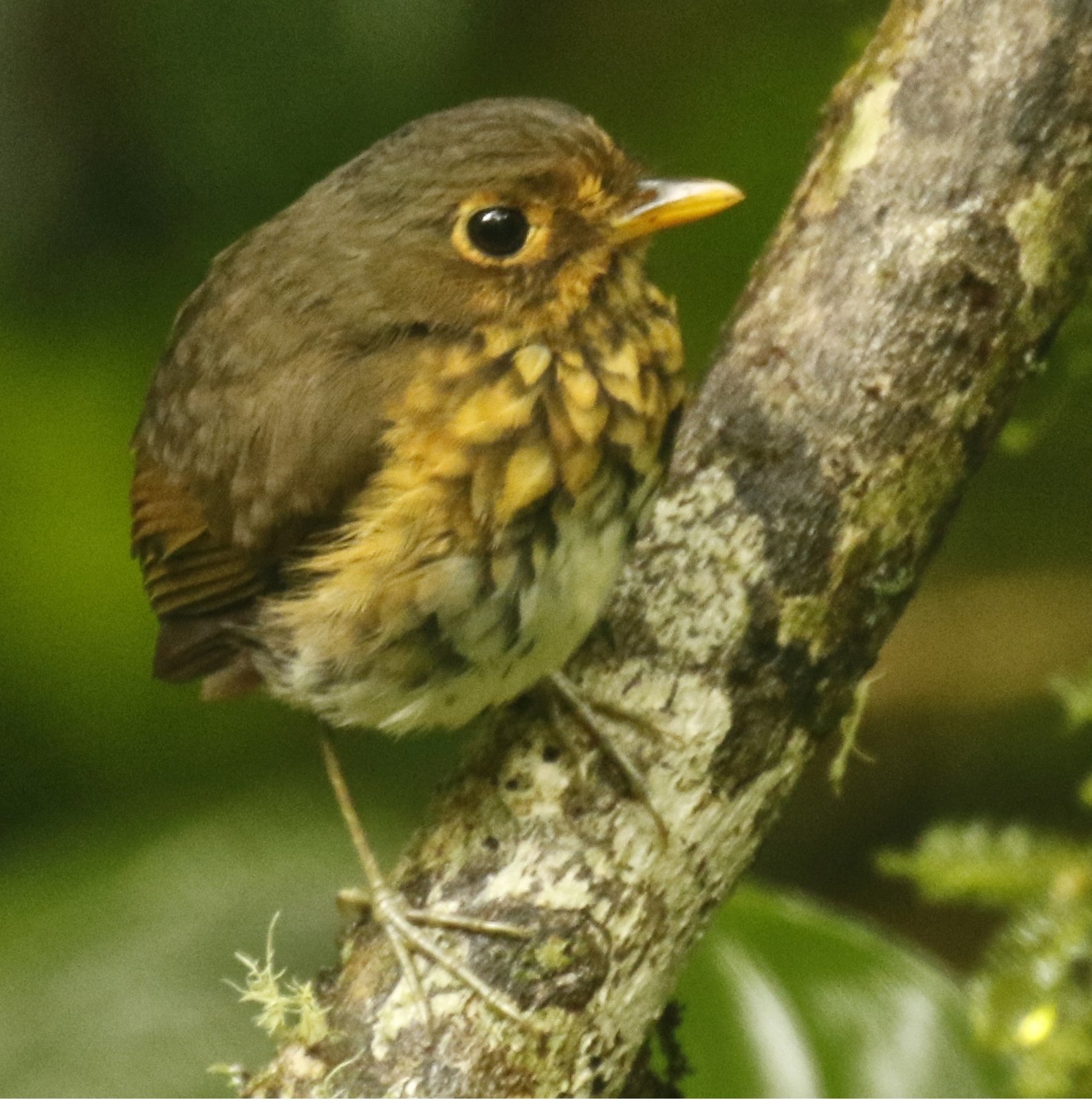
10 cm. Upperparts olive-brown. Ochre face and a pale eye-ring. Throat and breast warm ochre-yellow, with black streaks on the sides of the breast; belly whitish. Bill largely yellowish. Short, almost invisible tail and long, pale legs. Male and female are alike.
Confusion species
Streak-chested Antpitta Hylopezus perspicillatus is larger, with a grey crown, pale spots on the wing-coverts and white underparts with black streaks, and lives mainly lower down, on the forest floor. Tapaculos of the genus Scytalopus are dark grey and have a longer tail.
Habitat
Understorey of humid foothill and montane forest with many ferns, saplings and hanging vines, often near streams and in ravines. It usually perches motionless on a thin stem one or two metres above the ground and takes insects from leaves and the ground.
Where the bird is most at home, classified by the vegetation units of Mexico and Central America.


Range and movements
In the guide area on the middle slopes of the mountains of Costa Rica and Panama. Outside the guide area in the Andes from Colombia to Bolivia.
- Resident
- dark = core range, pale = thinly spread
How and when to look
It sits motionless low in the vegetation and gives itself away at most by a brief movement. Walking slowly along forest trails in humid montane forest and scanning the understorey gives the best chance.
Conservation status
Not threatened. Scarce and local in the guide area, and probably often overlooked.
Scientific name
Grallaricula flavirostris | (Sclater, 1858)
Sclater described the species in 1858 as Grallaria flavirostris; because it was later moved to another genus, the author and year stand in brackets. The genus Grallaricula was introduced in 1858 by Sclater. Grallaricula is a diminutive of Grallaria: 'little antpitta'. flavirostris is Latin, from flavus 'yellow' and rostrum 'bill', after the yellow bill. The specimen the first description was based on came from Río Napo, Ecuador.