All species › Waterfowl › Ducks, swans and geese › Northern Shoveler
Position in the tree Birds Aves › Birds with a flexible palate Neognathae › Fowl Galloanserae
Northern Shoveler | Spatula clypeata
Slobeend | Cuchara común
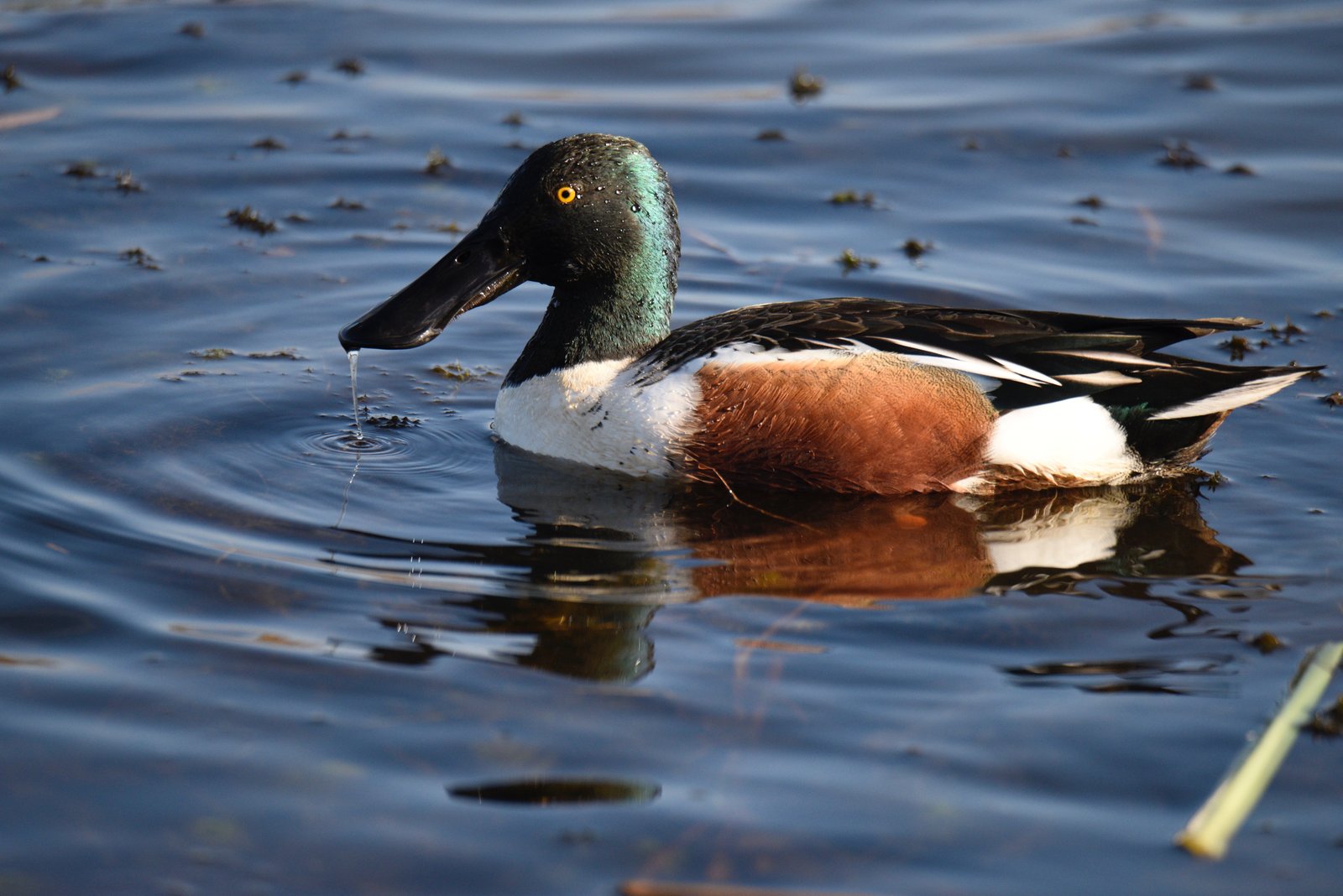
The Northern Shoveler is a medium-sized dabbling duck with a large, spoon-shaped bill, with which it sieves plankton and small invertebrates from the water. In Mexico it is one of the most numerous wintering ducks, especially on the lakes and saline lakes of the plateau and in coastal lagoons; in Central America it is scarcer.
Voice
Usually silent in winter. The male has a hollow, repeated took-took; the female a descending, quacking kwek-kwek-kwek.
Recording: Sonothèque ADVL — CC0 · converted to mono · xeno-canto
Identification
44–52 cm, a dabbling duck that sits low in the water, with the long bill, strongly broadened at the tip, often pointed at the water. The breeding male has a dark green head, a yellow eye, a white breast, chestnut flanks and belly and a white patch in front of the black stern; the bill is black. The female is mottled brown, with an orange edge to the bill. In autumn many males are still in a brown, female-like plumage, sometimes with a white crescent on the face. In flight a pale blue forewing, a white band and a green speculum, and because of the heavy bill the wings appear set far back.
Confusion species
Blue-winged Teal Spatula discors and Cinnamon Teal S. cyanoptera share the pale blue forewing, but are smaller and have a much smaller bill. At a distance the green-headed male can recall a male Mallard Anas platyrhynchos, but the white breast, rufous flanks and the bill rule out confusion. Females of Mallard and Mexican Duck Anas diazi are larger, with a smaller bill and a blue rather than green speculum.
Habitat
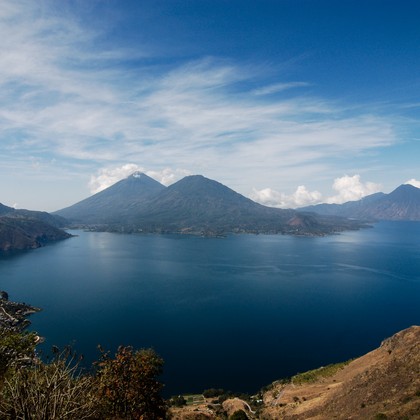
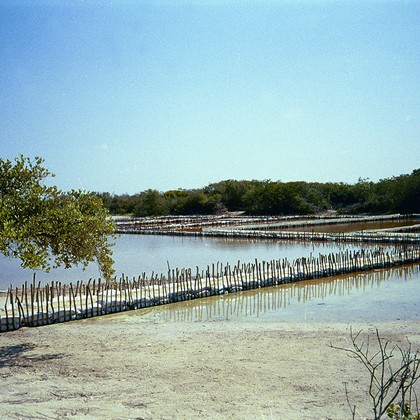
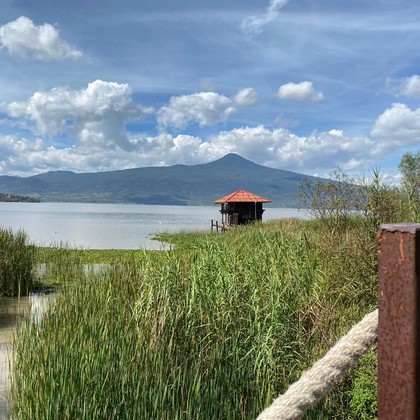
Shallow lakes, reservoirs and ponds with nutrient-rich water, saline and alkaline lakes, coastal lagoons, salt marshes, salt pans and flooded fields; also sewage ponds. It feeds while swimming with the bill through the water, often in groups that spin in a circle.
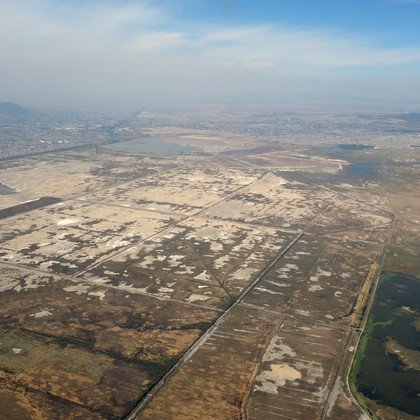
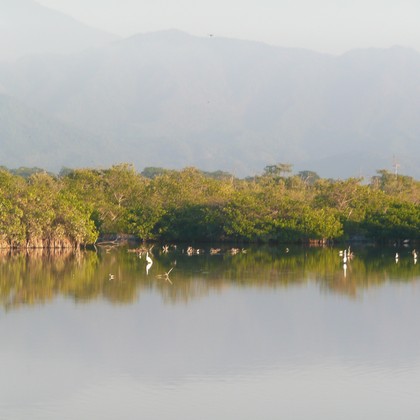
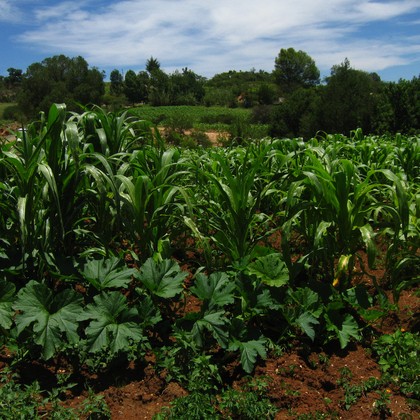
Where the bird is most at home, classified by the vegetation units of Mexico and Central America.
Range and movements
Winters throughout Mexico, from Baja California, Sonora, Chihuahua and Tamaulipas to Oaxaca, Chiapas and the Yucatán Peninsula; most numerous on the plateau and along the northern coasts. In Central America fairly scarce to locally common in Guatemala, Belize, El Salvador, Honduras, Nicaragua and Costa Rica, and scarce in Panama. A few birds stay through the summer in northern Mexico. Breeds in North America and Eurasia.
- Winter visitor (c. Oct–Mar)
- dark = core range, pale = thinly spread
How and when to look
Saline lakes, reservoirs and sewage ponds on the Mexican plateau in the winter months, where flocks lie low in the water and sieve the surface with their bills.
Conservation status
Not threatened globally. The North American population has increased since the 1950s. In the guide area a common winter visitor in Mexico, scarcer further south.
Scientific name
Spatula clypeata | (Linnaeus, 1758)
Linnaeus described the species in 1758 as Anas clypeata; because it was later moved to another genus, the author and year stand in brackets. The genus Spatula was introduced in 1822 by Boie. Spatula is Latin for 'spoon' or 'spatula', after the broad, spoon-shaped bill of the shoveler. clypeata is Latin for 'shield-bearing', from clypeus 'shield'. The specimen the first description was based on came from southern Sweden.