All species › Waders, gulls and terns › Jacanas › Northern Jacana
Position in the tree Birds Aves › Birds with a flexible palate Neognathae › All other modern birds Neoaves › Birds of the elements Elementaves › Cranes and waders Gruimorphae
Northern Jacana | Jacana spinosa
Midden-Amerikaanse jacana | Jacana norteña
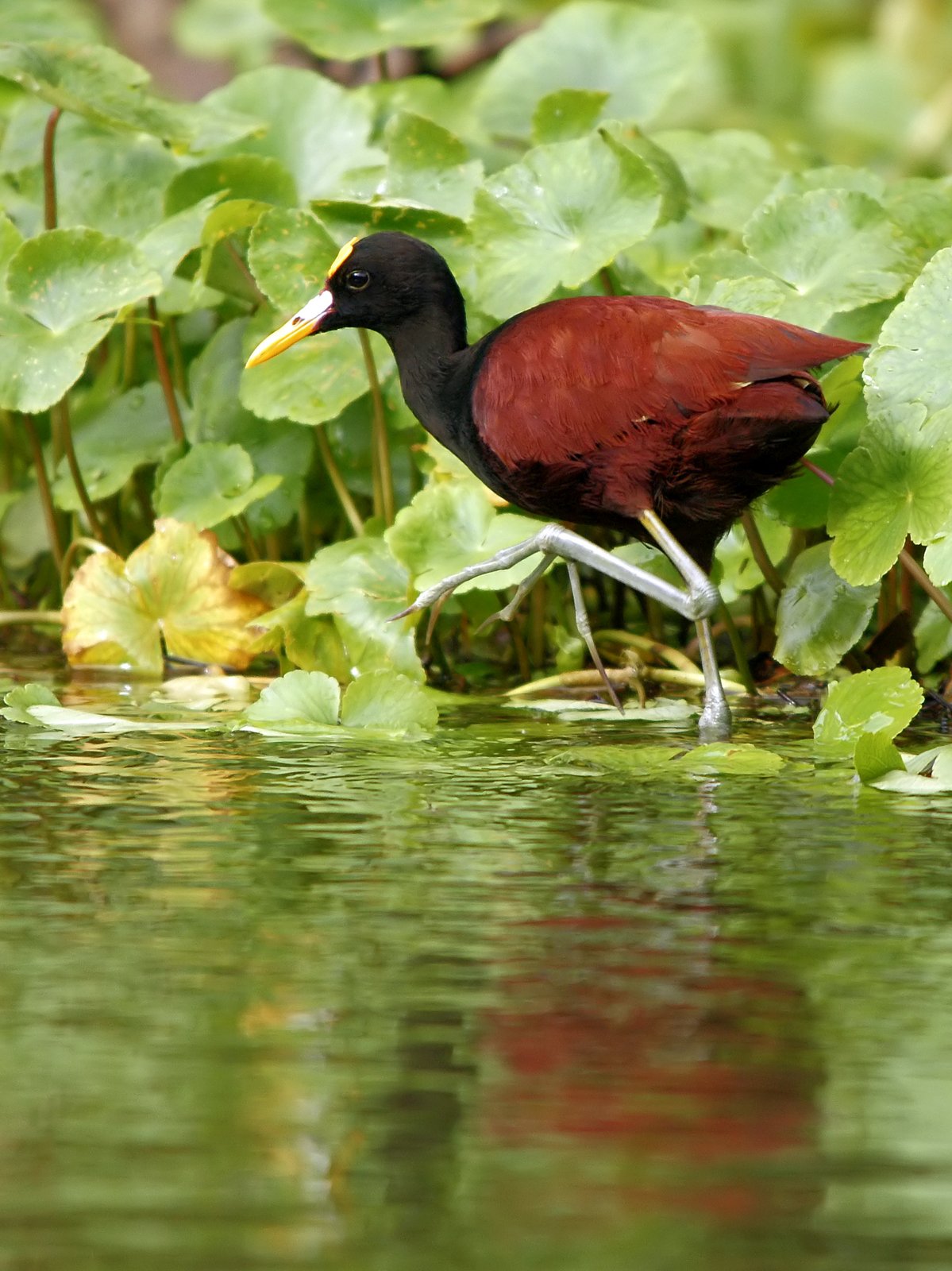
The Northern Jacana walks over water lilies, water hyacinth and other floating plants on extremely long toes and claws. It is a common resident of fresh water in the lowlands, from Mexico to western Panama. Breeding roles are reversed: the larger female defends a territory holding the nests of several males, which incubate the eggs and raise the young.
Voice
Noisy, especially when disturbed. A rapid series of shrill, cackling notes, kek-kek-kek or kee-kee-kee, often in flight or when flushed. When eggs or young are threatened the parents call persistently.
Recording: Zsombor Károlyi — CC BY-NC-SA 4.0 · converted to mono · xeno-canto
Identification
17–23 cm, with long legs and very long, greenish toes. Head, neck and breast black; back, wing coverts and belly deep chestnut. The bill is yellow, with a yellow, three-lobed frontal shield; there are no wattles at the base of the bill. A yellow spur sits at the bend of the wing. In flight, and when the bird raises its wings after landing, the pale yellow-green flight feathers stand out. The female is clearly heavier than the male but alike in pattern. Juveniles are brown above and white below, with a white supercilium, a dark eye-stripe and a small shield; they also show the yellow-green flight feathers.
Confusion species
Wattled Jacana Jacana jacana of Panama and southern Costa Rica has a red frontal shield and red wattles at the bill base, and in Panama is almost entirely black; intermediate birds occur in western Panama. Purple Gallinule Porphyrio martinica, which also walks over floating plants, is purple-blue and green with a red bill and a pale blue shield. Common Gallinule Gallinula galeata is slate-grey with a red shield and a white flank line. Juvenile jacanas are told from sandpipers by the long toes, the white supercilium and the yellow-green flight feathers.
Habitat
Freshwater marshes, ponds, lakes, lagoons, sluggish backwaters and ditches with floating or emergent plants, also wet pastures, flooded grassland and rice fields; mainly in the lowlands, locally to about 1200 m. Forages by walking over the vegetation for insects, snails and other small animals, flipping over leaves as it goes. The nest is a loose platform of plant material on floating vegetation.
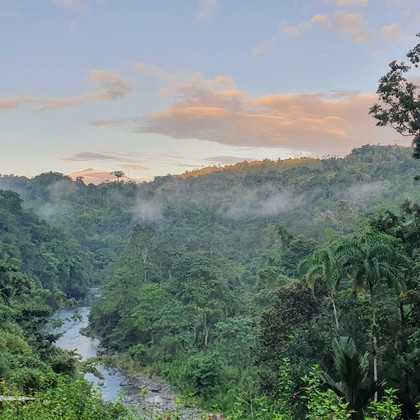
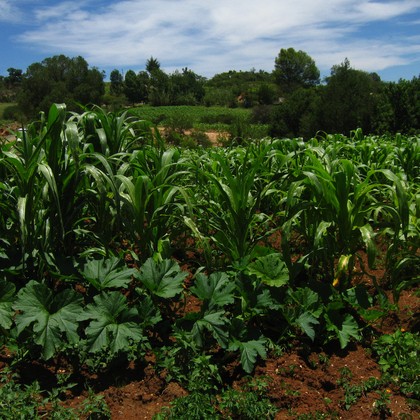
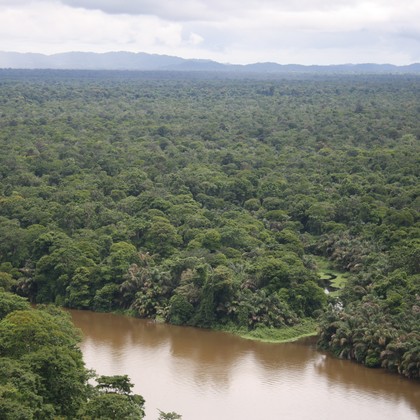
Where the bird is most at home, classified by the vegetation units of Mexico and Central America.


Range and movements
Resident in the lowlands on both sides of Mexico, on the Pacific side from Sinaloa and on the Gulf coast from Tamaulipas, including the Yucatán Peninsula, and on through Belize, Guatemala, El Salvador, Honduras, Nicaragua and Costa Rica to western Panama, where it meets Wattled Jacana. Outside the guide area also on Cuba, Jamaica and Hispaniola, with occasional wanderers in the southern United States.
- Resident
- dark = core range, pale = thinly spread
How and when to look
Almost any pool with water lilies or water hyacinth in the lowlands is promising, including roadside pools, rice-growing areas and cattle ponds. The yellow-green flight feathers are the surest feature on a bird that flushes or raises its wings.
Conservation status
Not threatened. The species is common in the guide area and also uses man-made water such as rice fields, fish ponds and reservoirs. Habitat is lost locally through the drainage of marshes.
Scientific name
Jacana spinosa | (Linnaeus, 1758)
Linnaeus described the species in 1758 as Fulica spinosa; because it was later moved to another genus, the author and year stand in brackets. The genus Jacana was introduced in 1760 by Brisson. Jacana is the Latinized form of Portuguese jaçanã, derived from a Tupi name for the bird. spinosa is Latin for 'spiny', after the sharp spurs at the bend of the wing. The specimen the first description was based on came from Panama (substituted type locality).